Forest Snakehead Care Guide
Channa lucius · Freshwater Fish
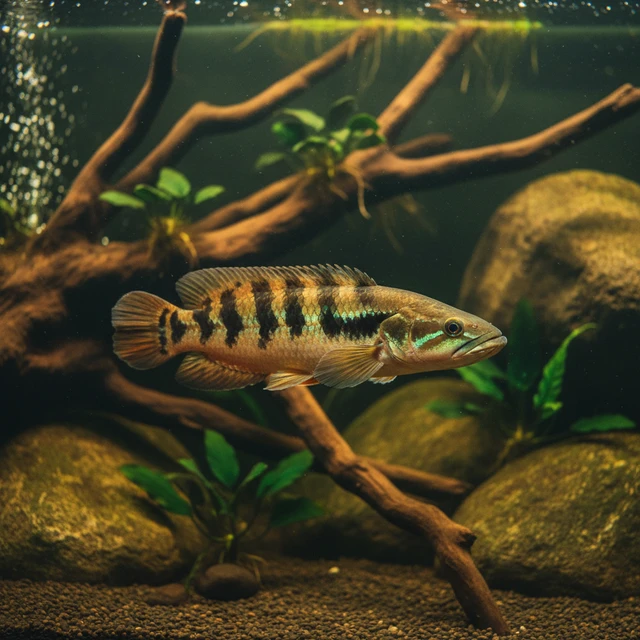
What Forest Snakehead look like
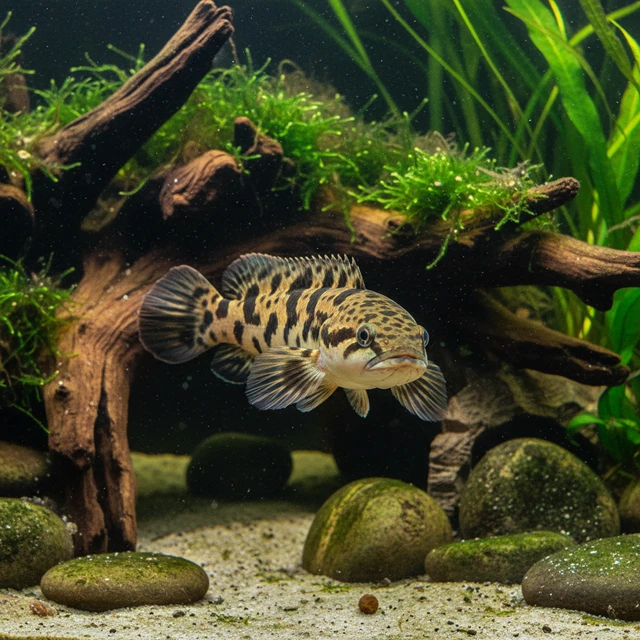
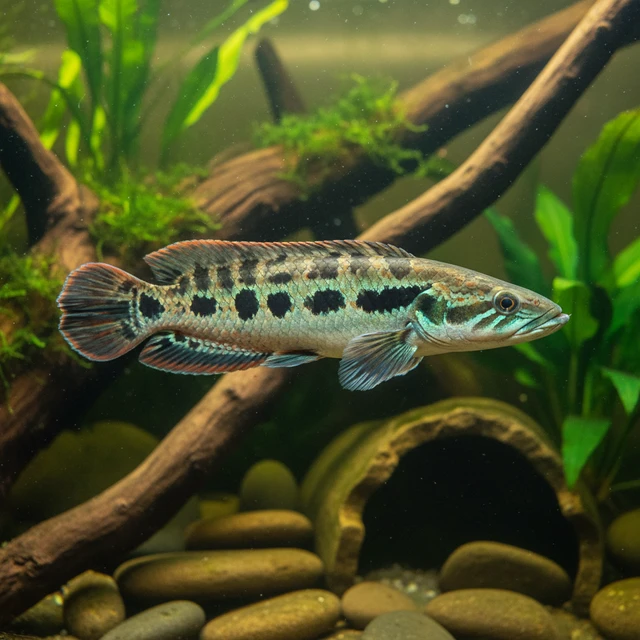
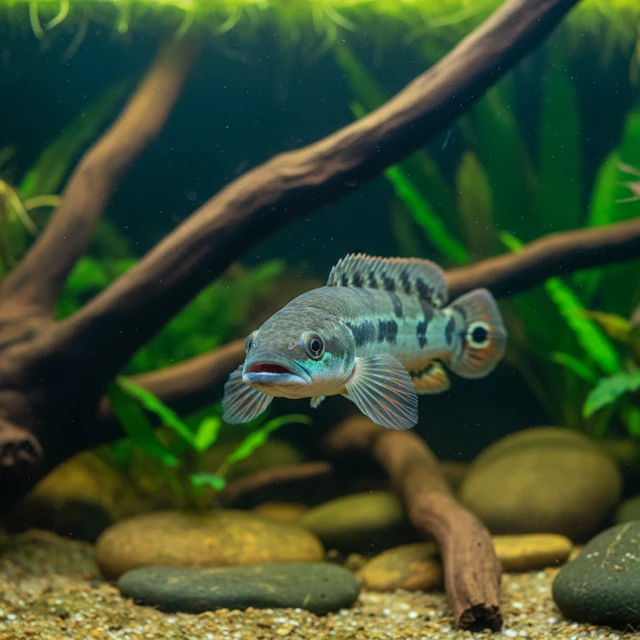
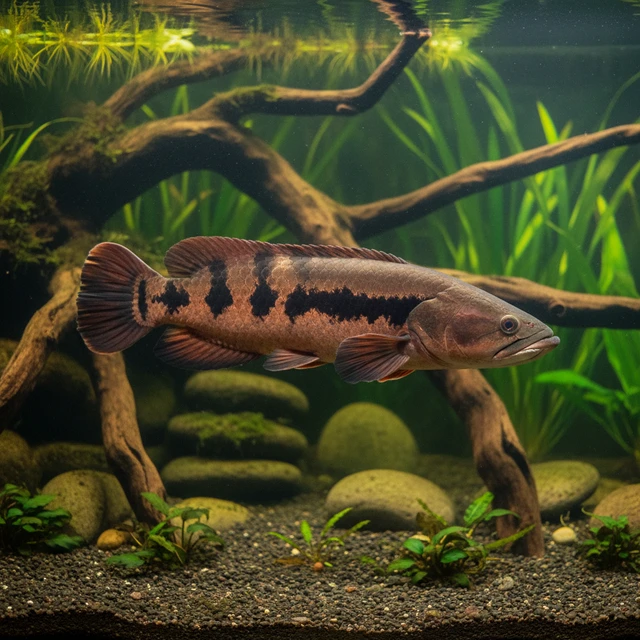
Channa lucius, commonly known as the Forest Snakehead, exhibits a robust, elongated, and cylindrical body that can reach a maximum adult size of approximately 15 inches (38 cm). The coloration is predominantly olive-brown, featuring a distinctive dark lateral stripe that runs along the length of the body, complemented by a mottled pattern that provides effective camouflage against the forest floor. This species possesses a large, predatory mouth equipped with sharp, conical teeth, adapted for grasping and holding onto slippery prey. Notably, the Forest Snakehead has an elongated dorsal fin that extends along much of its back, contributing to its streamlined shape, and an adipose fin that aids in maneuverability. The presence of a lateral line system enhances its ability to detect vibrations in the water, crucial for a predator. Sexual dimorphism is subtle, with males typically exhibiting slightly more vibrant coloration and larger fins during the breeding season. Defensive adaptations include its ability to breathe air, allowing it to survive in low-oxygen environments and evade potential predators.
Behavior & temperament
The Forest Snakehead is primarily a solitary and ambush predator, often dwelling in the benthic zone of slow-moving waters, such as swamps and flooded forests. It exhibits a highly territorial behavior, particularly during the breeding season when males establish dominance over specific areas. Breeding occurs through egg scattering, with females laying eggs in shallow nests, often hidden among vegetation. The species is known for its aggressive temperament, particularly towards conspecifics and other potential competitors, making it essential to provide ample space in captivity to minimize territorial disputes. Its behavior is characterized by stealthy movements and sudden bursts of speed to capture prey, reflecting its adaptation to a predatory lifestyle.
Diet & feeding
In the wild, the Forest Snakehead is a carnivorous predator that primarily feeds on smaller fish, amphibians, and invertebrates. In captivity, it requires a diet rich in high-quality protein sources, such as live or frozen foods including fish, shrimp, and worms, to maintain optimal health and growth.
Behind the name
Channa (from the Sanskrit 'chāna', meaning 'to shine or glimmer'); lucius (from Latin, meaning 'light' or 'bright', often associated with clarity or brightness).
Plan your tank
Check the numbers before you buy: tank volume, a stocking plan, cycle progress, water changes, and your ongoing care routine.
Keep reading

Choose compatible fish: school sizes, swimming zones, aggression, temperature and hardness matching, and honest bioload math for a peaceful community.
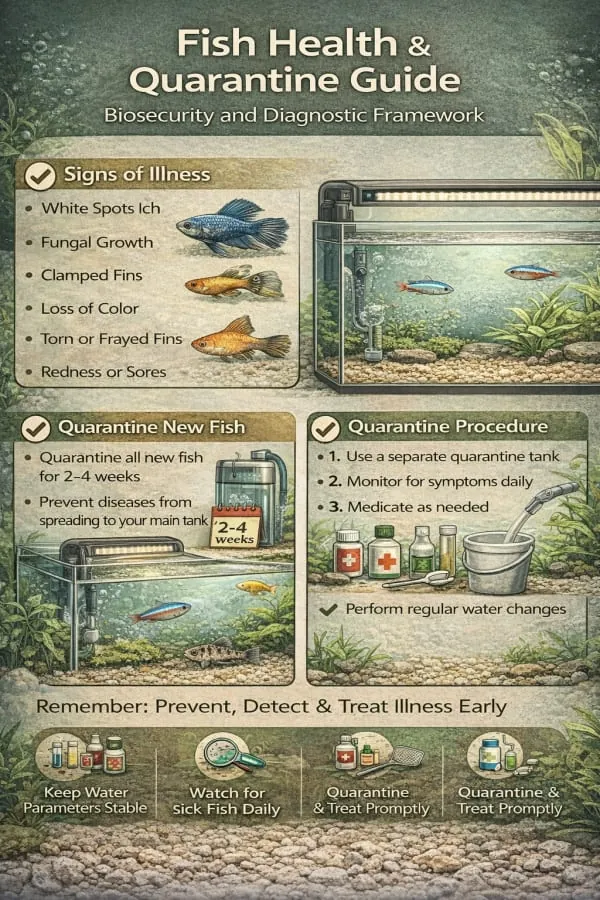
Quarantine new fish, spot the early warning signs, and treat disease without wrecking your tank. A practical freshwater fish health guide.
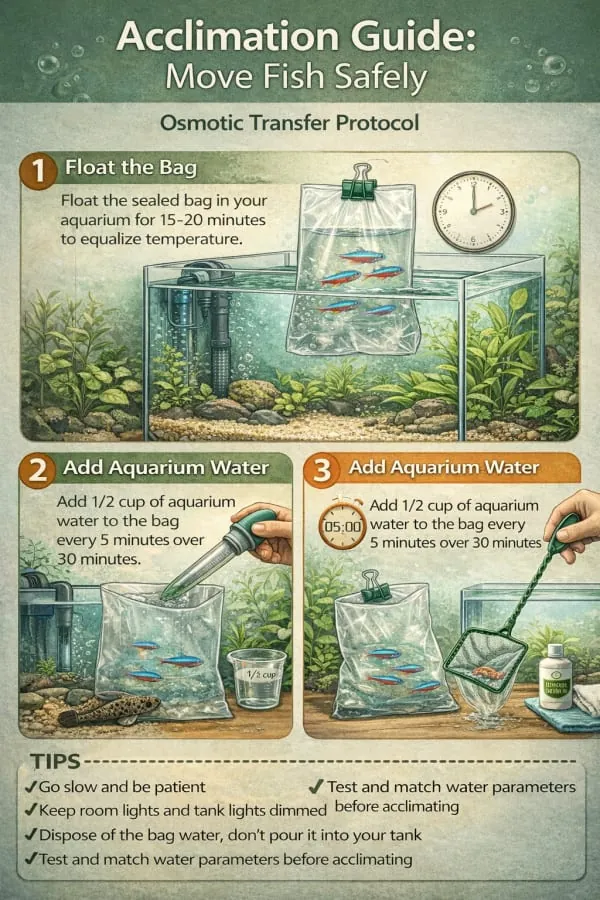
Acclimate new fish, shrimp, and coral safely: temperature floating, drip acclimation, plop-and-drop for shipped livestock, and the first 24 hours.
Keeping Forest Snakehead?
AquaLens identifies your fish and plants from a photo, tracks water chemistry, and flags health issues early — free on iOS and Android.