Peacock Snakehead Care Guide
Channa pulchra · Freshwater Fish
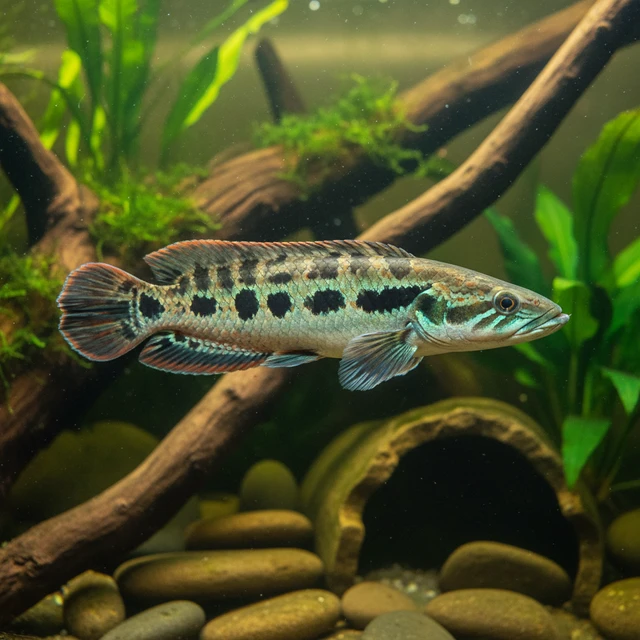
What Peacock Snakehead look like
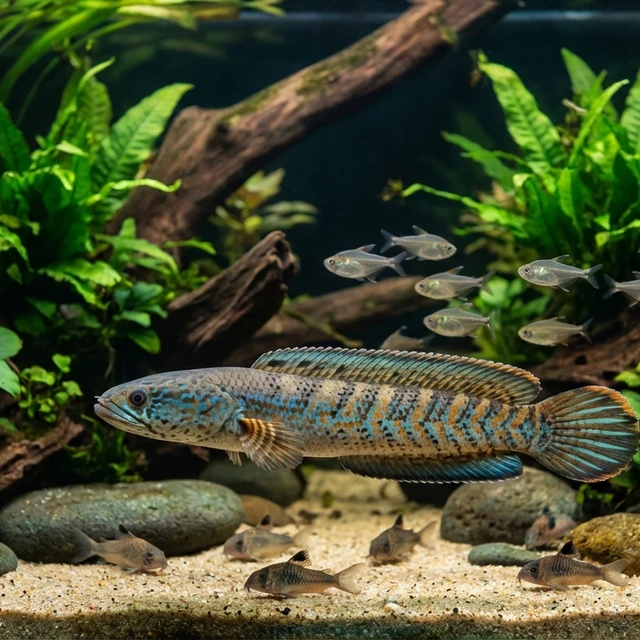
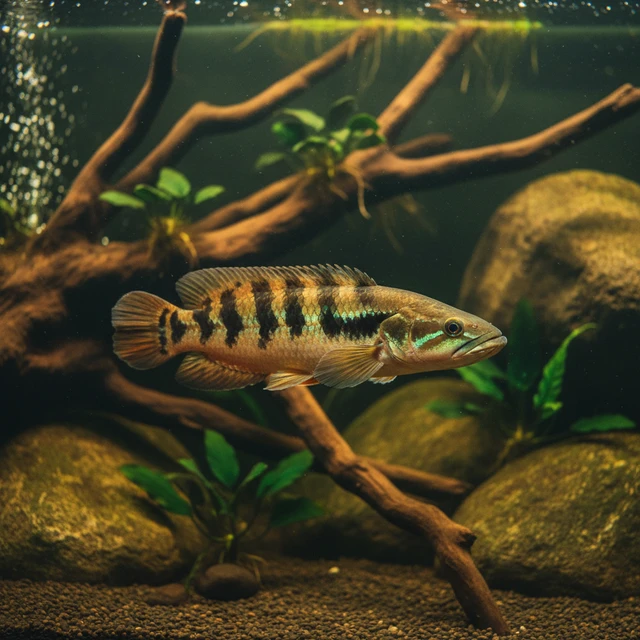
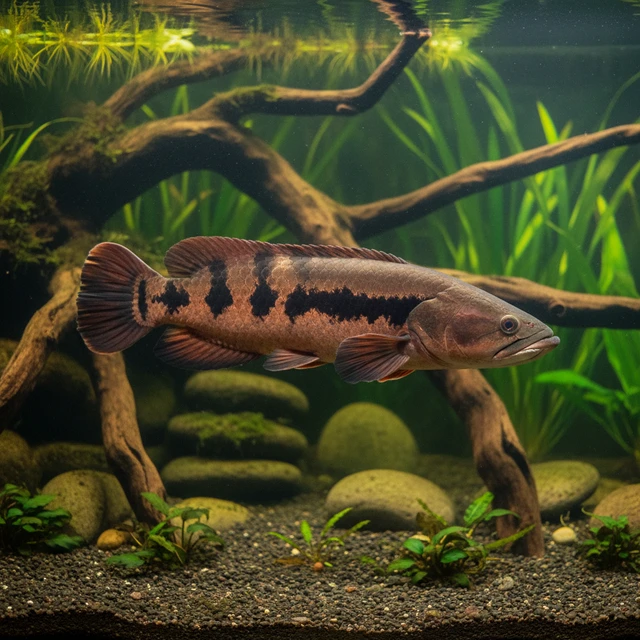
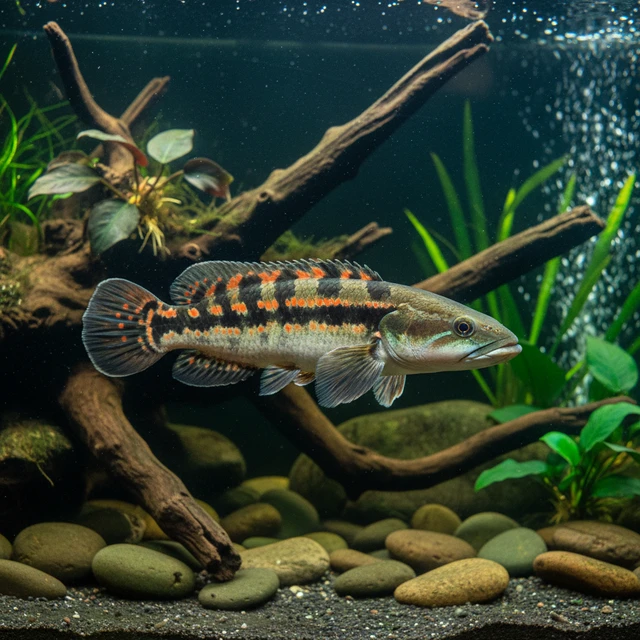
The Peacock Snakehead (Channa pulchra) exhibits a robust, cylindrical body that can reach a maximum adult size of approximately 15 inches, though individuals typically range from 8 to 12 inches. This species is characterized by its striking iridescent blue-green coloration, adorned with dark spots that resemble the plumage of a peacock, providing both camouflage and a display during mating rituals. Sexual dimorphism is subtle, with males generally exhibiting more vibrant coloration and larger fins compared to females. Notably, the species possesses a large, predatory mouth equipped with sharp, conical teeth, ideal for capturing prey. The presence of an adipose fin and a well-defined lateral line enhances its sensory perception in murky waters, while its ability to breathe air through a modified swim bladder allows it to thrive in low-oxygen environments. Defensive adaptations include its cryptic coloration and the potential for aggressive displays when threatened.
Behavior & temperament
The Peacock Snakehead is primarily a solitary and territorial species, often found dwelling in the benthic zone of freshwater habitats such as swamps, rivers, and lakes across Asia. It exhibits a predatory behavior, actively hunting smaller fish and invertebrates. During the breeding season, this species engages in a mouthbrooding reproductive strategy, where females lay eggs that are subsequently incubated in the male's mouth until they hatch. The temperament of Channa pulchra can be described as moderately aggressive, particularly towards conspecifics and other similarly sized fish, making it essential to provide ample space and hiding spots in captivity to reduce territorial disputes.
Diet & feeding
In the wild, the Peacock Snakehead is a carnivorous predator, primarily feeding on smaller fish, crustaceans, and aquatic invertebrates. In captivity, it requires a diet rich in protein, including high-quality pellets, live or frozen foods such as fish, shrimp, and worms to meet its nutritional needs.
Behind the name
Channa (from Sanskrit, meaning 'fish'); pulchra (Latin for 'beautiful').
Plan your tank
Check the numbers before you buy: tank volume, a stocking plan, cycle progress, water changes, and your ongoing care routine.
Keep reading
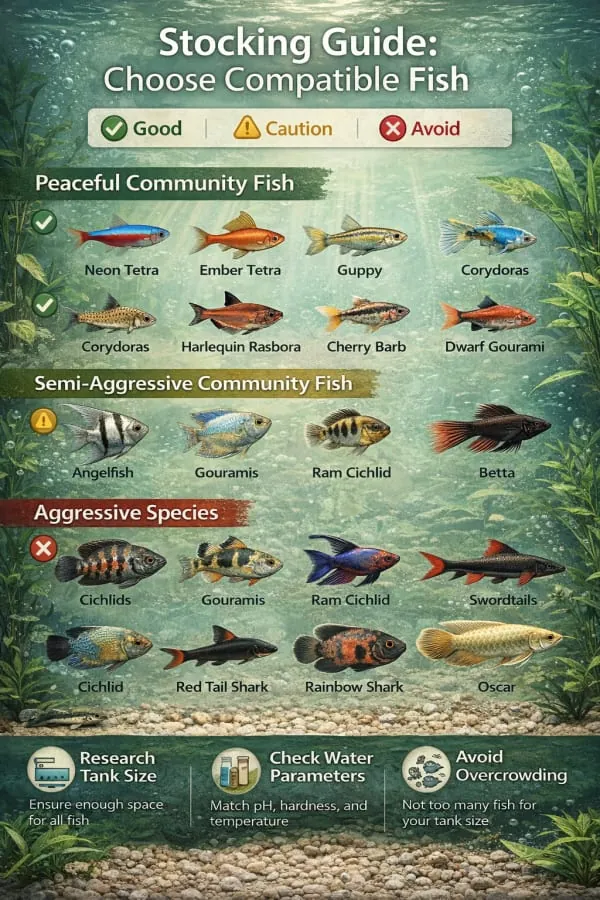
Choose compatible fish: school sizes, swimming zones, aggression, temperature and hardness matching, and honest bioload math for a peaceful community.
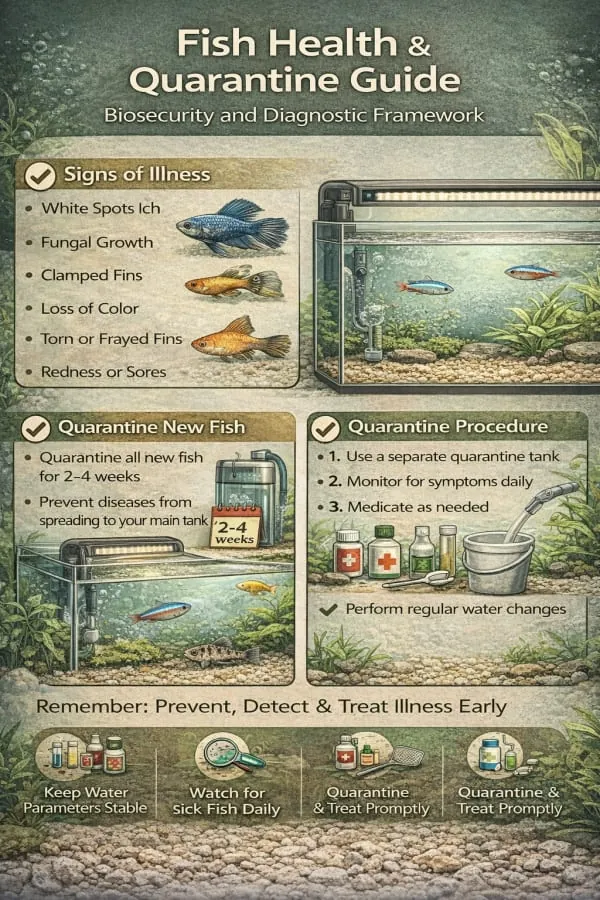
Quarantine new fish, spot the early warning signs, and treat disease without wrecking your tank. A practical freshwater fish health guide.
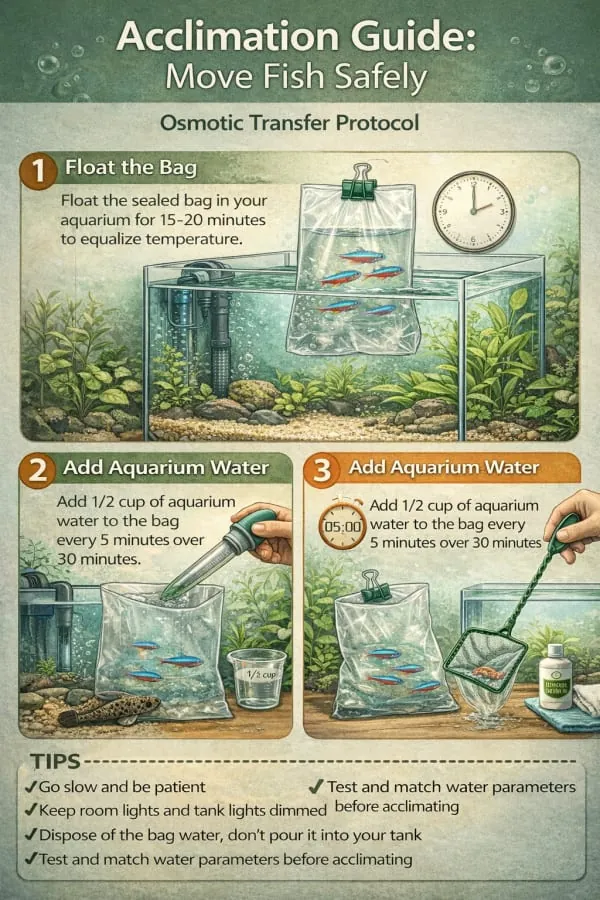
Acclimate new fish, shrimp, and coral safely: temperature floating, drip acclimation, plop-and-drop for shipped livestock, and the first 24 hours.
Keeping Peacock Snakehead?
AquaLens identifies your fish and plants from a photo, tracks water chemistry, and flags health issues early — free on iOS and Android.