Horned Nerite Care Guide
Clithon corona · Freshwater Invert
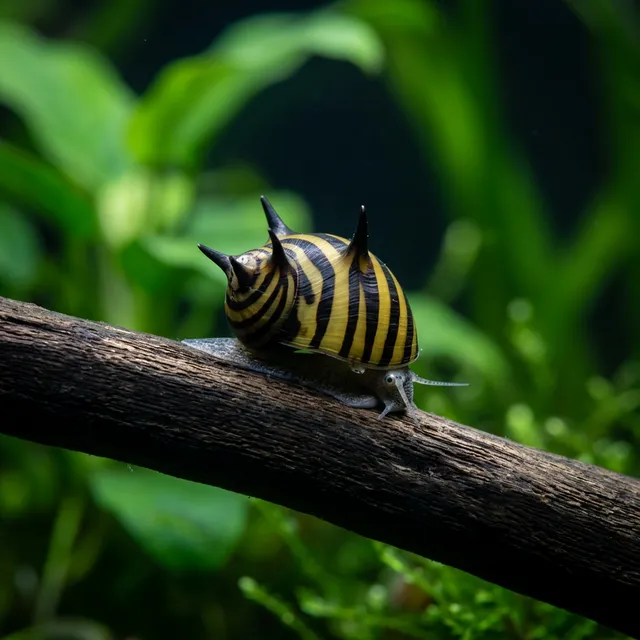
What Horned Nerite look like
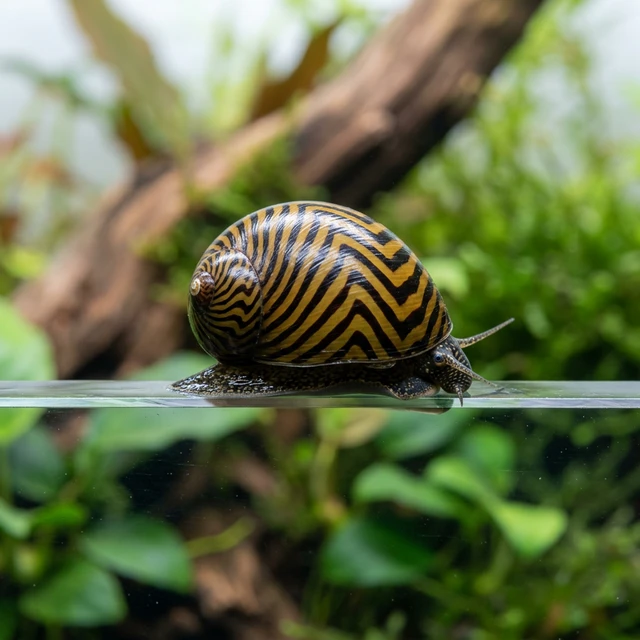
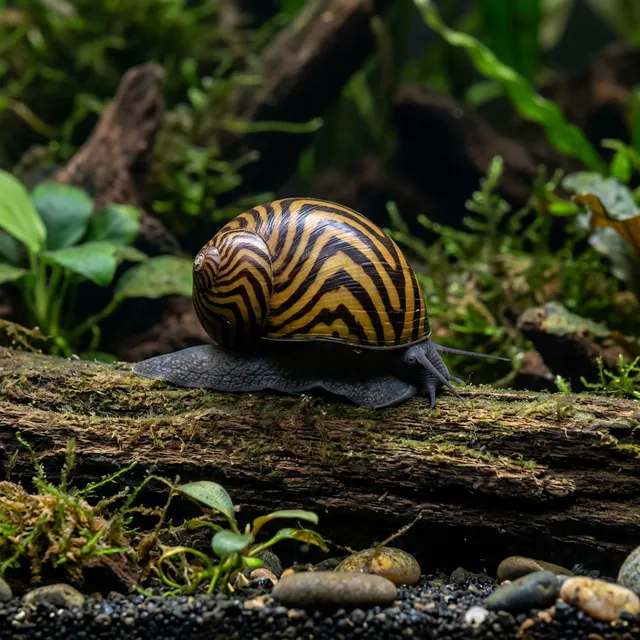
The Horned Nerite, scientifically known as Clithon corona, exhibits a distinctive morphology characterized by its tiny, round, and dome-shaped shell, which typically measures between 5 to 15 mm in diameter. The shell is adorned with striking yellow and black zebra-like stripes, providing a vivid contrast that enhances its visual appeal. A notable feature of this species is the presence of 3 to 6 prominent, sharp spikes or horns that protrude from the apex of the shell, serving as a defensive adaptation against potential predators. The shell's surface is textured, and the aperture is small, reflecting its adaptation to a benthic lifestyle. Its overall morphology is compact and robust, allowing it to navigate through various substrates while feeding on algae.
Behavior & temperament
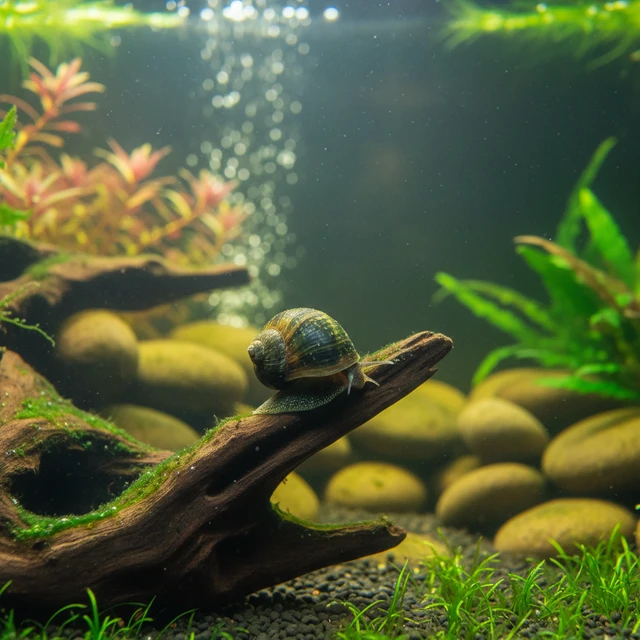
Clithon corona is primarily a solitary species, though it may be observed in small groups when foraging for food. It inhabits the benthic zone of freshwater environments, often found clinging to rocks and vegetation in slow-moving waters. The Horned Nerite exhibits a calm temperament, displaying minimal aggression towards tank mates. Breeding behavior in this species is not well-documented in captivity, as they are known to be egg scatterers in their natural habitat, laying eggs on hard surfaces. Their behavior is characterized by a slow, deliberate movement as they graze on algae, making them a peaceful addition to community aquariums.
Diet & feeding
In the wild, the Horned Nerite primarily feeds on algae, making it an obligate herbivore that requires a diet rich in plant matter. In captivity, they thrive on a varied diet that includes high-quality algae wafers, blanched vegetables, and spirulina-based foods to ensure optimal health and growth.
Behind the name
Clithon (from Greek 'klithon', meaning 'to incline or lean') and corona (Latin for 'crown'), referring to the crown-like appearance of the shell's horns.
Plan your tank
Check the numbers before you buy: tank volume, a stocking plan, cycle progress, water changes, and your ongoing care routine.
Keep reading

Choose compatible fish: school sizes, swimming zones, aggression, temperature and hardness matching, and honest bioload math for a peaceful community.
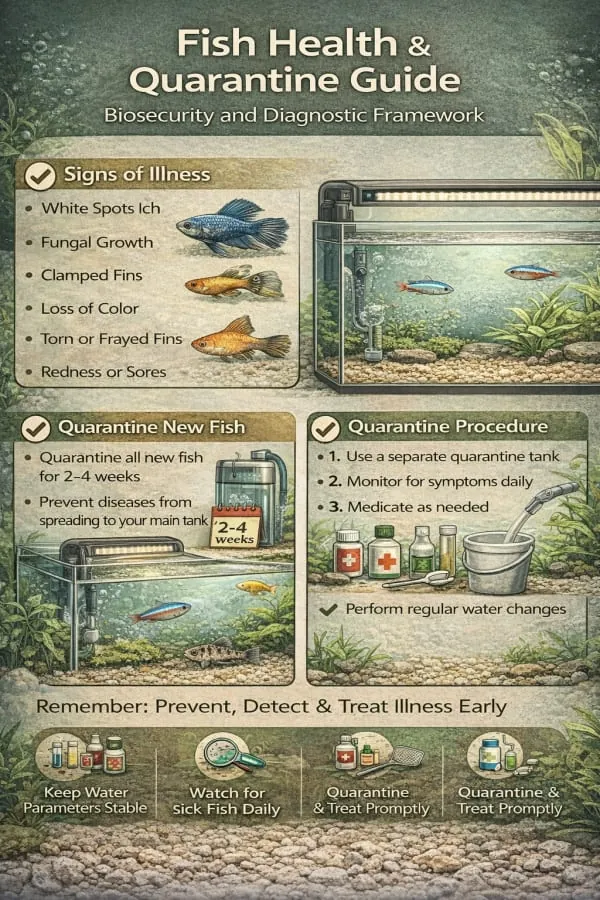
Quarantine new fish, spot the early warning signs, and treat disease without wrecking your tank. A practical freshwater fish health guide.

Acclimate new fish, shrimp, and coral safely: temperature floating, drip acclimation, plop-and-drop for shipped livestock, and the first 24 hours.
Keeping Horned Nerite?
AquaLens identifies your fish and plants from a photo, tracks water chemistry, and flags health issues early — free on iOS and Android.