Japanese Trapdoor Snail Care Guide
Viviparus malleatus · Freshwater Invert
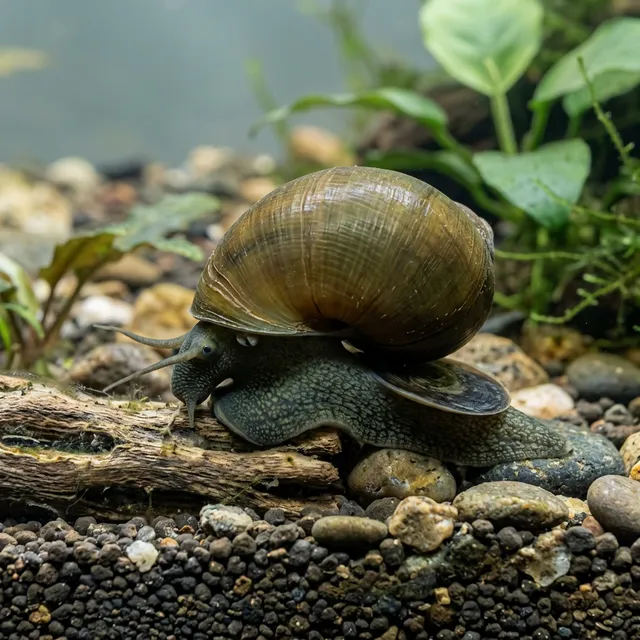
What Japanese Trapdoor Snail look like
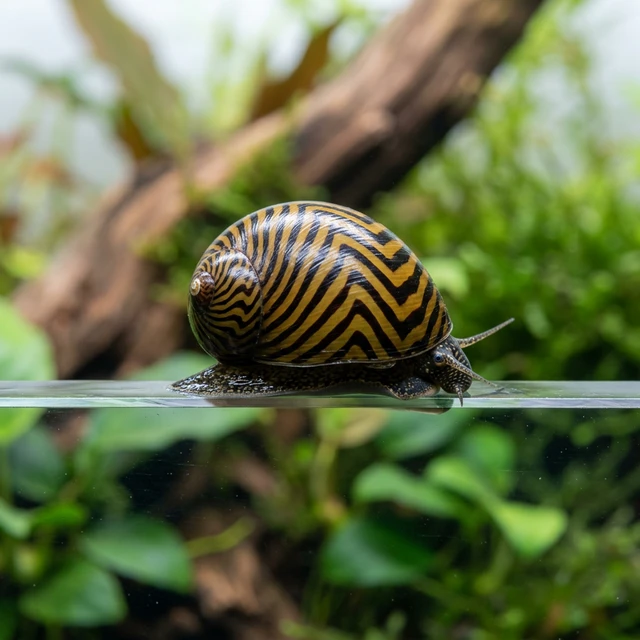
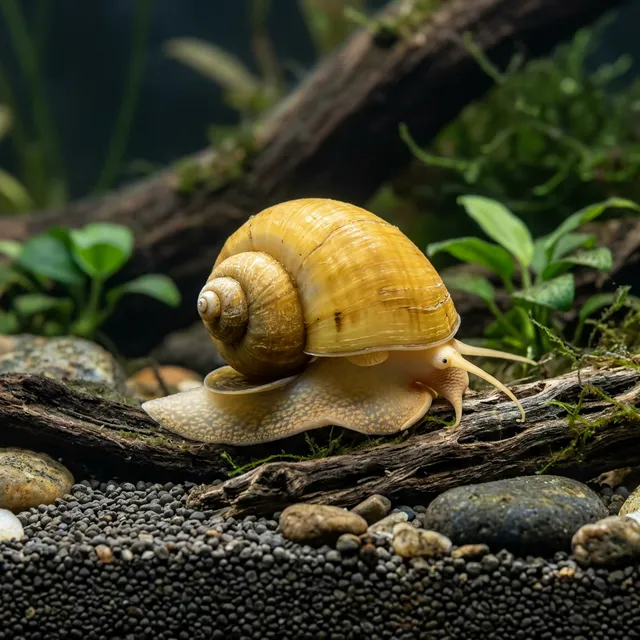
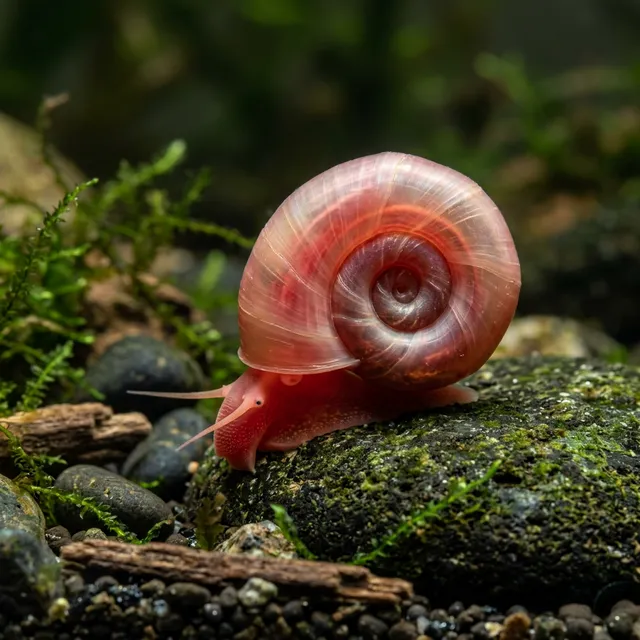
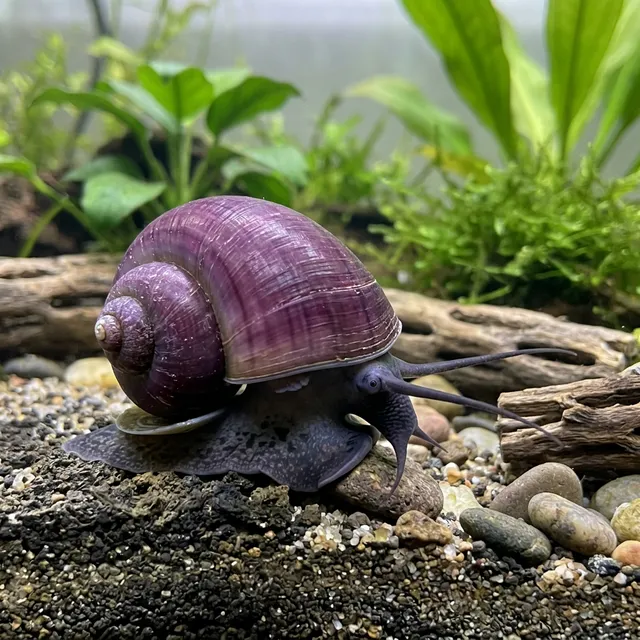
The Japanese Trapdoor Snail (Viviparus malleatus) exhibits a medium-sized, smooth, round-conical shell that typically measures between 1 to 2 inches in diameter. The shell coloration ranges from olive green to dark brown, characterized by smooth growth lines that lack ridges or spikes, providing a streamlined appearance. A notable feature is the solid operculum, or trap door, which allows for complete retraction of the soft body into the shell for protection against predation and desiccation. The body itself is dark gray-green, contrasting with the shell's earthy tones. This species does not exhibit sexual dimorphism, and its compact form differentiates it from more flamboyant species such as mystery snails. Defensive adaptations include its ability to retract fully into its shell and the presence of a robust operculum, which serves as a barrier against potential threats.
Behavior & temperament
Viviparus malleatus is primarily a benthic organism, dwelling on the substrate of freshwater habitats. It is generally solitary but can be found in loose aggregations, particularly in areas with abundant food sources. This species is not an obligate schooler and does not exhibit a strict social hierarchy. Breeding behavior is viviparous, with females giving birth to live young rather than laying eggs, which is a distinctive reproductive strategy among freshwater snails. The temperament of the Japanese Trapdoor Snail is generally peaceful, making it a suitable inhabitant for community aquariums. Its behavior is characterized by slow movement and a tendency to graze on algae and detritus on the substrate.
Diet & feeding
In the wild, the Japanese Trapdoor Snail is an omnivore, feeding on algae, decaying plant matter, and detritus. In captivity, it requires a varied diet that includes high-quality algae wafers, blanched vegetables, and occasional protein sources such as fish food or shrimp pellets to ensure optimal health.
Behind the name
Viviparus (live-bearing); malleatus (hammered or malleable, referring to the shell's shape).
Plan your tank
Check the numbers before you buy: tank volume, a stocking plan, cycle progress, water changes, and your ongoing care routine.
Keep reading

Choose compatible fish: school sizes, swimming zones, aggression, temperature and hardness matching, and honest bioload math for a peaceful community.

Quarantine new fish, spot the early warning signs, and treat disease without wrecking your tank. A practical freshwater fish health guide.

Acclimate new fish, shrimp, and coral safely: temperature floating, drip acclimation, plop-and-drop for shipped livestock, and the first 24 hours.
Keeping Japanese Trapdoor Snail?
AquaLens identifies your fish and plants from a photo, tracks water chemistry, and flags health issues early — free on iOS and Android.