Mystery Snail Care Guide
Pomacea bridgesii · Freshwater Invert
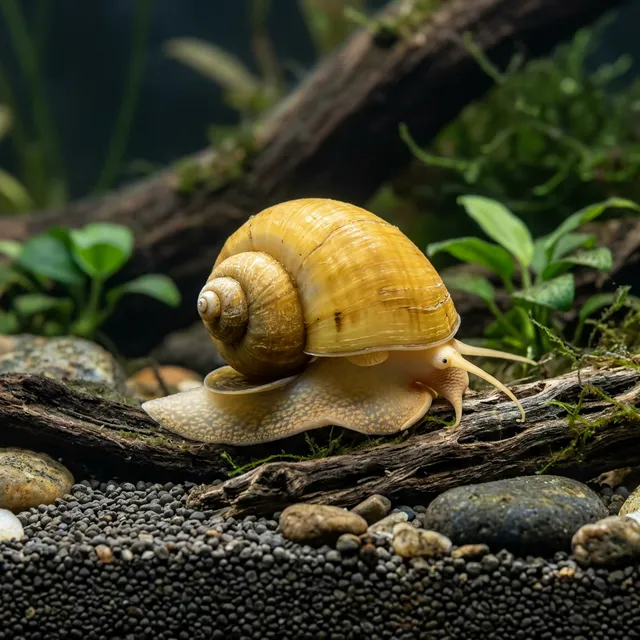
What Mystery Snail look like
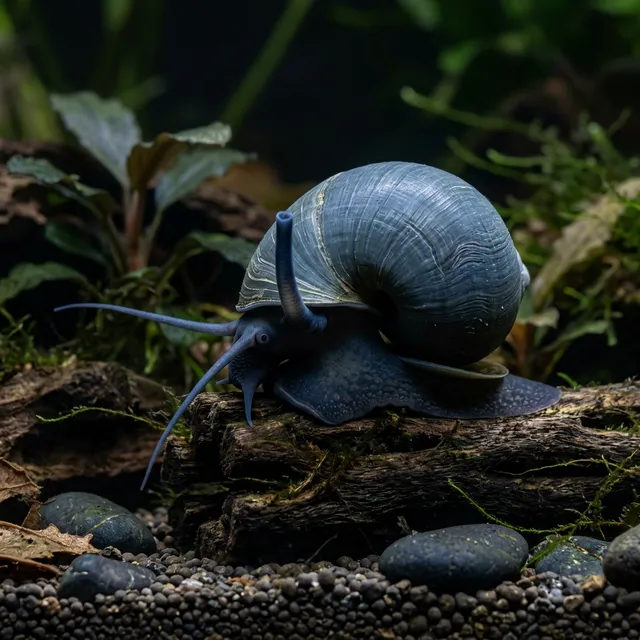
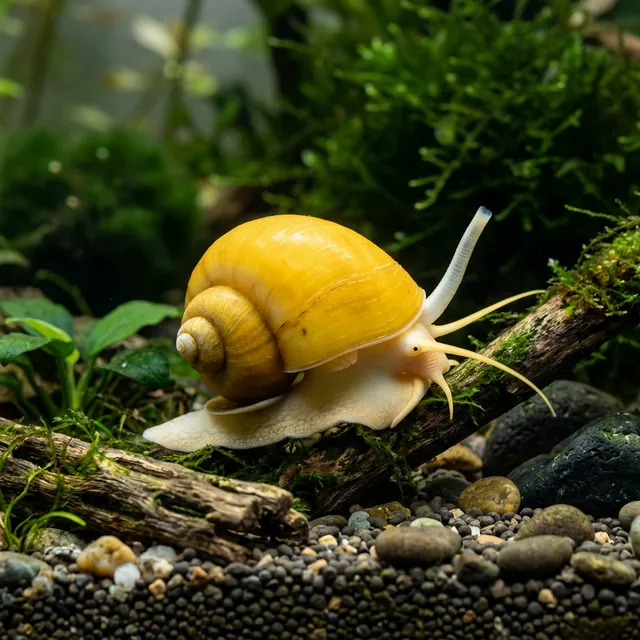
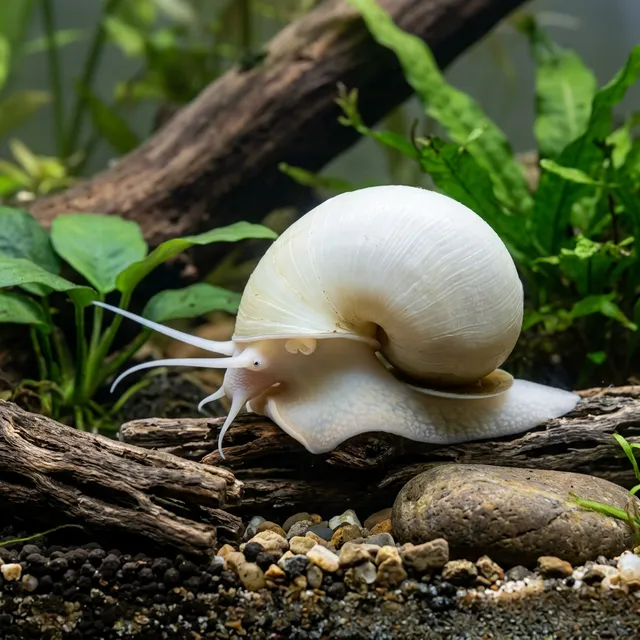
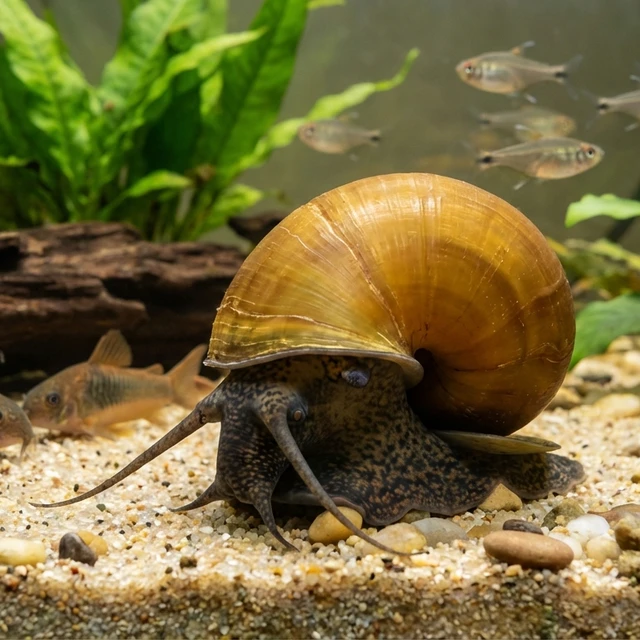
Pomacea bridgesii, commonly known as the Mystery Snail, exhibits a robust, coiled shell that can reach a maximum adult size of 5 to 15 centimeters in diameter. The shell is typically glossy and can vary in color from yellow to green, often adorned with dark spiral bands, which serve as a form of camouflage against predators. The body is soft and can range in color from pale yellow to dark brown, with a distinct foot that is broad and flattened, allowing for effective locomotion across substrates. Sexual dimorphism is subtle; females tend to be larger and more rounded than males, particularly when carrying eggs. A notable morphological feature is the presence of a respiratory siphon, which allows the snail to breathe air while submerged. Additionally, the shell's aperture is large, facilitating the snail's feeding habits, and the operculum serves as a defensive adaptation against desiccation and predation.
Behavior & temperament
Mystery Snails are primarily benthic dwellers, often found grazing on algae and detritus on the substrate. They exhibit a solitary lifestyle but can be observed in loose aggregations, particularly during feeding. These snails are not aggressive and display a calm temperament, making them suitable tank mates for a variety of species. Breeding behavior involves the laying of eggs above the waterline in clusters, which are typically bright pink or orange, indicating their reproductive strategy as egg scatterers. The young snails are independent from birth and descend into the water upon hatching, showcasing a high degree of adaptability to their environment.
Diet & feeding
In the wild, Pomacea bridgesii is an omnivorous scavenger, feeding on algae, decaying plant matter, and detritus. In captivity, they require a varied diet that includes high-quality algae wafers, blanched vegetables, and occasional protein sources such as shrimp or fish food to ensure optimal health.
Behind the name
Pomacea (from the Spanish 'pomace', meaning 'pulp' or 'mash'); bridgesii (named in honor of the American naturalist William H. Bridges).
Plan your tank
Check the numbers before you buy: tank volume, a stocking plan, cycle progress, water changes, and your ongoing care routine.
Keep reading

Choose compatible fish: school sizes, swimming zones, aggression, temperature and hardness matching, and honest bioload math for a peaceful community.

Quarantine new fish, spot the early warning signs, and treat disease without wrecking your tank. A practical freshwater fish health guide.

Acclimate new fish, shrimp, and coral safely: temperature floating, drip acclimation, plop-and-drop for shipped livestock, and the first 24 hours.
Keeping Mystery Snail?
AquaLens identifies your fish and plants from a photo, tracks water chemistry, and flags health issues early — free on iOS and Android.