Gold Mystery Snail Care Guide
Pomacea bridgesii var. Gold · Freshwater Invert
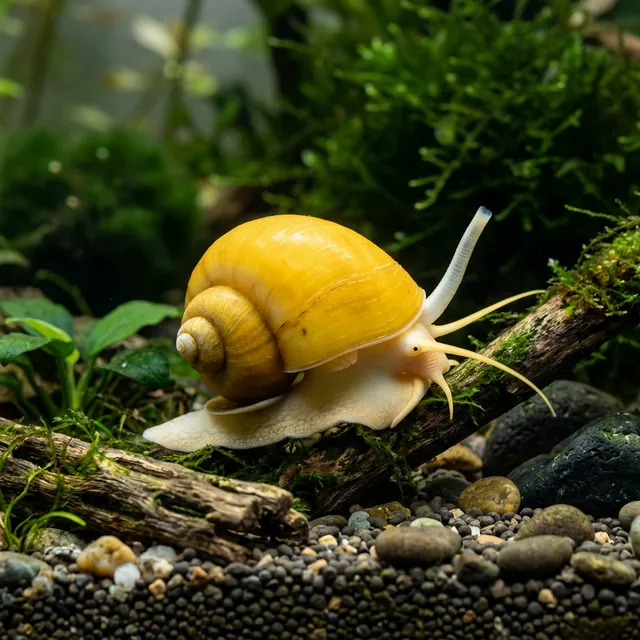
What Gold Mystery Snail look like
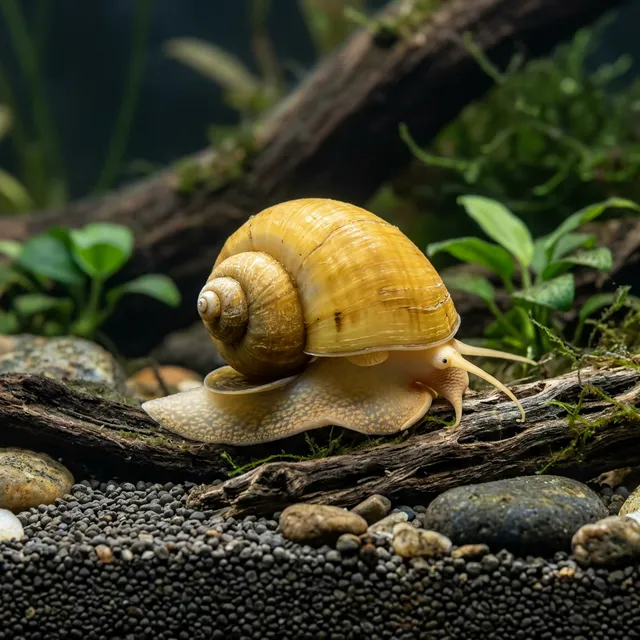
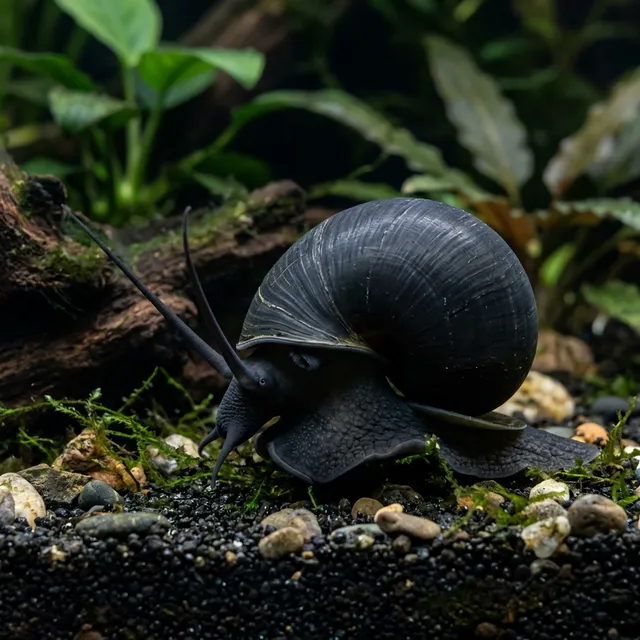
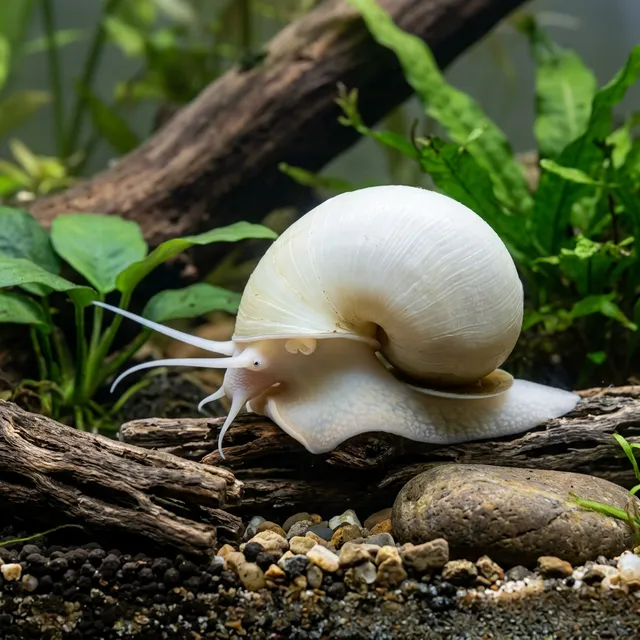
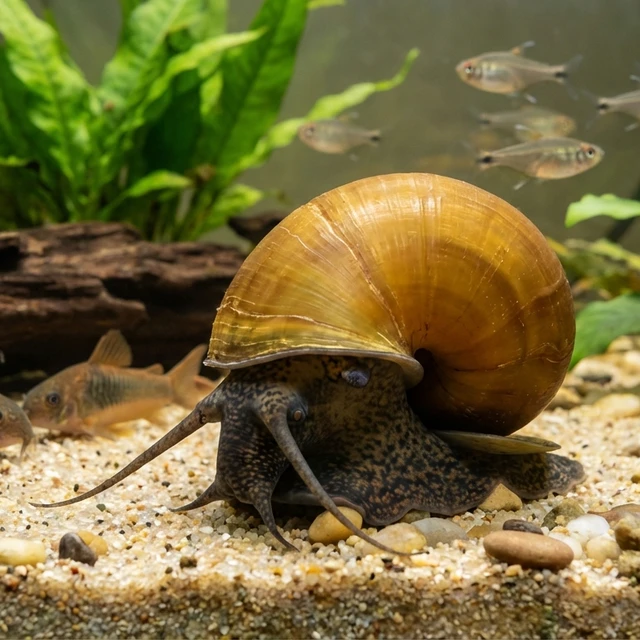
Pomacea bridgesii var. Gold, commonly known as the Gold Mystery Snail, exhibits a distinctive morphology characterized by a medium to large, globular shell that can reach a maximum adult size of approximately 5 inches in diameter. The shell is a vibrant golden-yellow hue, adorned with prominent growth spiral lines that enhance its visual appeal. The soft body, or foot, is creamy-white to pale yellow, providing a striking contrast to the shell. This species possesses two elongated sensory tentacles on its head, which are crucial for environmental sensing, alongside a visible siphon tube that aids in respiration. The operculum, a protective trap door, is observable when the snail retracts into its shell, serving as a defensive adaptation against predation. Unlike some other gastropods, the Gold Mystery Snail lacks significant sexual dimorphism, making it challenging to distinguish between males and females based solely on external features.
Behavior & temperament
Gold Mystery Snails are generally peaceful and exhibit a solitary to semi-social behavior, often found foraging alone or in small groups. They primarily inhabit the benthic zone of freshwater environments, where they graze on algae and detritus. These snails are not obligate schoolers but may occasionally congregate in areas with abundant food sources. Breeding behavior involves the laying of eggs above the waterline, where the female deposits bright pink egg masses that can contain hundreds of eggs. The temperament of the Gold Mystery Snail is typically calm, making them suitable for community tanks, although they may exhibit mild territoriality when competing for food resources.
Diet & feeding
In the wild, Gold Mystery Snails are omnivorous, feeding on algae, decaying plant matter, and detritus. In captivity, they require a varied diet that includes high-quality algae wafers, blanched vegetables, and occasional protein sources such as fish food or shrimp pellets to ensure optimal health and growth.
Behind the name
Pomacea (from Latin, meaning 'to eat') and bridgesii (named in honor of the American naturalist William H. Bridges).
Plan your tank
Check the numbers before you buy: tank volume, a stocking plan, cycle progress, water changes, and your ongoing care routine.
Keep reading
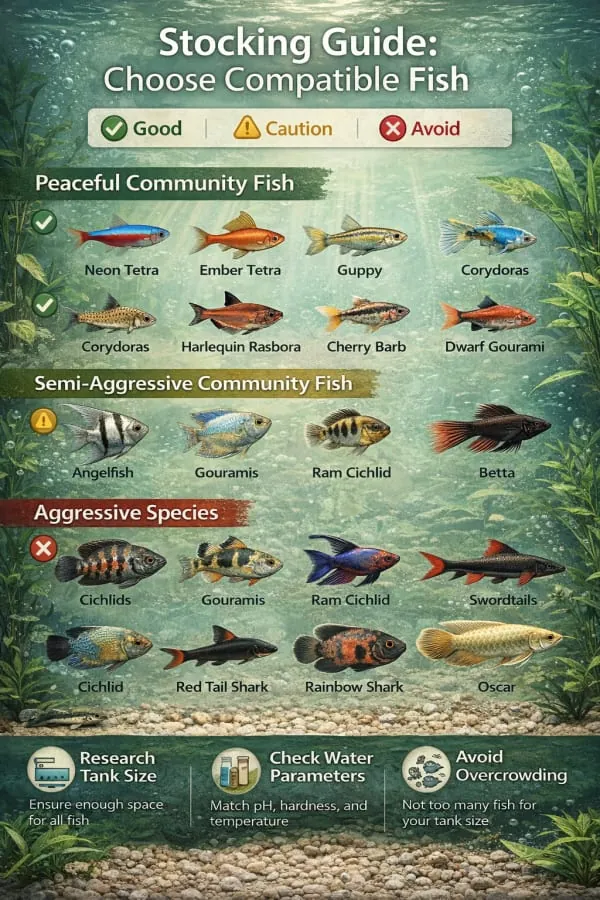
Choose compatible fish: school sizes, swimming zones, aggression, temperature and hardness matching, and honest bioload math for a peaceful community.
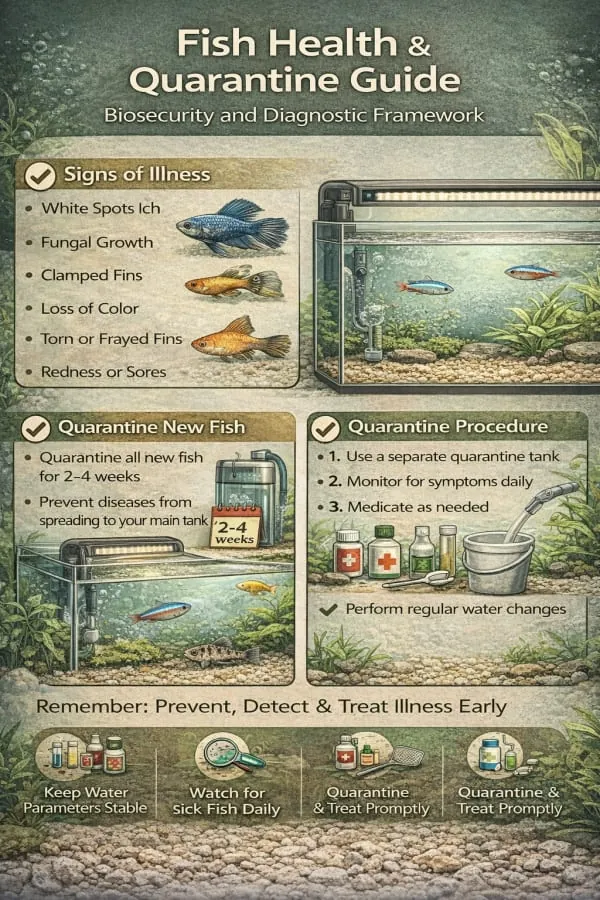
Quarantine new fish, spot the early warning signs, and treat disease without wrecking your tank. A practical freshwater fish health guide.
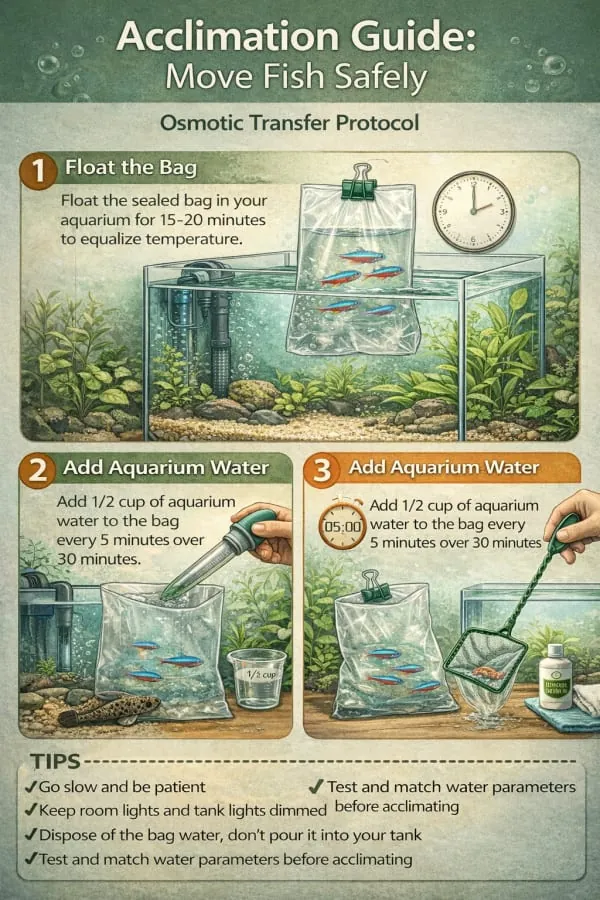
Acclimate new fish, shrimp, and coral safely: temperature floating, drip acclimation, plop-and-drop for shipped livestock, and the first 24 hours.
Keeping Gold Mystery Snail?
AquaLens identifies your fish and plants from a photo, tracks water chemistry, and flags health issues early — free on iOS and Android.