Black Mystery Snail Care Guide
Pomacea bridgesii var. Black · Freshwater Invert
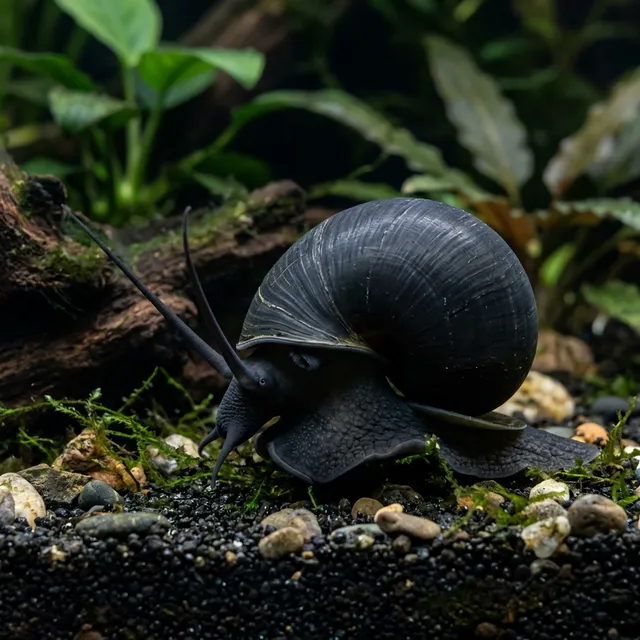
What Black Mystery Snail look like
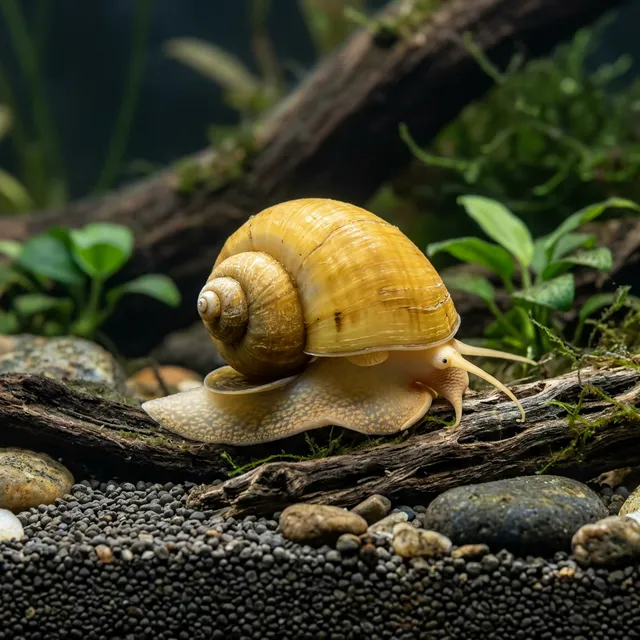
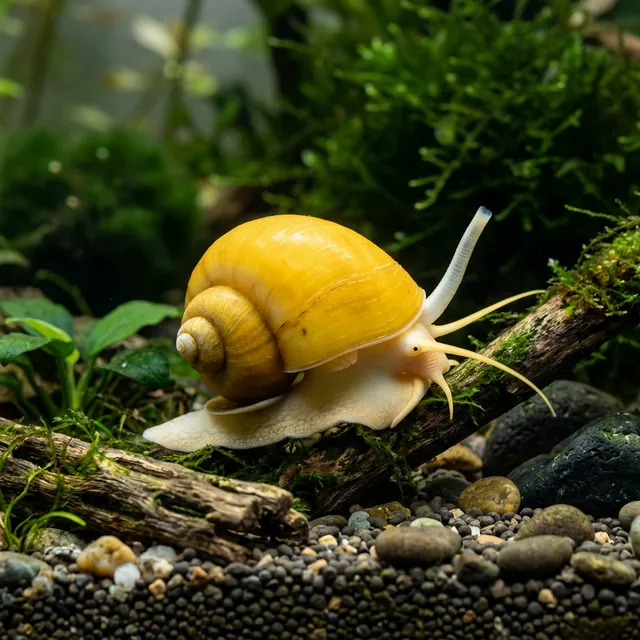
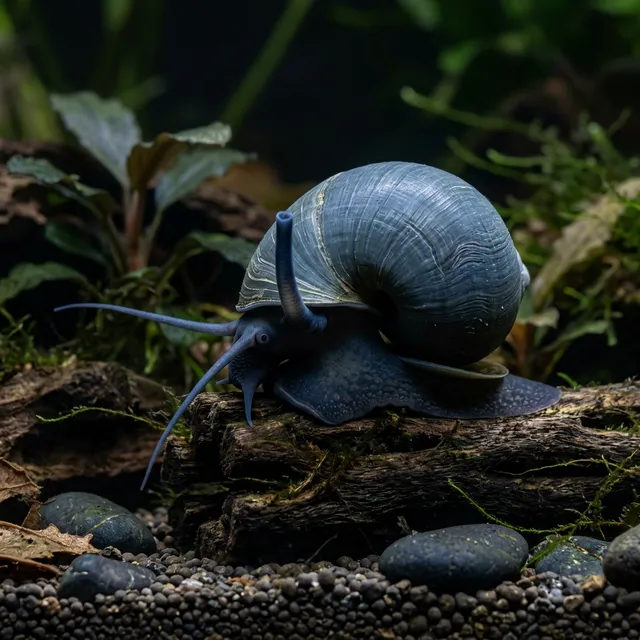
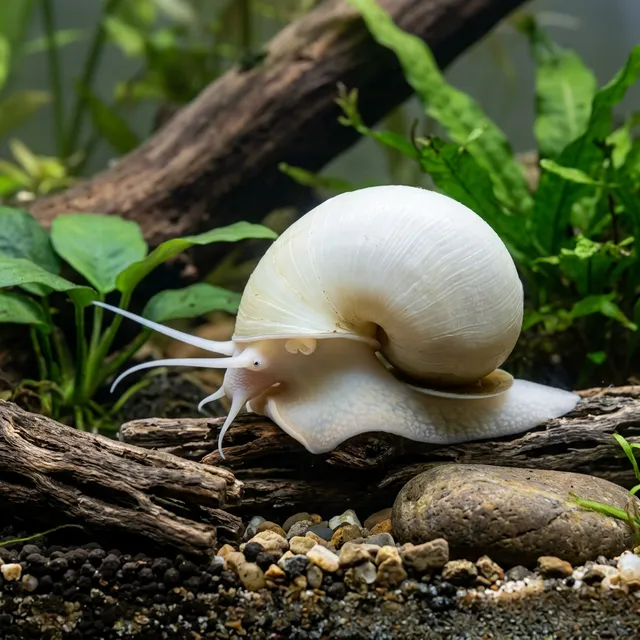
The Black Mystery Snail (Pomacea bridgesii var. Black) exhibits a robust, globular shell that typically ranges from 1.5 to 2 inches in diameter, characterized by a deep, solid black coloration. The shell surface displays subtle spiral growth lines, contributing to its aesthetic appeal in aquascapes. The body, comprising the foot and head, is a very dark gray to black, complementing the shell's hue. This species possesses the typical morphological features of the Ampullariidae family, including two prominent tentacles and a siphon that facilitates respiration. While sexual dimorphism is not pronounced, females may exhibit slightly larger sizes compared to males. Defensive adaptations include the ability to retract into its shell to avoid predation. The overall morphology of this snail contributes to its effectiveness as a scavenger in freshwater ecosystems.
Behavior & temperament
The Black Mystery Snail is primarily a solitary organism but can be found in loose aggregations, particularly in areas rich in food sources. It typically inhabits the benthic zone of freshwater environments, where it forages for detritus and algae. Breeding behavior involves egg-laying above the waterline, where females deposit clusters of bright pink eggs, which are then left to develop independently. This species exhibits a calm temperament, making it suitable for community tanks, though it may become territorial over food resources. Its behavior includes grazing on surfaces and occasionally surfacing for air, utilizing its siphon for respiration.
Diet & feeding
In the wild, the Black Mystery Snail is an omnivore, feeding on algae, decaying plant matter, and detritus. In captivity, it thrives on a varied diet that includes algae wafers, blanched vegetables, and high-quality sinking pellets to ensure proper nutrition.
Behind the name
Pomacea (from the Spanish word for 'apple', referring to the apple snail's shape); bridgesii (named in honor of the naturalist William Bridges).
Plan your tank
Check the numbers before you buy: tank volume, a stocking plan, cycle progress, water changes, and your ongoing care routine.
Keep reading
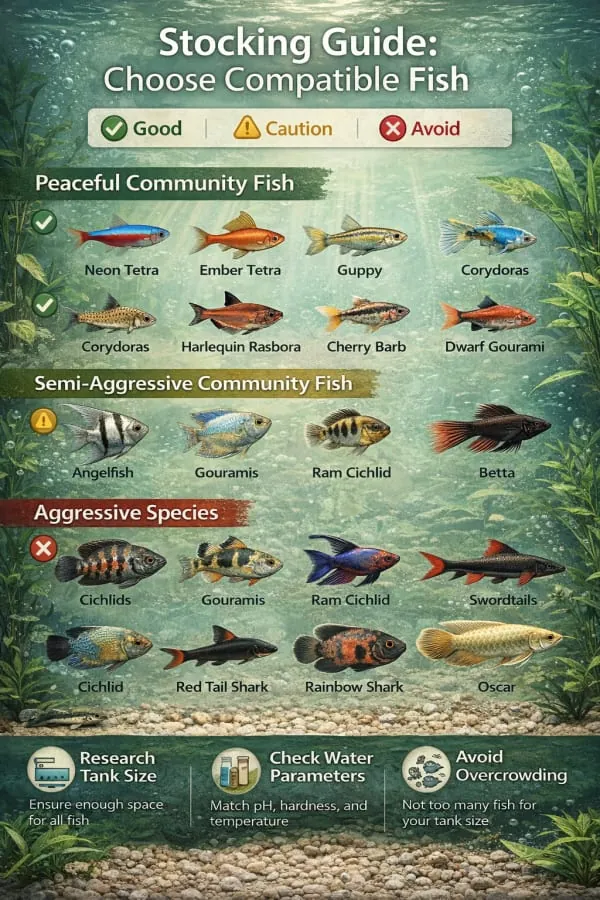
Choose compatible fish: school sizes, swimming zones, aggression, temperature and hardness matching, and honest bioload math for a peaceful community.
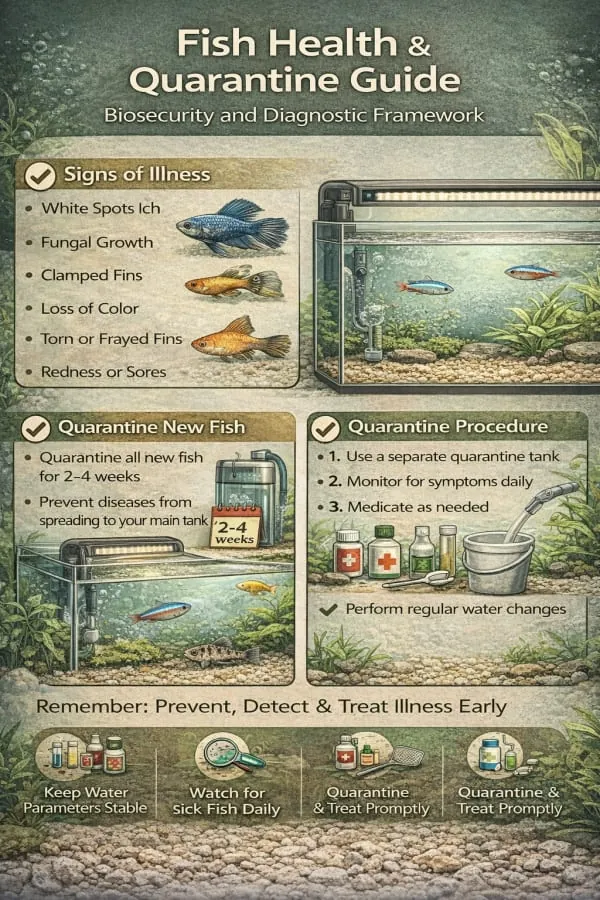
Quarantine new fish, spot the early warning signs, and treat disease without wrecking your tank. A practical freshwater fish health guide.
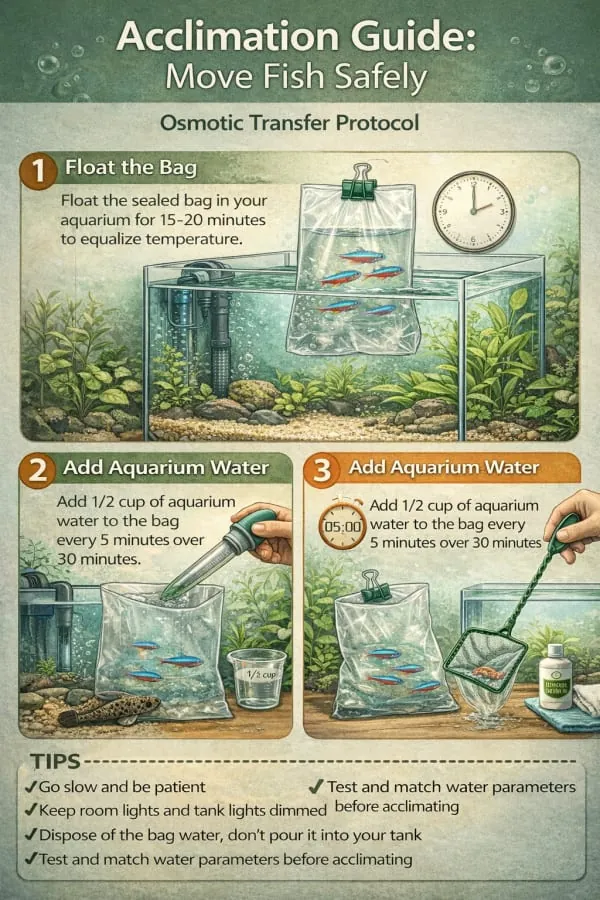
Acclimate new fish, shrimp, and coral safely: temperature floating, drip acclimation, plop-and-drop for shipped livestock, and the first 24 hours.
Keeping Black Mystery Snail?
AquaLens identifies your fish and plants from a photo, tracks water chemistry, and flags health issues early — free on iOS and Android.