Leopard Cactus Plecostomus Care Guide
Pseudacanthicus leopardus · Freshwater Fish
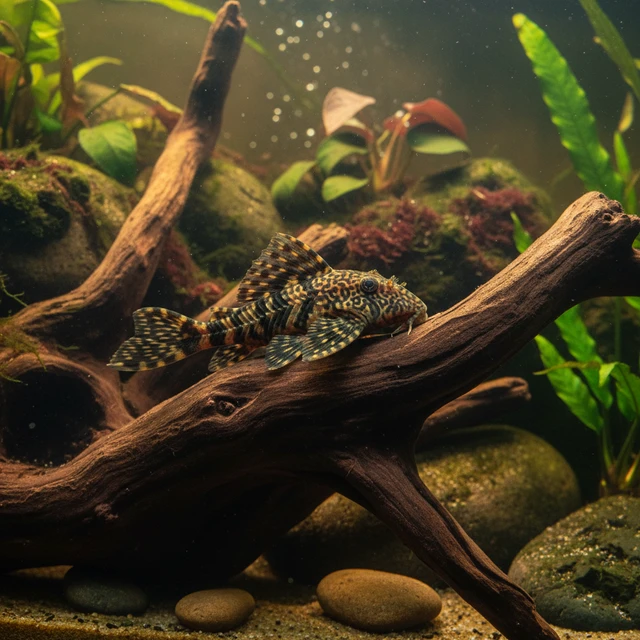
What Leopard Cactus Plecostomus look like
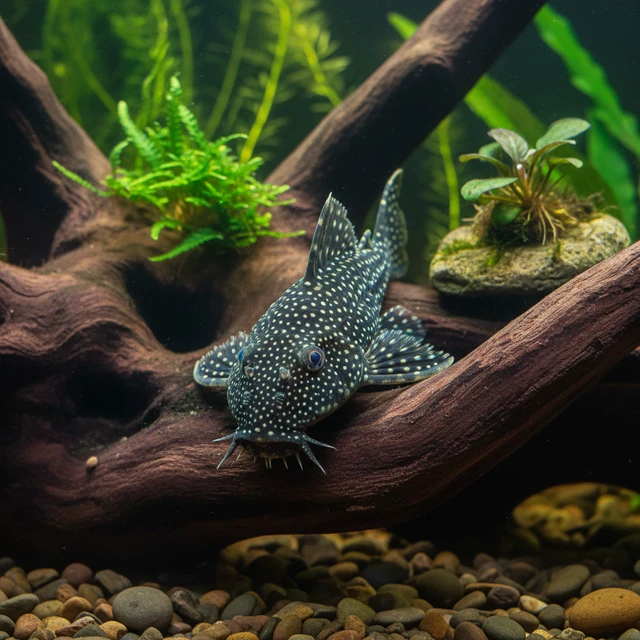
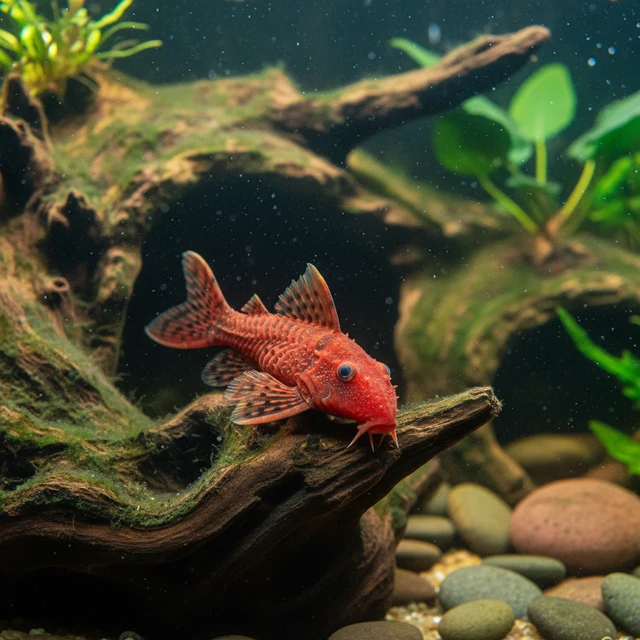
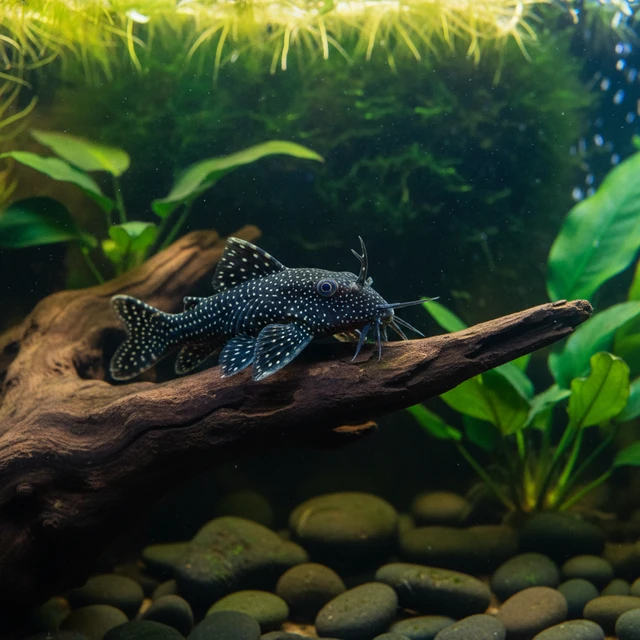
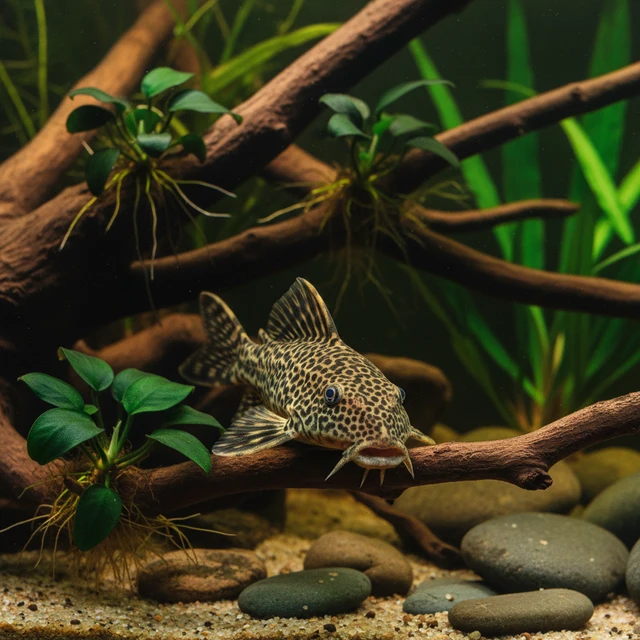
The Leopard Cactus Plecostomus (Pseudacanthicus leopardus) exhibits a robust and imposing morphology, reaching a maximum adult size of 10-12 inches (25-30 cm). This species is characterized by a laterally compressed, fusiform body covered in a dark brown to black base coloration adorned with large, pale tan spots that create a striking leopard-like pattern. Notably, the body is heavily armored with prominent spiny odontodes (thorns) that are distributed across the head, body, and fins, providing effective defensive adaptations against potential predators. The head is broad and flattened, with a wide mouth adapted for scraping algae from surfaces, and the dentition consists of specialized, flat teeth suited for its herbivorous diet. The caudal fin is well-developed, aiding in propulsion, while the presence of an adipose fin contributes to its streamlined shape. The overall appearance of this species is that of an armored spiny tank, distinguishing it from smoother-bodied plecos.
Behavior & temperament
Inhabiting the benthic zone of slow-moving rivers and streams in Brazil, the Leopard Cactus Plecostomus is primarily a solitary fish, although it may exhibit some social behaviors in larger aquaria. It tends to establish a hierarchical structure when kept in groups, with dominant individuals displaying territoriality over preferred hiding spots. This species is primarily nocturnal, exhibiting increased activity during the night when it forages for food. Breeding behavior in captivity is not well-documented, but it is believed to be an egg scatterer, laying adhesive eggs in hidden crevices. The temperament of the Leopard Cactus Plecostomus can be described as semi-aggressive, particularly towards conspecifics or other bottom-dwelling species, necessitating ample space and hiding places in the aquarium.
Diet & feeding
In the wild, the Leopard Cactus Plecostomus is an omnivore, primarily feeding on algae, detritus, and small invertebrates. In captivity, it requires a varied diet that includes high-quality sinking pellets, algae wafers, and occasional protein sources such as blanched vegetables and frozen or live foods.
Behind the name
Pseudacanthicus (false thorn); leopardus (leopard-like, referring to its spotted coloration).
Plan your tank
Check the numbers before you buy: tank volume, a stocking plan, cycle progress, water changes, and your ongoing care routine.
Keep reading

Choose compatible fish: school sizes, swimming zones, aggression, temperature and hardness matching, and honest bioload math for a peaceful community.
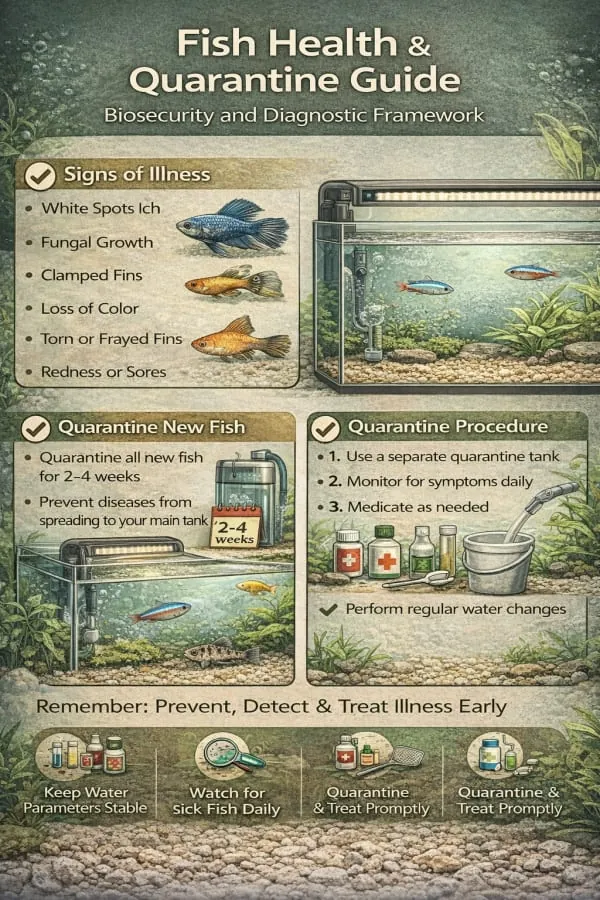
Quarantine new fish, spot the early warning signs, and treat disease without wrecking your tank. A practical freshwater fish health guide.
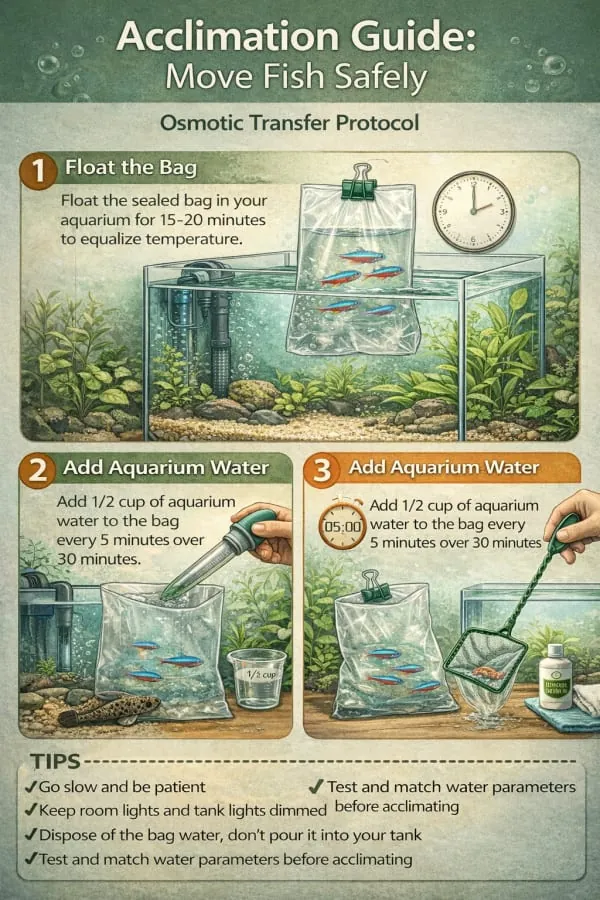
Acclimate new fish, shrimp, and coral safely: temperature floating, drip acclimation, plop-and-drop for shipped livestock, and the first 24 hours.
Keeping Leopard Cactus Plecostomus?
AquaLens identifies your fish and plants from a photo, tracks water chemistry, and flags health issues early — free on iOS and Android.