Starlight Bristlenose Plecostomus Care Guide
Ancistrus dolichopterus · Freshwater Fish
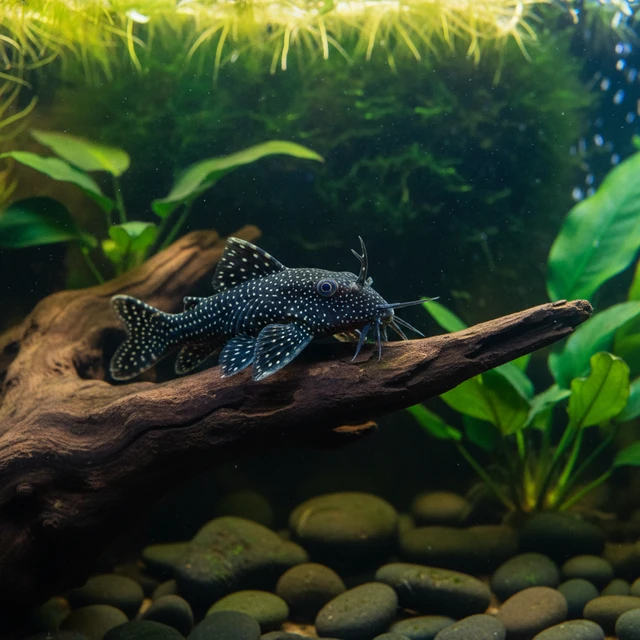
What Starlight Bristlenose Plecostomus look like
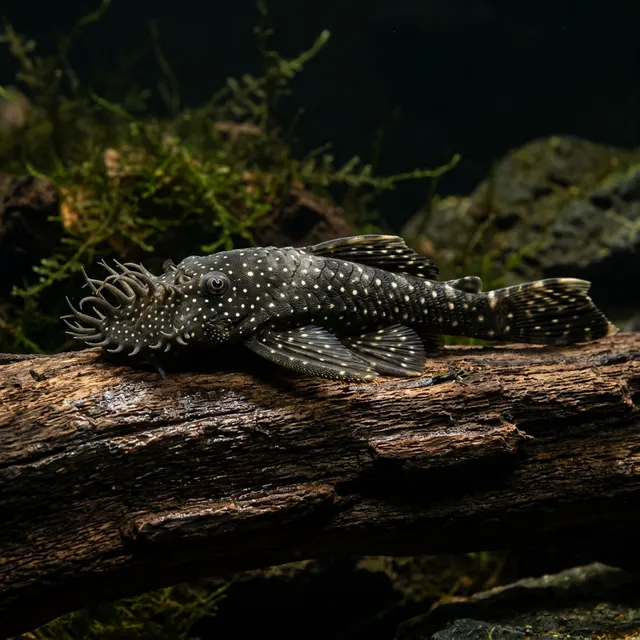
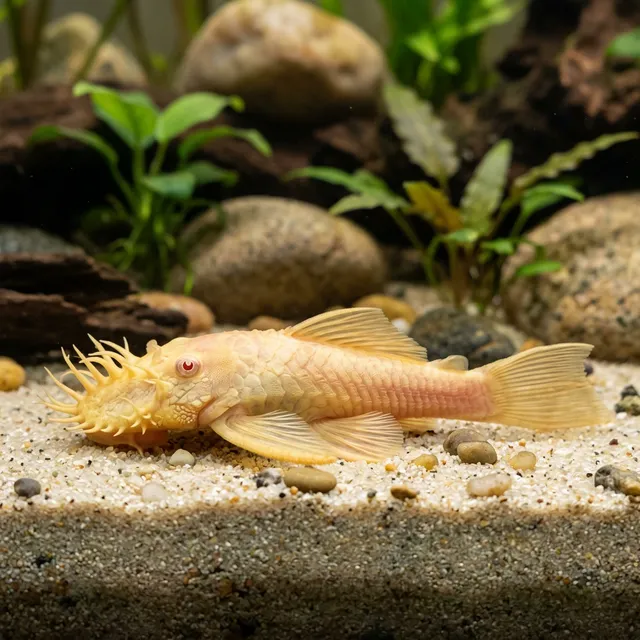
The Starlight Bristlenose Plecostomus (Ancistrus dolichopterus) exhibits a medium-sized, fusiform body that typically reaches a maximum adult size of 4-5 inches. The species is characterized by a dark black-brown body densely adorned with small, bright white star-like spots, creating a striking contrast reminiscent of a starry night sky. Males are distinguished by the development of prominent, bushy, tentacle-like bristles on their snouts, which serve as secondary sexual characteristics during mating rituals. The species possesses a well-developed, flattened ventral surface adapted for grazing on algae, and features a robust, broad head with a wide mouth equipped with specialized dentition for scraping. Additionally, the presence of a lateral line system enhances its sensory perception in the aquatic environment, while the adipose fin contributes to its streamlined swimming capabilities.
Behavior & temperament
The Starlight Bristlenose Plecostomus is primarily a benthic species, often found dwelling on the substrate of slow-moving rivers and streams in its native South American habitat. It exhibits a solitary to semi-social behavior, where individuals may occasionally be seen in loose aggregations, particularly in areas rich in food resources. This species is known for its peaceful temperament, making it an ideal tank mate for community aquariums. During breeding, males establish territories and engage in courtship displays, leading to the female laying eggs in secluded areas, where the male subsequently guards and aerates the clutch. The Starlight Bristlenose is not known for aggressive behavior, although males may exhibit territoriality during the breeding season.
Diet & feeding
In the wild, the Starlight Bristlenose Plecostomus primarily feeds on algae, detritus, and biofilm, making it an obligate herbivore. In captivity, it requires a diet rich in plant matter, including high-quality algae wafers, spirulina, and blanched vegetables such as zucchini and cucumber to maintain optimal health.
Behind the name
Ancistrus (from Greek, meaning 'hooked' or 'clawed'); dolichopterus (from Greek, 'dolichos' meaning 'long' and 'pteron' meaning 'fin').
Plan your tank
Check the numbers before you buy: tank volume, a stocking plan, cycle progress, water changes, and your ongoing care routine.
Keep reading

Choose compatible fish: school sizes, swimming zones, aggression, temperature and hardness matching, and honest bioload math for a peaceful community.
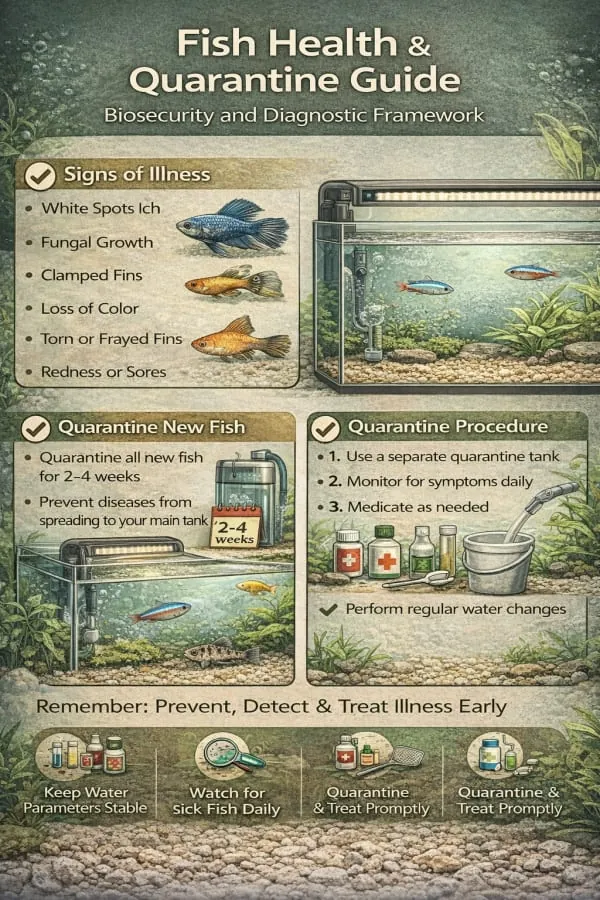
Quarantine new fish, spot the early warning signs, and treat disease without wrecking your tank. A practical freshwater fish health guide.
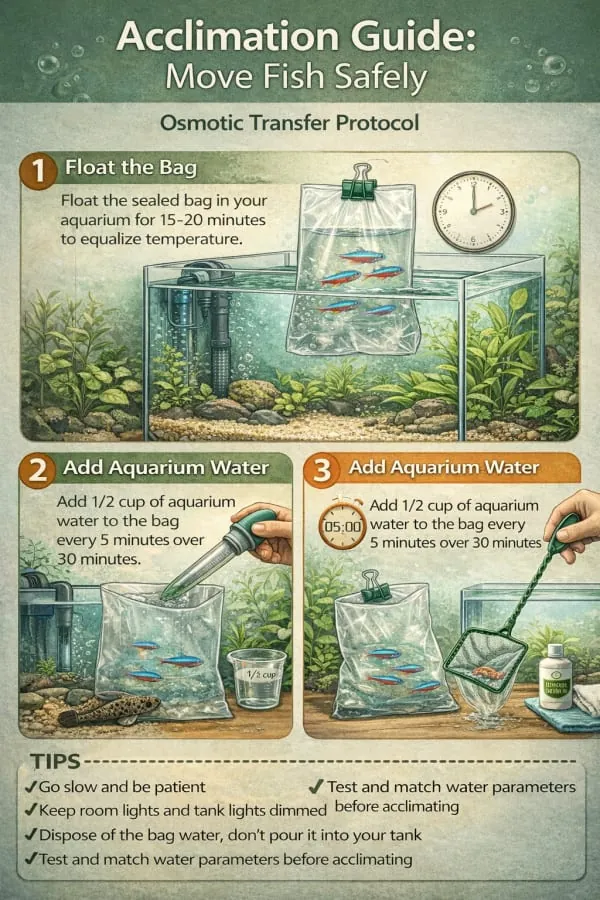
Acclimate new fish, shrimp, and coral safely: temperature floating, drip acclimation, plop-and-drop for shipped livestock, and the first 24 hours.
Keeping Starlight Bristlenose Plecostomus?
AquaLens identifies your fish and plants from a photo, tracks water chemistry, and flags health issues early — free on iOS and Android.