Royal Whiptail Calico Care Guide
Sturisoma panamense · Freshwater Fish
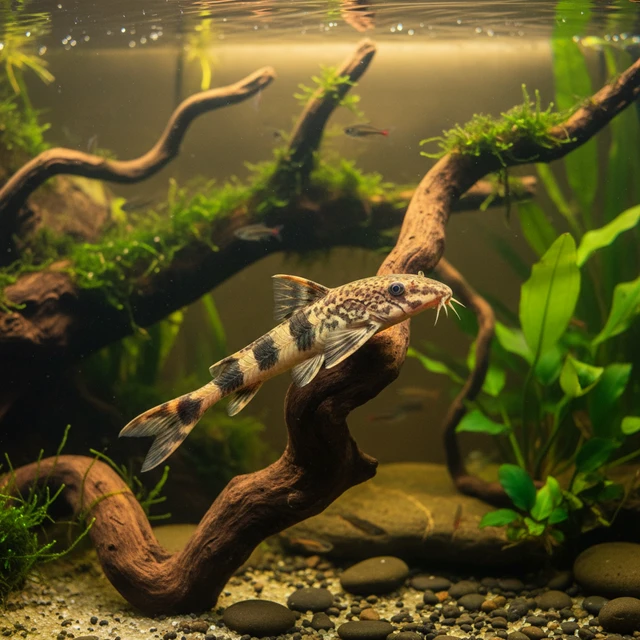
What Royal Whiptail Calico look like
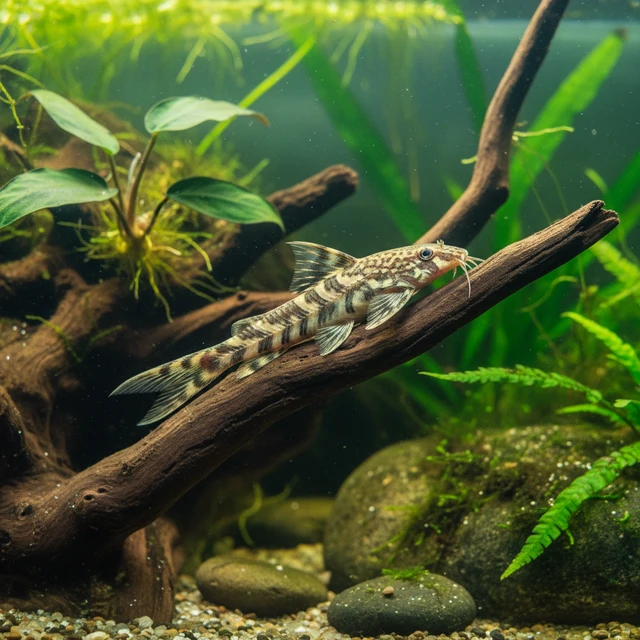
The Royal Whiptail Calico (Sturisoma panamense) exhibits a highly specialized morphology characterized by its elongated, fusiform body, which can reach a maximum adult size of approximately 15 inches. This species displays pronounced sexual dimorphism, with males typically possessing more elongated and slender bodies compared to the broader, more robust females. The head is notably flat and shaped like a sharply pointed triangle, facilitating its benthic lifestyle. A distinctive feature is its extraordinarily long, needle-like tail, which is arrow-straight and aids in maneuverability among submerged structures. The dorsal fin is exceptionally tall and stiff, forming a right angle that resembles a shark or helicopter blade, providing both stability and a unique aesthetic. Additionally, the species possesses a lateral line system that aids in detecting vibrations in the water, and its dentition is adapted for scraping algae from surfaces, indicative of its herbivorous diet.
Behavior & temperament
In terms of behavior, the Royal Whiptail Calico is primarily a solitary species, although it may exhibit social interactions during breeding periods. It typically inhabits the benthic zone of slow-moving rivers and streams in Colombia, where it can be found among submerged logs and vegetation. Breeding behavior involves egg scattering, where females release eggs onto surfaces that males subsequently fertilize. The temperament of this species is generally peaceful, though individuals may display territoriality, particularly during mating seasons, making it essential to provide ample space and hiding spots in captivity to reduce aggression.
Diet & feeding
In the wild, the Royal Whiptail Calico primarily feeds on algae and detritus, utilizing its specialized mouthparts to scrape surfaces. In captivity, it requires a diet rich in plant matter, including high-quality spirulina-based foods and blanched vegetables to meet its herbivorous needs.
Behind the name
The genus name 'Sturisoma' is derived from the Greek 'sturis' (meaning 'sturgeon') and 'soma' (meaning 'body'), reflecting the fish's elongated body shape, while 'panamense' indicates its origin from Panama, though it is commonly found in Colombia.
Plan your tank
Check the numbers before you buy: tank volume, a stocking plan, cycle progress, water changes, and your ongoing care routine.
Keep reading

Choose compatible fish: school sizes, swimming zones, aggression, temperature and hardness matching, and honest bioload math for a peaceful community.
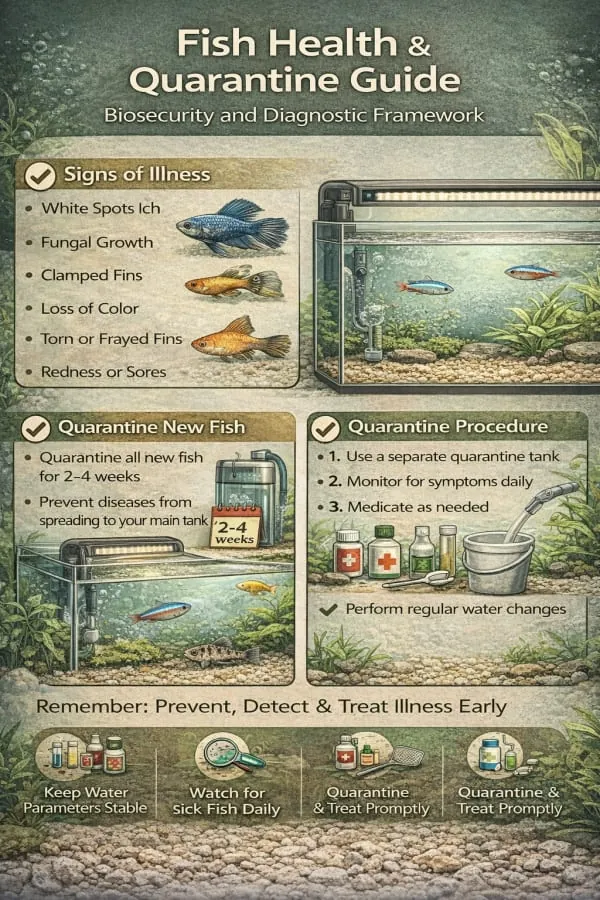
Quarantine new fish, spot the early warning signs, and treat disease without wrecking your tank. A practical freshwater fish health guide.

Acclimate new fish, shrimp, and coral safely: temperature floating, drip acclimation, plop-and-drop for shipped livestock, and the first 24 hours.
Keeping Royal Whiptail Calico?
AquaLens identifies your fish and plants from a photo, tracks water chemistry, and flags health issues early — free on iOS and Android.