Three Beacon Plecostomus L091 Care Guide
Leporacanthicus triactis · Freshwater Fish
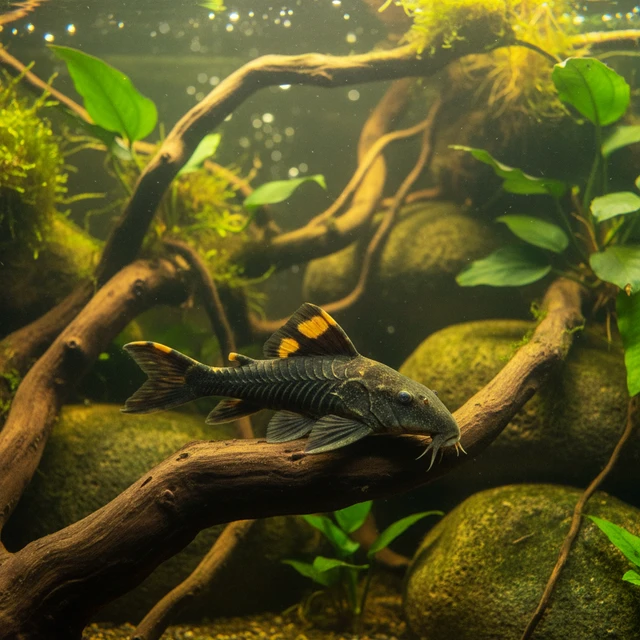
What Three Beacon Plecostomus L091 look like
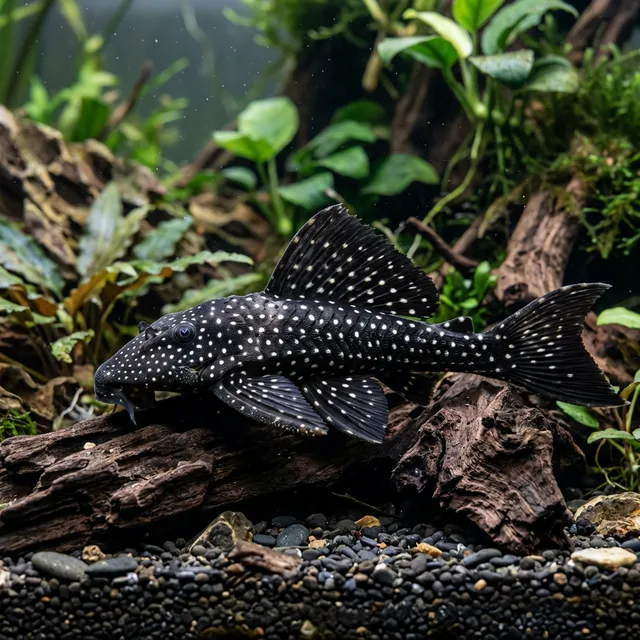
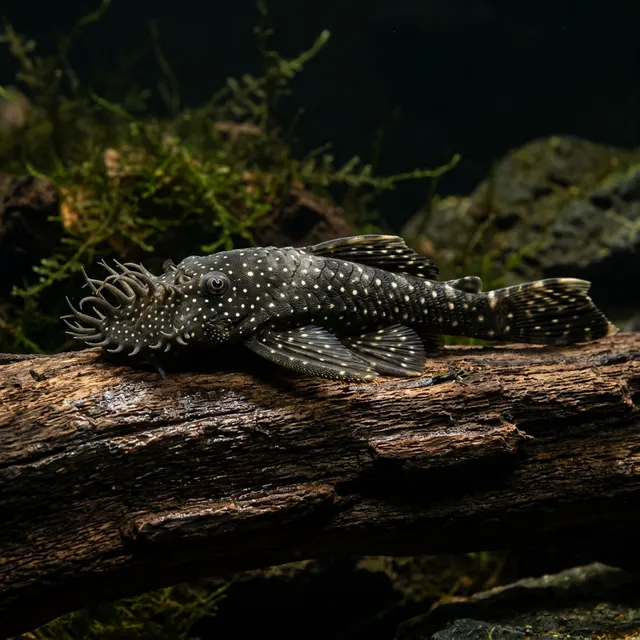
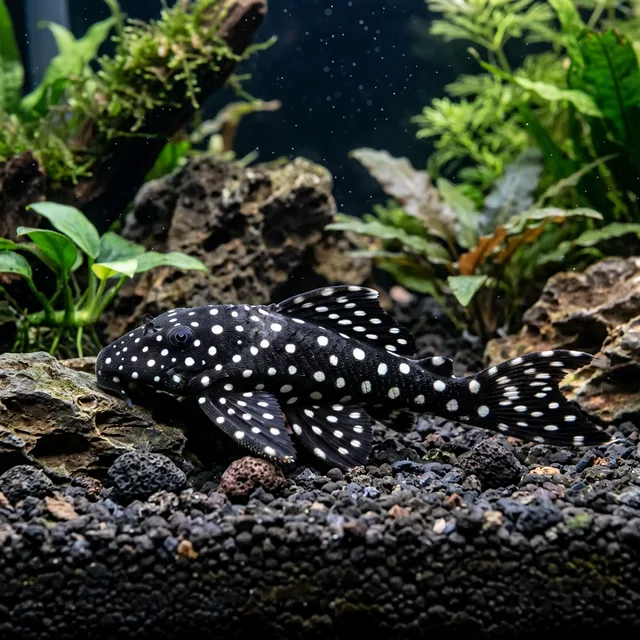
The Three Beacon Plecostomus (Leporacanthicus triactis) exhibits a robust, laterally compressed body that can reach a maximum adult size of approximately 8-10 inches. Its coloration is predominantly dark, serving as a striking contrast to its three distinctive bright white or yellow spots, or 'beacons', located on the dorsal fin and on each side of the caudal fin. This species displays pronounced cheek spines, which serve as a defensive adaptation against potential predators. The overall morphology includes a broad, flattened head with a wide mouth adapted for scraping algae, and a well-developed adipose fin that enhances its hydrodynamics. The lateral line is prominent, aiding in the detection of vibrations in the water, which is crucial for its benthic lifestyle.
Behavior & temperament
The Three Beacon Plecostomus is primarily a solitary and territorial species, often found dwelling in the benthic zones of its natural habitat, which consists of slow-moving rivers and streams in Venezuela. It exhibits a degree of aggression, particularly towards conspecifics, especially males during breeding periods. Breeding behavior involves the construction of nesting sites where females scatter eggs, and males guard these nests until the eggs hatch. This species is not an obligate schooler, but it may tolerate the presence of other fish if ample space is provided. Its temperament can vary, with individuals displaying shyness when first introduced to new environments.
Diet & feeding
In the wild, the Three Beacon Plecostomus is an omnivore, primarily feeding on algae, detritus, and small invertebrates. In captivity, it requires a varied diet that includes high-quality sinking pellets, fresh vegetables, and occasional protein sources such as bloodworms or brine shrimp to ensure optimal health.
Behind the name
Leporacanthicus (from Latin 'leporis' meaning 'hare' and 'acanthus' meaning 'thorn') refers to the thorny spines on its body; 'triactis' (from Greek 'tri' meaning 'three' and 'aktis' meaning 'ray') refers to the three prominent spots on its body.
Plan your tank
Check the numbers before you buy: tank volume, a stocking plan, cycle progress, water changes, and your ongoing care routine.
Keep reading

Choose compatible fish: school sizes, swimming zones, aggression, temperature and hardness matching, and honest bioload math for a peaceful community.

Quarantine new fish, spot the early warning signs, and treat disease without wrecking your tank. A practical freshwater fish health guide.

Acclimate new fish, shrimp, and coral safely: temperature floating, drip acclimation, plop-and-drop for shipped livestock, and the first 24 hours.
Keeping Three Beacon Plecostomus L091?
AquaLens identifies your fish and plants from a photo, tracks water chemistry, and flags health issues early — free on iOS and Android.