Wandering Snail Care Guide
Ampullaceana balthica · Freshwater Fish
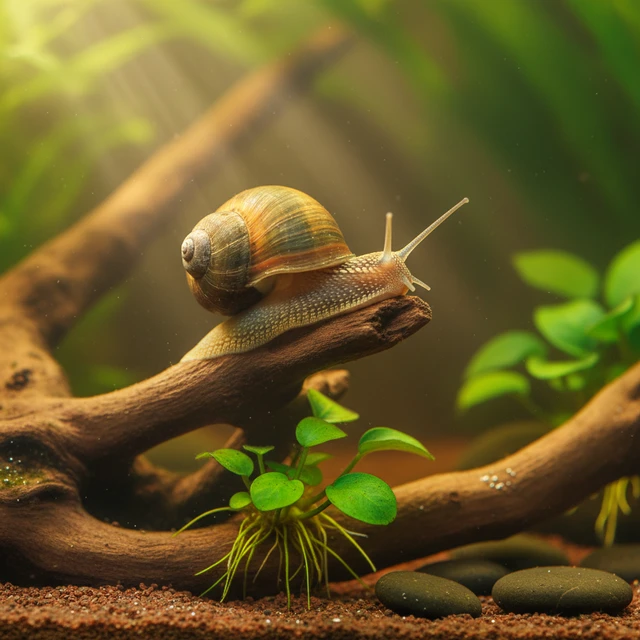
What Wandering Snail look like
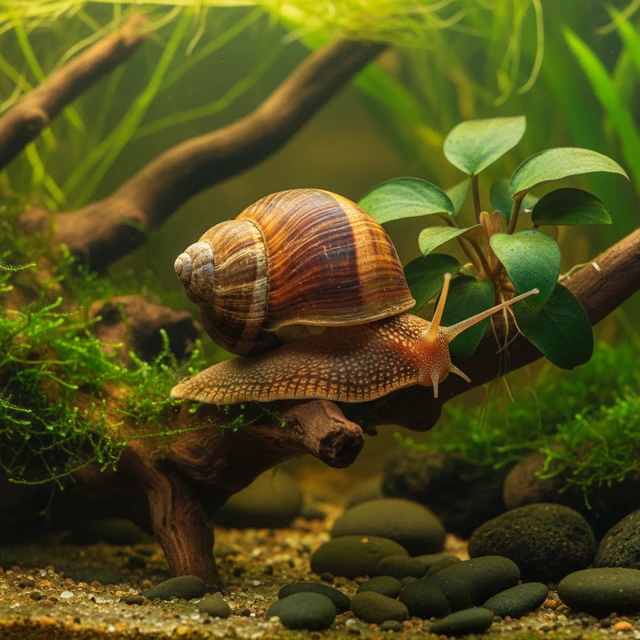
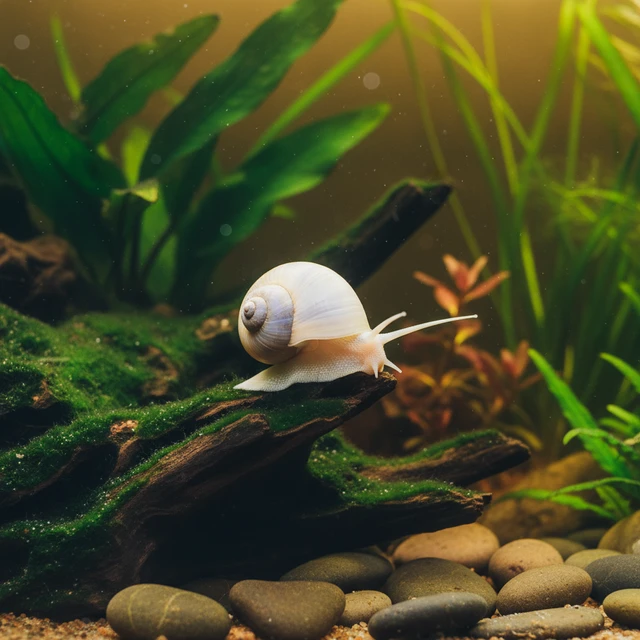
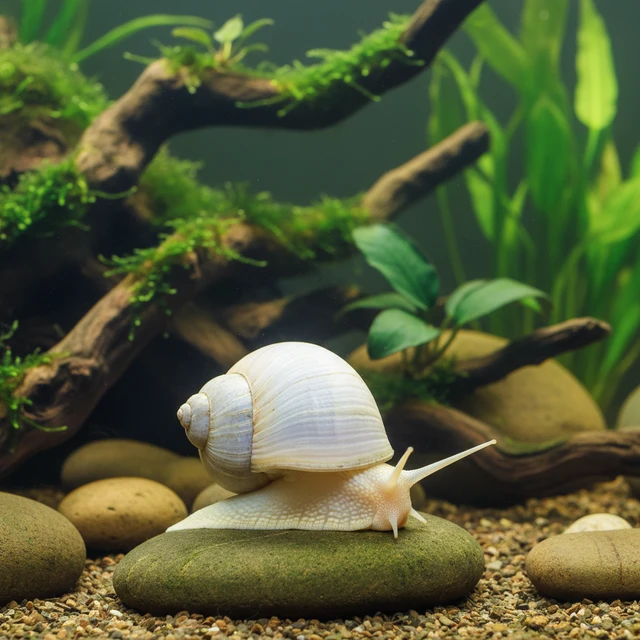
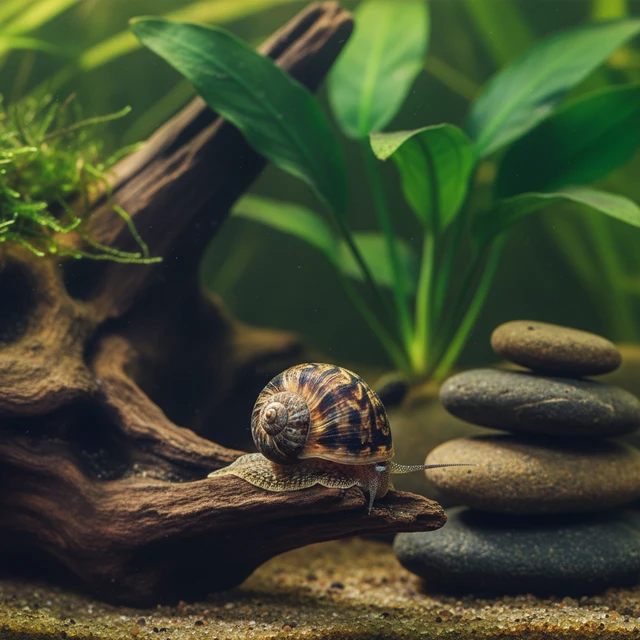
Ampullaceana balthica exhibits a medium-sized, conical shell that can reach a maximum adult size of approximately 1.5 inches (4 cm). The shell is characterized by its tall, spiraled structure, which is typically amber-brown in color, providing a degree of camouflage against its natural substrate. The shell is relatively thin and translucent, allowing for the observation of the internal body structure. Unlike flat ramshorn snails, the wandering snail's shell is distinctly elevated, which aids in identification. The species lacks pronounced sexual dimorphism, though females may exhibit a slightly larger shell size when carrying eggs. Defensive adaptations include the ability to retract into its shell for protection against predators, and the shell's spiral form may also deter some predatory fish. Unique morphological features include a well-developed operculum that seals the shell opening, and a foot that is broad and muscular, enabling efficient locomotion across various substrates.
Behavior & temperament
Ampullaceana balthica is primarily a benthic organism, often found in shallow waters of ponds and lakes, where it exhibits a solitary lifestyle, though it may occasionally be observed in loose aggregations. This species is not an obligate schooler and does not display a hierarchical social structure. The wandering snail is known for its slow, deliberate movements as it grazes on biofilm and detritus. Breeding behavior involves external fertilization, and females lay eggs in gelatinous masses attached to submerged vegetation. The temperament of this species is generally peaceful, making it a suitable inhabitant for community aquariums, although it may exhibit some territoriality when competing for food resources.
Diet & feeding
In the wild, the wandering snail is an omnivore, feeding on algae, detritus, and decaying plant matter. In captivity, it requires a varied diet that includes high-quality algae wafers, blanched vegetables, and occasional protein sources such as sinking pellets or live food to ensure optimal health.
Behind the name
Ampullaceana (from Latin 'ampulla', meaning 'small flask' or 'bottle') and 'balthica' (referring to the Baltic Sea region, where the species is commonly found).
Plan your tank
Check the numbers before you buy: tank volume, a stocking plan, cycle progress, water changes, and your ongoing care routine.
Keep reading

Choose compatible fish: school sizes, swimming zones, aggression, temperature and hardness matching, and honest bioload math for a peaceful community.

Quarantine new fish, spot the early warning signs, and treat disease without wrecking your tank. A practical freshwater fish health guide.

Acclimate new fish, shrimp, and coral safely: temperature floating, drip acclimation, plop-and-drop for shipped livestock, and the first 24 hours.
Keeping Wandering Snail?
AquaLens identifies your fish and plants from a photo, tracks water chemistry, and flags health issues early — free on iOS and Android.