Water Lettuce Care Guide
Pistia stratiotes · Freshwater Plant
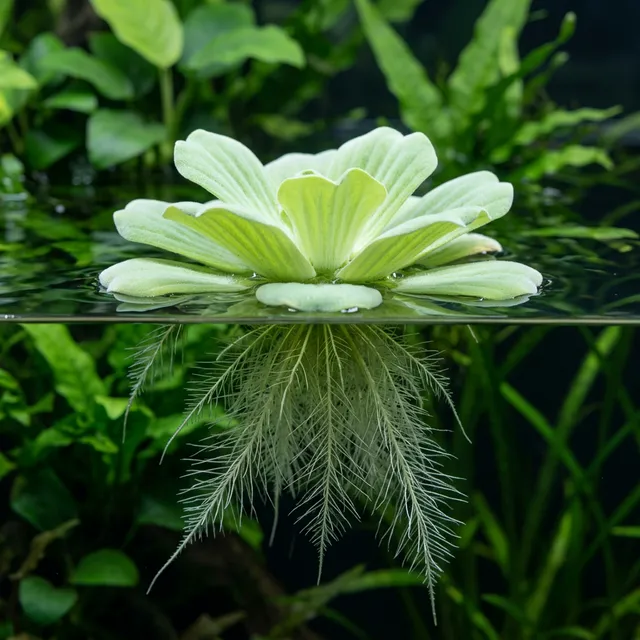
What Water Lettuce look like
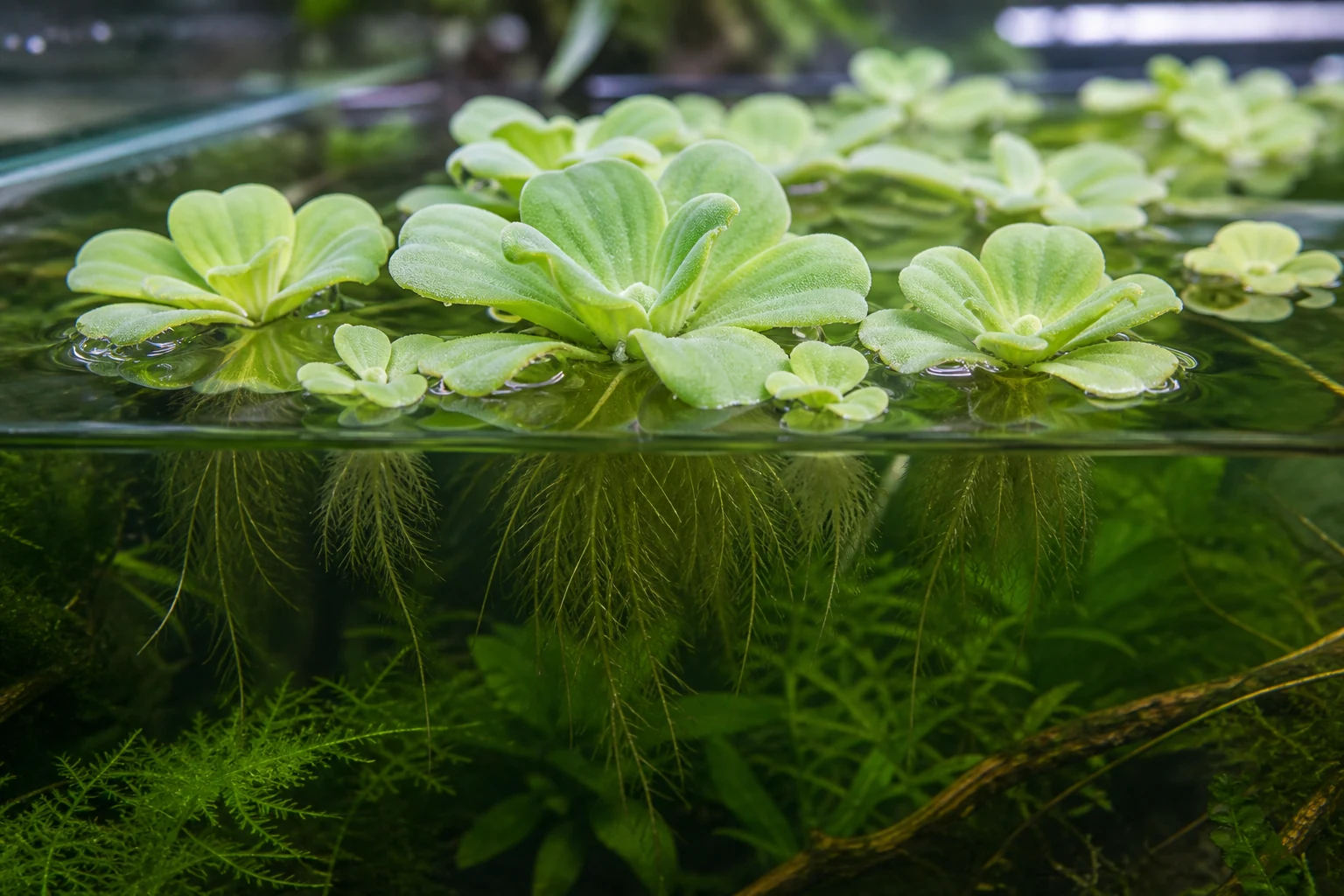
Pistia stratiotes, commonly known as Water Lettuce, exhibits a distinctive morphology characterized by its floating rosette structure. The plant typically reaches a maximum size of 3 to 15 inches in diameter, with its leaves arranged in a loose, open rosette that resembles a small head of lettuce. The leaves are oval-wedge shaped, measuring 2 to 4 inches in length, and possess a unique pale velvety light green coloration. Notable features include the presence of parallel veining and a soft, fuzzy, water-repellent surface texture that aids in buoyancy. Long, feathery white roots extend downward from the rosette, providing stability and nutrient absorption while dangling just below the water's surface. This plant lacks traditional stems and exhibits no significant sexual dimorphism, although variations in leaf size and density may occur based on environmental conditions. Water Lettuce's adaptation to floating life is further enhanced by its ability to form dense mats, which can provide shade and habitat for aquatic organisms.
Behavior & temperament
Water Lettuce is primarily a free-floating aquatic plant that thrives in still or slow-moving waters, often forming extensive colonies on the water's surface. It does not exhibit social hierarchy as seen in animal species; instead, it grows in clusters that can cover large areas, facilitating a unique ecosystem for various aquatic life. The plant is not aggressive and does not engage in competitive behaviors typical of terrestrial flora. Water Lettuce reproduces vegetatively through offsets, allowing it to spread rapidly in suitable conditions. It can also produce small flowers, though these are less common in cultivated environments. The plant's buoyancy allows it to dwell at the water's surface, where it can maximize light exposure for photosynthesis, its primary means of sustenance.
Diet & feeding
In its natural habitat, Water Lettuce relies on photosynthesis as its primary means of nutrition, utilizing sunlight to convert carbon dioxide and water into energy. In captivity, it requires bright, indirect light to thrive and may benefit from nutrient-rich water to support its growth.
Behind the name
The genus name 'Pistia' is derived from the Greek word 'pistós,' meaning 'pudding' or 'mush,' likely referring to the plant's soft texture. The species name 'stratiotes' comes from the Greek 'stratiotes,' meaning 'soldier,' possibly alluding to its robust growth habit in aquatic environments.
Plan your tank
Check the numbers before you buy: tank volume, a stocking plan, cycle progress, water changes, and your ongoing care routine.
Keep reading
Diagnose aquarium plant deficiencies by leaf age and symptom: yellowing, pinholes, twisting, and stunting. Read the pattern, then fix it safely.

PAR-first planted tank lighting: choose intensity by what you grow, set photoperiod and spectrum, kill shadows, and hold algae back without overspending.

Aquarium CO₂ injection made safe: how carbon, light, and nutrients balance, which system to buy, and how to dial it in without gassing your fish.
Keeping Water Lettuce?
AquaLens identifies your fish and plants from a photo, tracks water chemistry, and flags health issues early — free on iOS and Android.