Yellow Lab Cichlid Care Guide
Labidochromis caeruleus · Freshwater Fish
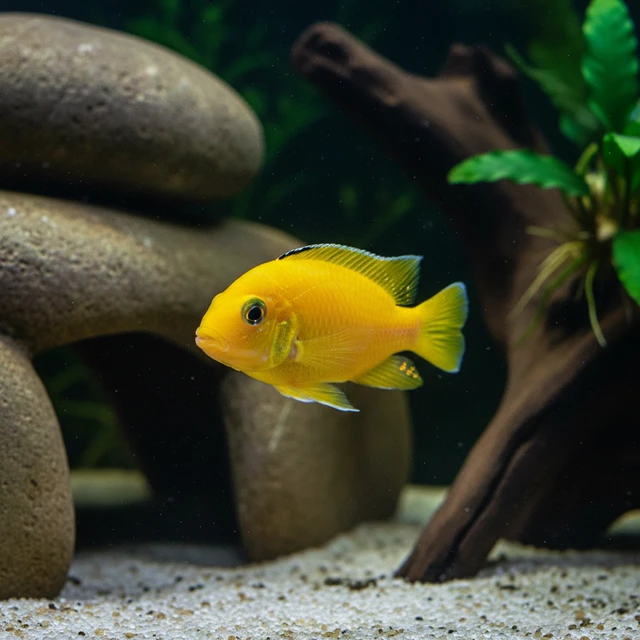
What Yellow Lab Cichlid look like
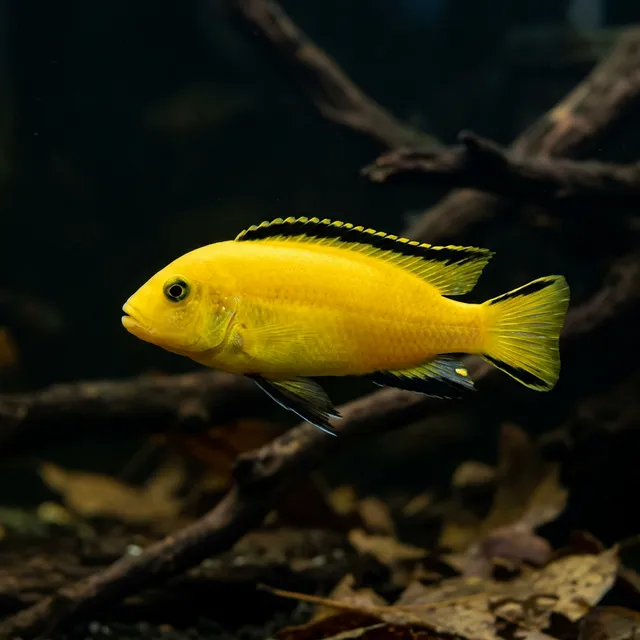
Labidochromis caeruleus, commonly known as the Yellow Lab Cichlid, exhibits a standard torpedo-shaped body that is laterally compressed, reaching a maximum adult size of approximately 4 to 5 inches (10-12 cm). The species displays sexual dimorphism, with males typically exhibiting more vibrant coloration and larger dorsal fins compared to females. The body is predominantly a striking, bright lemon yellow, which is a critical identification trait, while a thick, jet-black stripe runs along the edge of the dorsal fin, providing a stark contrast. This species possesses a well-developed lateral line system, which aids in detecting vibrations in the water. The dentition is adapted for an omnivorous diet, featuring conical teeth suited for grazing on algae and consuming small invertebrates. Additionally, the Yellow Lab has an adipose fin and a forked caudal fin, enhancing its swimming agility in its natural rocky habitat.
Behavior & temperament
The Yellow Lab Cichlid is generally a peaceful species within the mbuna group, often found dwelling in rocky substrates of Lake Malawi. It exhibits a social hierarchy, typically forming small groups or pairs rather than large schools, and is known to establish territories during breeding seasons. This species is primarily a benthic dweller, foraging along the substrate for food. During breeding, the Yellow Lab is an egg scatterer, with females laying eggs in crevices or on flat surfaces, while males display courtship behaviors to attract females. In terms of temperament, they are relatively mild-mannered compared to other cichlids, although males can exhibit territorial aggression during breeding periods.
Diet & feeding
In the wild, the Yellow Lab Cichlid primarily feeds on algae, small invertebrates, and detritus, making it an omnivore. In captivity, it thrives on a varied diet that includes high-quality flake food, spirulina, and occasional protein sources such as brine shrimp or bloodworms.
Behind the name
Labidochromis (from 'labido' meaning 'lip' and 'chromis' meaning 'color') refers to the colorful nature of the genus, while caeruleus translates to 'blue' in Latin, although this species is known for its yellow coloration.
Plan your tank
Check the numbers before you buy: tank volume, a stocking plan, cycle progress, water changes, and your ongoing care routine.
Keep reading
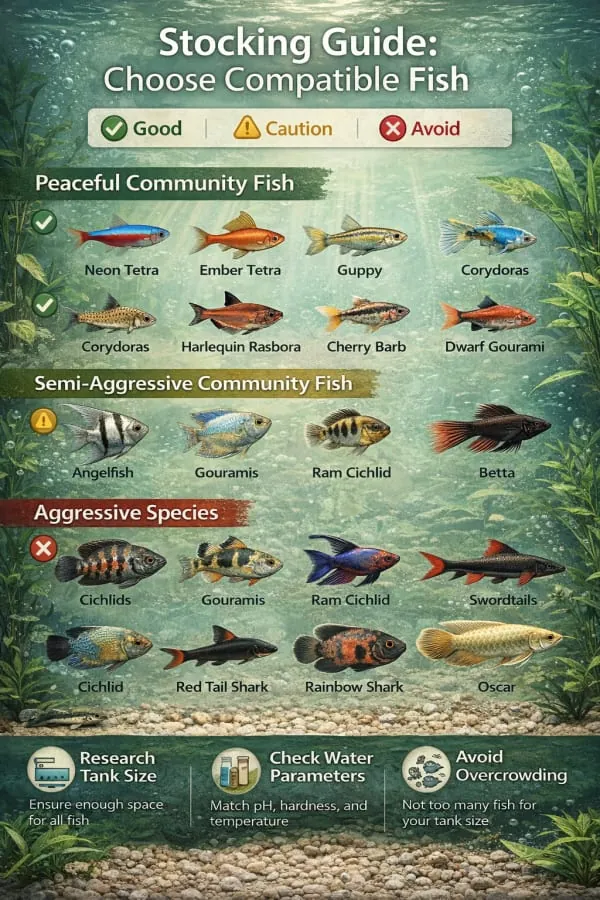
Choose compatible fish: school sizes, swimming zones, aggression, temperature and hardness matching, and honest bioload math for a peaceful community.
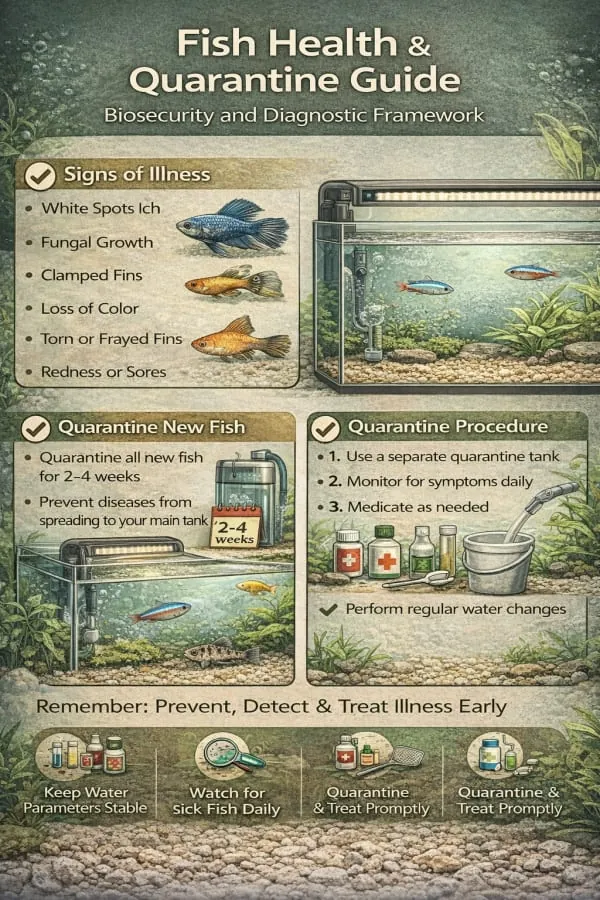
Quarantine new fish, spot the early warning signs, and treat disease without wrecking your tank. A practical freshwater fish health guide.
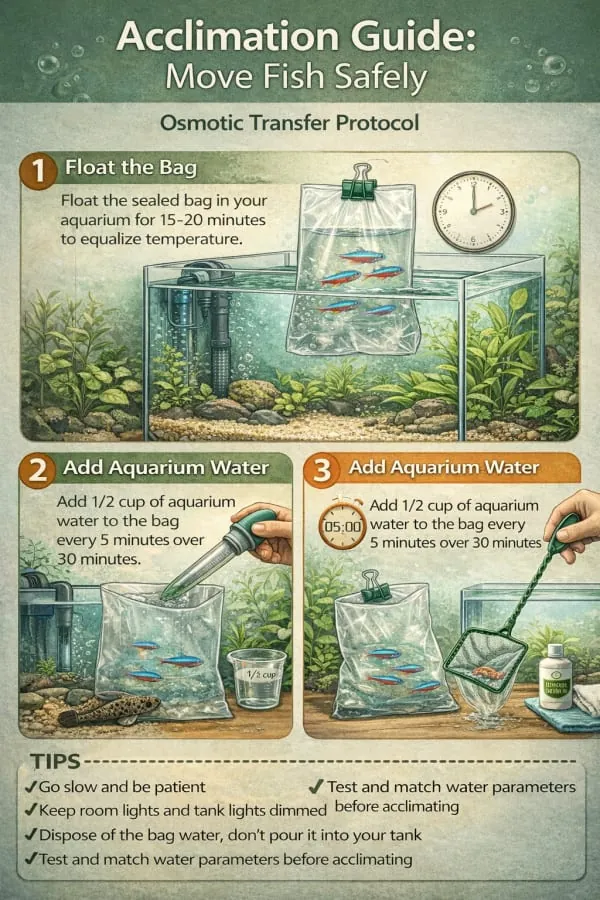
Acclimate new fish, shrimp, and coral safely: temperature floating, drip acclimation, plop-and-drop for shipped livestock, and the first 24 hours.
Keeping Yellow Lab Cichlid?
AquaLens identifies your fish and plants from a photo, tracks water chemistry, and flags health issues early — free on iOS and Android.