Yo-Yo Loach Care Guide
Botia almorhae · Freshwater Fish
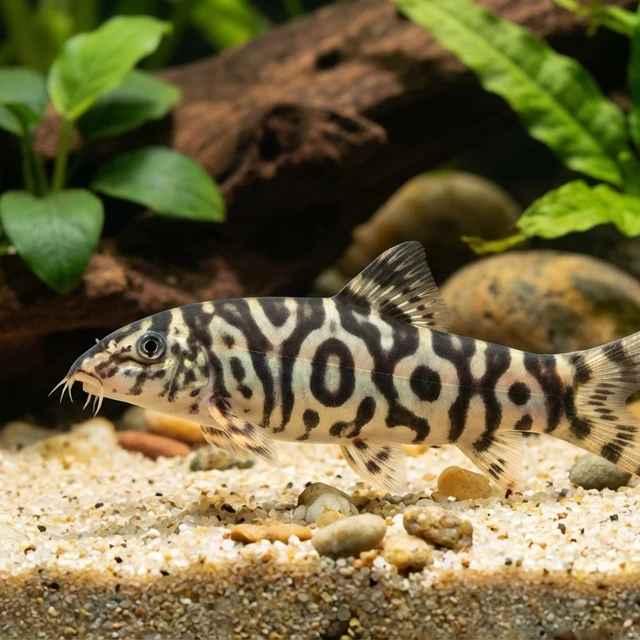
What Yo-Yo Loach look like
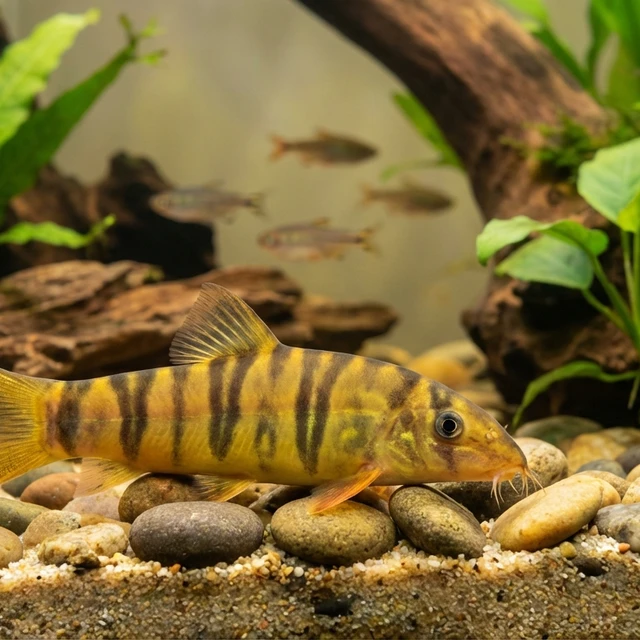
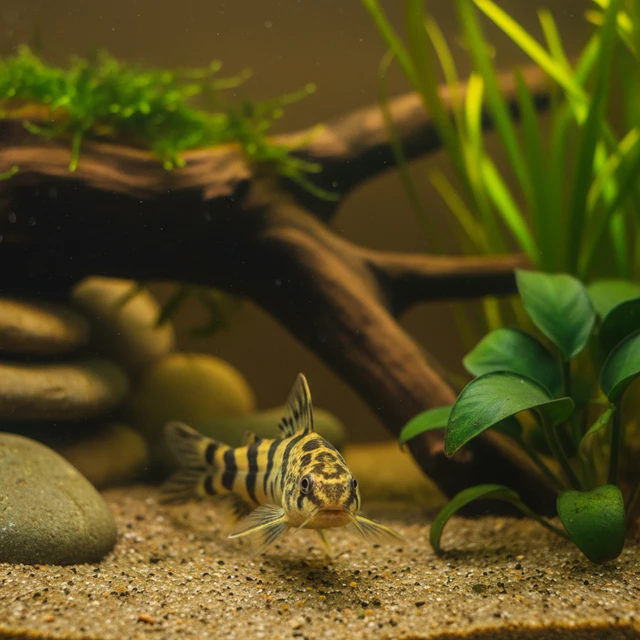
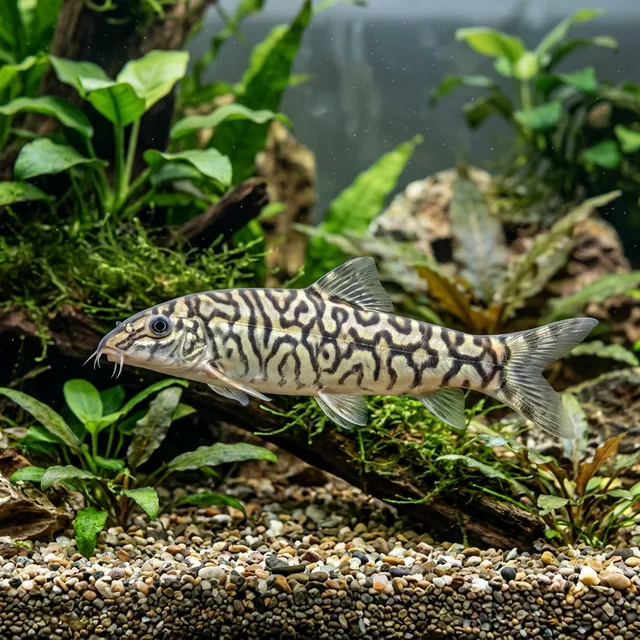
The Yo-Yo Loach (Botia almorhae) exhibits a medium-sized, elongated body that typically reaches a maximum adult size of 4-5 inches (10-12 cm). Its morphology is characterized by a pale silver base coloration adorned with a striking network of dark brown to black reticulated markings, which in juvenile specimens distinctly form patterns resembling the letters 'Y-O-Y-O'. As individuals mature, these patterns evolve into more intricate and maze-like designs while maintaining a bold contrast between the dark markings and the lighter body. The species possesses four pairs of sensory barbels, which aid in foraging, and features a slightly compressed cross-section, enhancing its agility in navigating through its habitat. Notably, the Yo-Yo Loach lacks significant sexual dimorphism, making it challenging to differentiate between males and females based solely on external characteristics. Defensive adaptations include a robust body structure and the ability to burrow into substrate, providing refuge from potential predators.
Behavior & temperament
The Yo-Yo Loach is primarily a social fish, often found in small groups or schools, which enhances its safety in the wild. It typically inhabits the benthic zone of freshwater environments, where it forages among the substrate for food. This species exhibits a peaceful temperament but can display territorial behavior, especially among males during breeding periods. Breeding behavior is characterized by egg scattering, where females release eggs onto the substrate, and males fertilize them externally. The Yo-Yo Loach is generally non-aggressive, making it suitable for community tanks, provided that tank mates are similarly peaceful.
Diet & feeding
In the wild, the Yo-Yo Loach is an omnivore, feeding on a varied diet that includes detritus, small invertebrates, and plant matter. In captivity, it thrives on a balanced diet consisting of high-quality sinking pellets, supplemented with live or frozen foods such as bloodworms and brine shrimp, along with occasional vegetable matter to ensure optimal health.
Behind the name
The genus name 'Botia' is derived from the Hindi word 'boti', meaning 'fish', while the species name 'almorhae' refers to Almora, a region in India where this species is commonly found.
Plan your tank
Check the numbers before you buy: tank volume, a stocking plan, cycle progress, water changes, and your ongoing care routine.
Keep reading

Choose compatible fish: school sizes, swimming zones, aggression, temperature and hardness matching, and honest bioload math for a peaceful community.

Quarantine new fish, spot the early warning signs, and treat disease without wrecking your tank. A practical freshwater fish health guide.

Acclimate new fish, shrimp, and coral safely: temperature floating, drip acclimation, plop-and-drop for shipped livestock, and the first 24 hours.
Keeping Yo-Yo Loach?
AquaLens identifies your fish and plants from a photo, tracks water chemistry, and flags health issues early — free on iOS and Android.