
Where to Buy Aquarium Plants: The Complete Buyer's Guide
Compare online aquarium plant stores, local hobbyists, tissue culture, prices, pests, shipping, quarantine, and how to choose healthy plants.
On this page
Quick Recommendations
If you only want the shortlist, start here. Prices below are representative U.S. prices checked in July 2026, before shipping, not promises. Plant size, season, sales, and rarity can move them quite a bit.
| Company | Best For | Typical Pricing | My Thoughts |
|---|---|---|---|
| Facebook Marketplace and Local Hobbyists | Best overall value and submerged-grown plants | Often $2 to $8 per common plant, or $10 to $30 for a mixed trimming package | My favorite overall source. You can inspect the plants, ask questions, avoid shipping, and often get much more usable plant mass for the money. Availability and quality depend on the seller and your area. |
| WetPlants | Beginners and affordable, dependable orders | Common plants are often about $7 to $13; mixed packs roughly $19 to $56+, with occasional lower mystery or sale packs | The first online retailer I ever bought from. I have consistently received healthy plants at good prices, with reliable shipping and a useful selection. |
| Dustin's Fish Tanks | Vigorous stems and consistently healthy growth | Many individual plants are about $6 to $12; packages often run $25 to $100 | Some of the healthiest plants I've received have come from Dustin's. Stem plants are a particular strength, packaging is good, quality is reliable, and customer service has been helpful. |
| Etsy | Unusual species and collector plants | Common portions often cost $5 to $15; rare plants can be $20 to $50 or much more | One of my favorite places to search for something unusual. I've found some fantastic plants there, but the seller matters far more than the marketplace name. |
| Father Fish Aquarium | Hardy plants for natural, low-tech, and dirted tanks | Most individual plants are about $6 to $15; curated multi-plant packs run roughly $56 to $90 | Louis "Father Fish" Foxwell has one of the biggest and most devoted followings in natural fishkeeping. I haven't ordered from him myself yet, but he stocks hardy species chosen to thrive in natural, no-CO2 tanks, and his curated packs make planting a whole tank heavily from day one affordable. |
| Buce Plant | Tissue culture, rare plants, and finding a specific species | Many plants and tissue-culture cups cost $8 to $15; rare portions can cost much more | An excellent company with a huge selection. I especially like it for tissue culture and hard-to-find plants, but it is generally more expensive than budget sellers. |
Skip to the full store directory ↓
I don't take any money, commission, or affiliate fee from a single store on this page. These are simply the places I rate or that have earned the hobby's trust. If you run a shop and would like to be considered for the directory, email me at Dave@aqualensapp.com.
Facebook Marketplace and local hobbyists
Buying through Facebook Marketplace or directly from local planted-tank hobbyists is my favorite overall way to buy plants. They're often already growing underwater, so I get submerged leaves and a shorter adjustment. Rooted runners and divisions may also come with established roots, while fresh stem trimmings often won't. Prices are usually the best, I can inspect before buying, ask the grower direct questions, support another hobbyist, and skip shipping stress. Careful local growers often offer fresher, healthier plants than stock that has spent days in a sales tank.
The limitations are real. Selection depends on the area, rare plants may be hard to find, and quality, identification, pest control, and communication all depend on the seller.
WetPlants
WetPlants was the first online aquarium plant retailer I ever bought from, and it remains one of the easiest recommendations for a beginner. My experiences have been consistently positive: good prices, healthy plants, reliable shipping, and enough selection to plant a straightforward low-tech or community tank without turning the order into a research project.
Dustin's Fish Tanks
Dustin's Fish Tanks consistently sends some of the healthiest plants I've received. The stem plants in particular tend to arrive substantial and vigorous. Packaging has been dependable, quality is reliable, and customer service is a genuine strength. Its current FAQ says most plants are grown underwater and emersed-grown exceptions are marked in product descriptions. Across the trade, many aquarium plants are grown emersed. If one arrives in that form, some old leaves may melt while submerged growth replaces them. That is normal transition, not evidence of a bad plant.
Etsy
Etsy is one of my favorite places to look for unusual species and collector plants, and I've found some fantastic plants there. The seller matters more than the platform. I read recent plant-specific reviews, look for buyer photos, compare the promised portion with the listing, and check whether it is tissue culture, emersed-grown, or submerged-grown. Quality, identification, packaging, and support vary substantially.
Father Fish Aquarium
Father Fish Aquarium is the store behind the Father Fish YouTube community, founded by Louis Foxwell, an aquarist with more than 70 years in the hobby, a founding board member of the National Aquarium in Baltimore, and one of the clearest voices for keeping planted tanks the way nature does: soil and sand, hardy plants, no CO2, and no chemicals. The shop, based in Salisbury, Maryland, sells the plants that method depends on. Expect around 60 dependable species such as Anubias, Java fern, crypts, swords, hornwort, and floating plants, plus curated bundles like the 16-piece Father Fish Favorites pack, his Aqua Preta soil substrate, and live food cultures. Shipping is free over $100.
The catalog is deliberately built around hardiness rather than rarity. If you want a tissue-culture carpet or a named Bucephalandra, the specialists later in this guide are a better fit. If you want a heavily planted, low-tech tank that settles into its own balance, this selection was assembled for exactly that, by someone who has been growing plants this way longer than almost anyone else selling them online.
Buce Plant
Buce Plant is an excellent company with a huge selection, particularly for tissue culture, Bucephalandra, rare cultivars, and the moments when I know the exact plant I want. The tradeoff is price. It is generally more expensive than budget retailers or hobbyist cuttings, so I use it when finding something specific matters more than maximizing plant mass for the money.
Apart from Father Fish Aquarium, which earns its spot on reputation and community trust, these are simply the places I've personally had the best experiences with. There are many other excellent retailers, but if someone asked where I'd buy my next plants tomorrow, this would be my shortlist.
Introduction: Why the Source Matters
Buying an aquarium plant isn't quite like buying a piece of decor. You are buying a living organism in the middle of a major environmental change. The source affects how much stored energy the plant has, whether its leaves were built for air or water, how carefully it was packed, what algae or hitchhikers came with it, and whether anybody will help if the box arrives cooked or frozen.
Plant health matters more than showroom perfection. I care much more about a firm crown, the center where roots and leaves meet, and a solid rhizome, the thick horizontal stem on plants such as Anubias, than I do about one cosmetically perfect leaf. Crisp stems and signs of new growth matter too. Old leaves can be torn, spotted, or ready to drop while the plant itself is strong. On the other hand, a glossy plant with a soft crown or rotting rhizome may have very little future left.
The source also affects the rest of the aquarium. Weak plants can collapse into organic waste, and struggling plants leave light and nutrients available for algae. Plants held in systems with fish may carry snails or other organisms in the water and on their leaves. Commercial plants can carry treatment residues that matter far more to shrimp than to fish. None of this means new plants are dangerous. It means they deserve the same thought you would give any other living addition.
Cost is part of the decision, but the checkout price is only one piece. A $4 bunch isn't cheap if half the stems are crushed, the remainder never adapts, and shipping costs $18. A healthy $9 portion that establishes quickly can be the better bargain. Spending a little more for the right plant, from a source that packs it well and stands behind the order, usually saves money over repeated replacements.
This guide covers the buying half of the problem. If you are still deciding what to grow in the first place, The Ultimate Guide to Choosing Aquarium Plants matches species to your light, CO2 decision, livestock, and the maintenance you actually enjoy.
Every Place You Can Buy Aquarium Plants
The type of source often tells me more than the logo. A big retailer can provide selection and a formal live-arrival policy. A local grower can provide submerged plants and a real conversation. A collector may be the only practical source for one obscure cultivar. Each can be the right answer.
The prices in this section are rough U.S. ranges before shipping. Rare plants, large mother plants, mounted specimens, and weather packaging can fall well outside them. When I mention provenance, I mean a documented identity and source history rather than just a premium name.
| Source | Typical Price | Typical Plant Condition | Selection | Pest Risk |
|---|---|---|---|---|
| Large online retailer | $6 to $15 per common plant | Pots, bunches, bare-root plants, and tissue culture from multiple growers | Broad | Low to moderate, depending on production and holding systems |
| Dedicated nursery | $7 to $18 per plant or cup | Usually consistent, often emersed-grown | Broad and plant-focused | Low to moderate; tissue culture is lowest |
| Local fish store | $5 to $15 per plant | Inspectable, but time in the sales tank varies | Moderate | Moderate to high if plants share livestock systems |
| Chain pet store | $5 to $12 per plant | Highly variable | Narrow, mostly common plants | Moderate to high |
| Local hobbyist or club | $1 to $8 per type, often $10 to $40 per package | Frequently submerged cuttings, runners, or rooted divisions | Unpredictable | Moderate and seller-dependent |
| Online marketplace | $5 to $20 for common portions | Varies from fresh hobbyist trimmings to imported stock | Very broad | Variable |
| Rare collector | $20 to $100 or more | Small, named portions with provenance when reputable | Deep but specialized | Seller-dependent |
| Source | Pickup or Shipping | Customer Support | Best Suited For | Main Drawback |
|---|---|---|---|---|
| Commercial retailer or nursery | Shipping, sometimes local pickup | Formal policies and order records | Predictable ordering and broad lists | Shipping cost and transition from emersed growth |
| Fish or pet store | Immediate local purchase | Easy to ask, expertise varies | Inspecting common plants today | Holding conditions can be poor |
| Marketplace seller | Pickup or informal shipping | Direct seller conversation | Value, submerged growth, unusual finds | Few guarantees and uneven quality |
| Club, swap, or convention | In-person and event-based | Excellent peer advice | Biomass, community, and provenance | Limited dates and unpredictable inventory |
| Rare collector | Pickup or careful shipping | Often knowledgeable but informal | Exact cultivars | High prices and costly misidentification |
Large online retailers
Large online retailers are convenient. They usually carry dozens or hundreds of species, have established packing routines, accept standard payments, and publish a dead-on-arrival policy. Common plants generally cost about $6 to $15, although packs and mounted pieces cost more. Shipping is the major extra expense, so a larger planned order usually offers better value than buying one plant at a time.
The downside is variability within the same catalog. A retailer may source tissue culture from one laboratory, potted rosettes from a nursery, and bunch plants from another grower. One order can therefore contain several growth forms and levels of maturity. Support is usually better than on an informal marketplace, but the employee answering an email may not have grown every species personally. Pest risk is low to moderate, not zero, unless the plant is sealed tissue culture.
Dedicated aquatic plant nurseries
For a dedicated nursery, plant quality, correct identification, and consistency are the core business. That focus usually produces better labels, more reliable stock, and staff who understand the difference between a rhizome plant and a root feeder. Typical common plants run about $7 to $18, with rare specimens and premium tissue culture above that. Selection is usually excellent within the nursery's specialty.
Many nurseries grow amphibious aquarium plants emersed because they propagate faster, stay cleaner, and ship sturdier that way. That is sound horticulture, not a shortcut. Buyers just need to expect a leaf transition. Packing and customer support are normally strong, and formal live-arrival policies are common. Pest risk is often lower than in a mixed fish-and-plant store, but any open-grown plant still deserves inspection and quarantine.
Local fish stores
A good local fish store can be excellent because you see the actual plant, skip shipping, and take it home the same day. Common pots and bunches often cost $5 to $15. The best stores maintain real display tanks, employ someone who knows plants, and can tell you when the shipment arrived and whether the plant was grown emersed.
The weak point is inconsistency. Plants can sit under inadequate light, be moved between tanks, accumulate algae, or share water with fish and snails. Selection depends on the weekly shipment, and support ranges from superb to guesswork. Inspect the crown, roots, leaf undersides, and sales tank. If the store has healthy new growth rather than merely fresh stock, that tells you a lot.
Chain pet stores
Chain stores are convenient and sometimes perfectly reasonable for common Anubias, Java fern, Cryptocoryne, and sword plants. Prices often land between $5 and $12, and sealed tissue-culture cups can be a particularly safe purchase if they haven't overheated or dried out.
Quality outside the sealed cups can be unpredictable. Plants may spend too long under weak lighting, collect algae, or be mislabeled. Some stores still sell marginal or terrestrial plants as if they will live permanently underwater. A pretty striped leaf doesn't make a plant aquatic. Support depends on the individual employee, selection is limited, and pest exposure is moderate to high in shared systems. Buy the specimen in front of you, not the confidence of the sign above the aisle.
Facebook Marketplace
Marketplace is often the best combination of price, submerged growth, and convenience. A hobbyist may sell individual common plants for $2 to $8 or a generous mixed trimming bag for $10 to $30. Pickup avoids shipping, lets you inspect the plants, and gives you a chance to see the tank they came from.
There is no nursery quality-control department behind the seller. Names can be wrong, photos can be old, messages can go unanswered, and a seller may not mention snails because they don't consider them a problem. Ask for a current photo, portion size, submerged status, tank conditions, and known algae or pests. When the seller is careful and knowledgeable, this is my first choice. When the answers are vague, I walk away without making it personal.
Facebook groups
Regional aquarium groups and species-specific groups can be even better than general Marketplace because reputation matters inside the community. Prices resemble local hobbyist pricing, and the selection can include plants that never reach stores. A good grower will often explain how the plant behaves, not just paste a care sheet.
Moderation, payment protection, shipping skill, and seller standards vary. Read group rules, search the seller's history, and keep the transaction clear. Pest risk is seller-dependent. These groups are best for buyers who enjoy the community side of the hobby and don't need a formal guarantee.
Aquarium clubs
Aquarium clubs are underrated plant sources. Auctions, monthly meetings, and member sales can produce large bags of healthy submerged growth for a few dollars. Better yet, the person who grew the plant is often standing beside it. That is hard to beat for provenance and practical advice.
Inventory is whatever members trimmed that week, events may be infrequent, and not every town has an active club. Support is social rather than contractual. Pest risk varies by member, so I still inspect and quarantine. Clubs are especially good for beginners on a budget and experienced keepers searching for regionally established plants.
Reddit is most useful as a research and reputation layer. Planted-tank communities can help verify a species, compare sellers, identify an algae problem in a listing photo, or show what a plant actually looks like in ordinary tanks. That information can prevent a bad purchase.
General discussion communities aren't stores, though. Advice quality varies, old posts can describe outdated policies, and private transactions have limited support. I use Reddit to ask better questions, not as proof that a seller or plant is automatically safe.
If a private sale does happen outside a dedicated marketplace, expect hobbyist-style prices, often about $5 to $15 per plant type, fresh submerged cuttings of variable quality, informal shipping, no standard guarantee, and the same seller-dependent pest risk as any home tank.
AquaSwap
AquaSwap is Reddit's transaction-focused aquarium marketplace. It can be excellent for hobbyist trimmings, plant packages, floaters, mosses, and collector species. Common portions are often $5 to $15, while packages and rare plants vary widely. Seller history and clear listing formats make it easier to evaluate an informal purchase than a random direct message.
It is still peer-to-peer. Packing skill, weather judgment, portion size, and after-sale help depend on the seller. Read the current community rules, use a payment method with appropriate protection, confirm shipping dates, and save the listing. Pest risk is similar to other hobbyist sources: entirely dependent on the source tank and the seller's disclosure.
Etsy
Etsy provides enormous selection and a usable review system, which makes it one of the better marketplaces for rare and unusual plants. Common cuttings may cost $5 to $15, while a fashionable Bucephalandra or variegated plant can cost many times that. Shipping may be included in the price or charged separately, so compare the order total rather than the listing number.
Look for recent reviews of the exact kind of plant, buyer photos, a clear portion description, the scientific name, and an explanation of how it was grown. Avoid listings that use only stock photos or make an ordinary plant sound rare through creative naming. Good Etsy sellers can provide collector-level plants and excellent support. Weak ones can send tiny, mislabeled portions with little recourse beyond the marketplace process.
eBay
eBay has broad reach, occasional bargains, and some long-established aquatic plant sellers. Prices resemble Etsy, from a few dollars for common stems to three figures for a rare collector plant. Feedback history and buyer protection are useful, but general seller feedback doesn't replace plant-specific evidence.
Stock photos, vague quantities, questionable cultivar names, and slow shipping are the usual concerns. Check where the plant ships from, whether it can legally enter your state or country, and whether the listing promises a cutting, a rooted plant, or merely a few leaves. Pest risk and support vary widely. eBay suits patient buyers who know exactly how to evaluate a listing.
Plant swaps
Plant swaps range from two friends exchanging trimmings to organized community events. Plants may be free, traded, or sold for a token amount. They are an outstanding way to get fast-growing submerged plants, learn what thrives in local water, and meet the person who maintained them.
Selection is unpredictable, labels can get separated, and there may be no formal support after the event. Since plants arrive from many home tanks, pest and algae risk is moderate to high unless each participant follows strong quarantine practices. Bring labeled bags, keep each source separate, and don't let the friendly atmosphere replace inspection.
Aquarium conventions
Conventions put nurseries, retailers, clubs, and collectors in one room. You can compare actual specimens, ask detailed questions, and find plants that are rarely shipped. Pricing ranges from show specials on common pots to premium collector prices. Customer support is usually strong during the event, but follow-up depends on the vendor.
The purchase still has to survive the trip home. A plant can cook in a parked car, chill in winter air, or dry out during a long day. Bring an insulated bag, keep purchases out of direct sun, and ask vendors to label everything. Pest risk varies with each booth, so keep plants separated until quarantine.
Rare plant collectors
Collectors are often the best source for a precise cultivar, a documented lineage, or a species that commercial nurseries produce only occasionally. A reputable collector can explain the plant's identity, submerged form, growth rate, and exact tank conditions in a level of detail no general catalog can match.
You may pay $20 to $100 or more for a very small portion. At that price, provenance and seller reputation matter. Trade names can be confused, photos can exaggerate color, and a fragile cutting can be lost in shipping. This source is best for experienced growers who can give a small plant stable conditions and who value the exact identity more than immediate visual impact.
A Comprehensive Directory of Online Plant Retailers
This directory is intentionally broad. It mixes shops I have used, shops with strong reputations, and shops included mainly for coverage, so treat it as a map rather than a set of endorsements. Everything here was trading and reachable as of July 2026, but online shops open, close, and change hands often, so confirm the link, the current reviews, and the shipping range before a large order. Where I have a recent independent rating from Trustpilot, Google, or Yelp I include it, dated; where a shop has only an on-site review widget such as Judge.me or Yotpo, or too few reviews to mean much, I say so instead of inventing a number. Most of these ship only within their own country or region.
United States
- Aqua Forest Aquarium (San Francisco, CA). The first US Nature Aquarium store, an ADA specialist with a large plant selection. Yelp around 4.6 from 280 or more reviews.
- Aquarium Co-Op (Edmonds, WA). Beginner-friendly hardy plants and one of the largest free aquarium education libraries. Widely reviewed on independent platforms with a strong reputation.
- Aquarium Plants Factory (California greenhouse). Farm-direct tissue culture with insulated shipping. On-site reviews.
- Aquascape Supply Co.. Plants, tools, substrates, and aquascaping equipment.
- Aquascaping Supply. Driftwood, stones, plants, fish, and general aquascaping gear.
- Aquatic Arts (Indianapolis, IN). Plants, shrimp, and fish in one order. Limited independent reviews so far.
- Buce Plant (California). Very large selection, tissue culture, Bucephalandra, and rare cultivars, with a live-arrival guarantee. On-site (Yotpo) reviews.
- Cuboid Nature Aquarium (Pipersville, PA). The largest aquascaping store on the US East Coast, with 250-plus plant types across dozens of display tanks and free-shipping online ordering.
- Dustin's Fish Tanks (Nicholasville, KY). Vigorous stem plants and dirt packs. On-site reviews (Judge.me) around 4.9 from 30,000 or more orders.
- Father Fish Aquarium (Salisbury, MD). Louis Foxwell's natural-method shop: hardy low-tech plants, curated packs, Aqua Preta soil, and live food cultures, covered earlier in this guide. Reputation rests on his large YouTube community rather than an independent review platform.
- Flip Aquatics (Warren, OH). Shrimp-focused shop with quarantined plants for invertebrate tanks. On-site reviews (Judge.me) around 4.7 from 20,000 or more.
- Florida Aquascaping (Florida). In-vitro tissue culture with generous multi-plant listings.
- Glass Aqua (California). Plants plus hardscape, substrate, and aquascaping gear. On-site and aggregator reviews around 4.8.
- Green Leaf Aquariums (Gainesville, FL). Plants plus CO2 systems and fertilizers. On-site testimonials.
- Jungle Aquashrimp (US). Shrimp and planted-tank specialist that also sells through hobby auction groups.
- Modern Aquarium. Large selection with low flat-rate shipping. On-site reviews.
- Nature Aquariums (Lauderhill, FL). Physical store and online with a broad plant and aquascaping range.
- Odysea Gardens NC (Raleigh, NC). Veteran-owned Etsy grower of submerged-grown plants with betta and nano plant packs, floaters, and insulated packaging standard on every order.
- S21 Aquatics (US, ships from North Carolina). A smaller rare-plant specialist: exotic stems, collector specimens, and epiphytes that are hard to find in the US market.
- Shrimpy Business (US). Shrimp-focused shop with a solid aquarium plant selection.
- The Shrimp Farm (US). Freshwater shrimp specialist since 2005 that also stocks plants, with flat-rate livestock shipping.
- The Shrimp Tank (US). One of the oldest US freshwater invertebrate sellers, with a plant range and free shipping over a threshold.
- Ultum Nature Systems (California). Tissue culture plants alongside rimless tanks and hardscape. Brand store.
- Vitro Culture. Tissue-culture specialist focused on pest-free rare and common plants.
- WetPlants. Beginner-friendly value packs matched to your tank, covered earlier in this guide. On-site reviews.
Canada
- Planted Aquaria (Oakville, ON). Boutique and online with free Canada-wide shipping.
- Aquascaperoom (Pickering, ON). Rare ADA tissue culture, plant packages, and shipping to every province.
- AquafloraCanada (Canada). Anubias, Bucephalandra, moss, and shrimp with fast express shipping.
- Aquatic Plant Man (Canada). Hand-grown plants and shrimp from a long-running grower.
- AquaPlantStore (Canada). Snail-free beginner, stem, moss, and rare plants shipped nationwide.
- The Wet Leaf (Canada). Plants, shrimp, hardscape, and fertilizers with Canada-wide shipping.
- Sousleau (Quebec). One of Quebec's largest plant and aquascaping shops.
United Kingdom
- Aqua Essentials (UK). Tropica-sourced potted plants, tissue culture, and epiphytes with fast dispatch. Trustpilot around 4.9 from 2,900 or more reviews.
- Aquarium Gardens (Peterborough, UK). Shop and showroom with European-sourced plants and aquascaping supplies. Trustpilot around 4 stars from 75 or more reviews.
- Horizon Aquatics (Newton Aycliffe, UK). Multi-year UK aquascaping-store award winner. Strong reputation with only a few Trustpilot reviews so far.
- Java Plants (UK and Ireland). More than 30 years of weekly-fresh mail-order plants. Trustpilot rated Excellent from around 90 reviews.
- Pro Shrimp (UK). Shrimp-safe plants, XL plants, and dry goods. Trustpilot 130 or more and TrustedShops 2,100 or more reviews, mixed on service.
- Dennerle Plants UK (UK). Premium potted plants and pest-free tissue culture, with free shipping over a threshold. Brand store.
- Charterhouse Aquatics (UK). Very wide freshwater and marine range including plants and equipment. Trustpilot around 4 stars from 17,000 or more reviews, mixed on stock and service.
- Byrkley Aquatics (UK). Long-established shop spanning beginner plants to advanced aquascaping tools.
- Abyss Aquatics (UK). A 35-year bricks-and-mortar shop that also sells plants online.
- Aquascaping Express (UK). Plants and aquascaping accessories. Small Trustpilot sample, mixed.
- Swell UK (UK). Large general aquatics retailer that also stocks plants. Trustpilot 2,800 or more reviews, mixed on service.
Mainland Europe
- Aquasabi (Germany). Large aquascaping range and in-vitro plants, ships across the EU and to the UK in a few days. Trustpilot around 140 reviews.
- Green Aqua (Hungary). One of Europe's best-known aquascaping brands, ships to all EU countries with Dennerle, Tropica, Stoffels, Aqua Art, and ADA plants.
- Garnelenhaus (Germany). Shrimp, plants, and CO2 gear with fast DHL delivery.
- Garnelio (Germany). Plants and shrimp with an English storefront.
Australia
- Aquarzon (Australia). 150-plus plants including rare species and the country's largest moss and fissidens range.
- Scapeshop (Brisbane). Farm-direct, one of Australia's largest premium plant ranges.
- Sydney Aquascapes (Australia). Plants, shrimp, and fish with a live-delivery guarantee.
- Micro Aquatic Shop (Australia). Plants, moss, and aquascaping driftwood.
- Aura Aquarium (Australia). Exotic fish, plants, and premium aquascaping supplies.
- Aquafy (Australia). Plants and shrimp with express Australia-wide shipping.
- Abquatics (Australia). Live aquarium plants and aquascaping stock.
Marketplaces and growers
- AquaBid (US-centered auctions). Hobbyist and small-seller plant auctions; judge each seller, not the platform.
- Planted Tank Quick Auctions (private Facebook group, around 8,000 members). Auction-only group where hobbyists sell trimmings and collector plants. Rare and super-rare cultivars can reach $100 or more per plant, so set a budget before you bid. You request to join, and each seller sets their own terms.
- Etsy (global). Huge marketplace for common and collector plants; read recent plant-specific reviews and buyer photos.
- BuceFarm (Etsy, US). A rare and tissue-culture plant seller I have ordered from several times, with consistently strong quality and value.
- eBay (global). Broad reach and occasional bargains; check the seller's plant feedback and where it ships from.
- Tropica (Denmark, grower). The largest aquatic plant nursery; you buy its plants through the retailers above rather than direct.
If a link is dead or a shop has changed hands by the time you read this, that is exactly why it pays to check current reviews and place a small test order before a big purchase.
Why Buying From Local Hobbyists Is Often the Best Choice
My preference for local hobbyists isn't based only on price. It comes from what happens after the plant enters the aquarium. A plant that is already producing submerged leaves in a nearby tank has completed one of the hardest transitions before I buy it. I get to evaluate the form I actually want, talk to the person who grew it, and move it home in hours rather than days.
Plants that are already living underwater
Many aquarium plants can grow both above and below water, but they don't use identical leaves for both jobs. Emersed leaves are built to exchange gases in air. Submerged leaves are usually thinner and shaped to work underwater. When I buy a fresh commercial pot, I may be buying a strong plant whose current leaves are temporary. When I buy a hobbyist's trimming, I am usually buying the underwater form itself.
That doesn't make emersed plants inferior. Commercial nursery plants often have excellent stored energy and clean root systems. It does mean a submerged-grown plant lets me skip or reduce the visible leaf change. In a new aquascape, that can be the difference between seeing growth in the first week and watching the layout look worse before it looks better.
Less melt and faster establishment
A submerged-to-submerged move is generally gentler. There is less old foliage for the plant to reclaim and replace, so more of the purchased biomass remains useful. Crypts may still sulk, stems may drop lower leaves, and Vallisneria may react to being moved. Light intensity, CO2, hardness, temperature, substrate, and nutrients can all differ between two houses.
The important distinction is that the plant isn't being asked to change both its environment and its basic leaf design at once. In my tanks, that usually makes establishment easier to read. I can tell whether a stem is rooting and making a healthy tip instead of trying to decide whether widespread leaf loss is expected conversion or actual decline.
Better coloration and more useful growth
Submerged-grown plants show me their honest underwater leaf shape, spacing, and color. A Rotala grown in strong light and injected CO2 may still lose red color in my lower-energy tank, but at least I can see the form it is capable of producing underwater. Emersed leaves can look broader, tougher, and sometimes completely different.
Color is not a guarantee. It reflects light, CO2, nutrition, genetics, and sometimes camera processing. I ask for an ordinary current photo, ideally with the whole source tank visible. That tells me more than a close-up under heavily saturated lighting.
Strong roots and more biomass for the money
Local growers often sell rooted runners, divided rhizomes, mature crowns, or fresh stem trimmings. Those aren't always retail-pretty, but they can be excellent starter material. A rooted Cryptocoryne runner with three healthy leaves may establish better than a larger-looking plant whose root base has been damaged. A bag of ten fresh stems gives me enough biomass to create a real group instead of scattering three stems and waiting months.
This is why I compare usable plant mass rather than item count. One "plant" can mean a tissue-culture cup with dozens of tiny plantlets, a single rooted sword, five stem cuttings, or a thumbnail-sized collector rhizome. Local packages often win on mass and maturity, especially after shipping is included.
Local water adaptation
Plants from a nearby aquarium may already be accustomed to similar tap water. If both homes use the same municipal supply, the transition in hardness and alkalinity can be smaller. The seller can also tell me whether the plant thrives without injected CO2 in conditions that resemble mine.
I don't push this idea too far. Two houses in the same town can use softened versus unsoftened water, different substrates, radically different lighting, and completely different fertilizer routines. "Local" helps most when I ask for the details. The ZIP code alone doesn't acclimate a plant.
I can inspect before I purchase
Local pickup lets me look past the best listing photo. I check whether stems are firm, whether new tips are compact and healthy, whether rhizomes are solid, and whether rosette crowns are intact. I turn leaves over for snail eggs and algae. I look at the seller's tank for black beard algae, Cladophora, cyanobacteria, planaria, and obvious pest pressure.
I also ask a short set of questions: Was it grown submerged? Does the tank use CO2? What light schedule and intensity does it receive? Is the water soft or hard? Are there snails, shrimp, fish medications, or known algae in the system? Has any pesticide been used around the plants? Is the cultivar name certain? A careful seller won't be offended by careful questions.
I can ask the person who actually grew it
Generic care labels describe a species across thousands of tanks. A local grower can tell me how this specific plant behaved. They may know that it creeps under medium light, grows upright under high light, hates repeated replanting, or needs two weeks before it starts sending runners. They can show where they cut it and how deep they plant it.
That direct feedback is especially valuable for beginners. It turns a transaction into a small handoff of practical knowledge. If the plant struggles, I can compare conditions with the source rather than guessing from a broad care range.
Better prices and support for the hobby
Hobbyists usually sell surplus growth, not inventory that must pay for a greenhouse, staff, packaging, and nationwide fulfillment. That is why a $15 local trimming bag can contain more plant mass than a much larger commercial order. The seller recovers some aquarium costs, the buyer gets value, and healthy plants stay in circulation instead of going into the trash after a trim.
There is a community benefit too. Buying locally keeps clubs active, rewards careful growers, and makes uncommon plants available in the area. I don't expect hobbyists to operate like free customer-support departments, but good local relationships often lead to better advice, future trades, and more good plants circulating locally.
When a nursery or tissue culture is the better choice
Local isn't automatically best. For a shrimp breeding tank where pesticide residue, planaria, and snails are unacceptable, sealed tissue culture is often worth the extra cost and planting work. If I need a precise cultivar, enough identical plants for a large aquascape, professional weather packaging, or a written live-arrival policy, a commercial nursery may be the sensible choice.
Online retailers also matter when the local hobby is small, sellers can't confidently identify their plants, or nobody nearby grows what suits the tank. Sometimes I want predictable pots from one production batch. Sometimes I want a clean carpet cup. Sometimes I simply don't want to coordinate a pickup. The best source is the one whose strengths match the actual purchase.
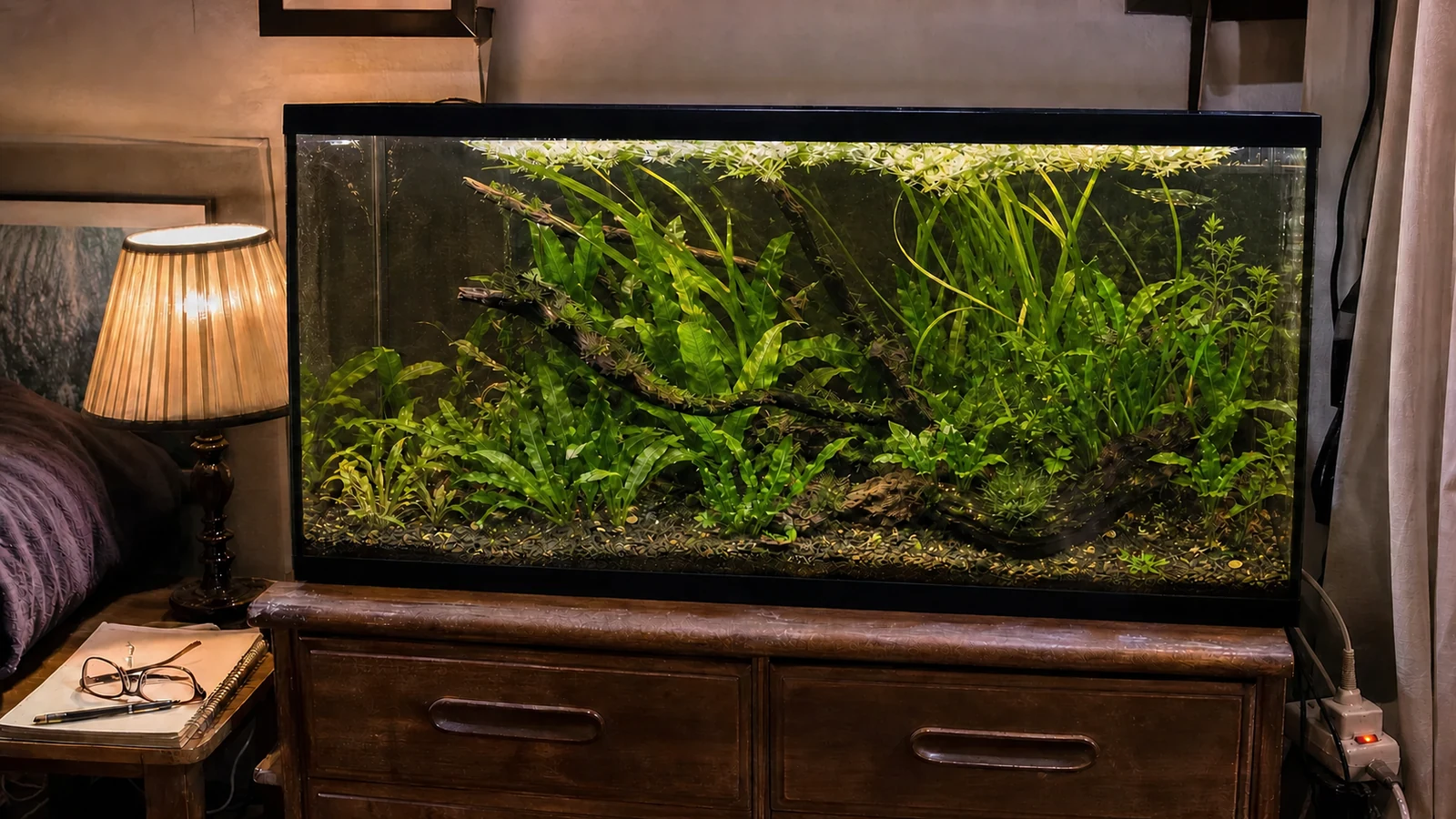
Emersed vs Submerged Aquarium Plants
The emersed-versus-submerged question sounds technical, but the basic idea is simple. An emersed plant has wet roots and leaves growing in humid air. A submerged plant grows with its foliage underwater. Many plants sold for aquariums are amphibious in nature, so they are capable of both forms.
| Growth Form | Where the Leaves Grow | What the Leaves Are Like | What to Expect After Planting |
|---|---|---|---|
| Emersed | In humid air above wet roots | Often thicker, firmer, and broader | Some old leaves may decline while submerged leaves replace them |
| Submerged | Fully underwater | Often thinner, softer, and adapted to underwater gas exchange | Usually less leaf-form conversion, though a change in tank conditions can still cause stress |
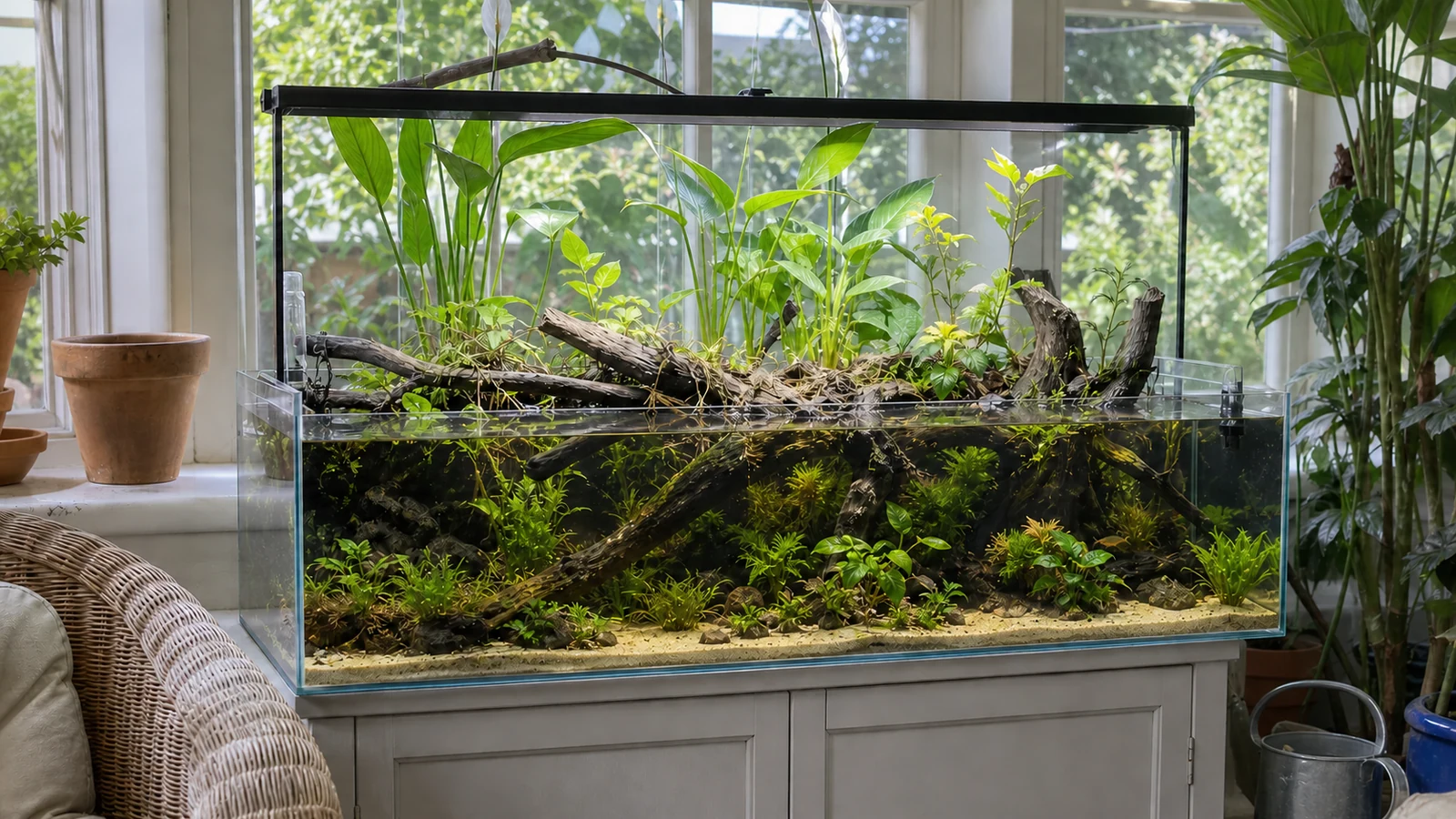
Why commercial growers use emersed production
Air contains far more accessible carbon dioxide than aquarium water. In a warm, humid greenhouse, amphibious plants can grow quickly without expensive underwater CO2 systems. They are also easier to keep free of aquatic algae, simpler to handle, and sturdy enough to survive packing. The method allows a nursery to produce a consistent number of healthy plants at a price hobbyists can afford.
Tropica's overview of emersed production explains how a major aquatic nursery uses this natural amphibious growth cycle rather than treating it as a defect to hide.
Some true aquatic plants, including Vallisneria, Egeria, and Cabomba, are normally produced submerged because that is how they live. Most Cryptocoryne, Echinodorus swords, Hygrophila, Bacopa, Ludwigia, Rotala, Anubias, and many carpeting plants can be produced emersed.
Why melting happens
A leaf built for air cannot simply become an efficient underwater leaf. Its surface, thickness, internal air spaces, and gas-exchange structures were made for a different environment. After planting, the plant often reclaims nutrients from those old leaves and grows a new form. The old leaves yellow, turn translucent, soften, or detach. Aquarists call that melt.
Old-leaf melt can be completely normal. A soft crown, mushy rhizome, or rot moving into new growth is not. Cryptocoryne and many swords can shed most of their old foliage and recover from a firm crown. Stem plants often lose lower emersed leaves while healthy submerged tips continue upward. Carpeting plants may thin before sending new runners. Anubias and Java fern usually transition more quietly, although damaged rhizomes can rot.
Foul smell or rot that keeps moving through new tissue points to a real problem rather than harmless conversion. Crypt melt can also follow a general environmental shock, even when the plant was already submerged. Temperature, hardness, lighting, nutrients, and repeated uprooting all matter.
Which plants adapt most easily
Many healthy Bacopa, Hygrophila, Ludwigia, and Rotala plants adapt readily because the growing tips can start making submerged leaves while the older portion declines. That doesn't mean every leaf survives. Fast growth simply makes the conversion easier to see and recover from.
Cryptocoryne, swords, some carpeting species, and delicate stem plants can show a more dramatic change. The individual plant's stored energy matters as much as the name. A robust emersed pot with a strong root system may outperform a weak submerged cutting.
Helping an emersed plant transition
- Plant it correctly. Keep Cryptocoryne and sword crowns just above the substrate. Keep Anubias, Bucephalandra, and Java fern rhizomes completely unburied.
- Remove only clearly failing tissue. Trim mushy, badly torn, or decomposing leaves, but leave functional leaves while new growth develops.
- Keep conditions steady. Stable temperature, sensible lighting, adequate nutrients, and consistent CO2 are more useful than a sudden blast of light.
- Feed the right place. Root tabs help heavy root feeders in inert substrate. Stem and rhizome plants also use nutrients from the water column.
- Stop moving it. Repeatedly uprooting a plant to check the roots creates another setback each time.
- Watch the growth point. A firm crown, solid rhizome, healthy stem tip, or tiny new shoot matters more than the old leaves.
The lesson I learned is to wait for evidence from the growth point. Throwing away a firm crypt because every old leaf melted can mean discarding a plant one week before it rebounds.
Tissue Culture Plants
Tissue culture is laboratory propagation. A tiny piece of clean plant tissue is disinfected, multiplied under sterile conditions, and grown in a sealed cup on a nutrient gel. The gel contains water, minerals, sugar, vitamins, and substances that direct plant growth. One cup can hold many small plantlets genetically derived from the same stock. Tropica's tissue-culture overview shows what this sealed production method looks like in practice.
As long as a reputable cup remains sealed and uncontaminated, it starts free of aquarium snails, pest algae, planaria, hydra, and pesticide exposure from an ordinary grow-out tank. That is why tissue culture is so attractive for shrimp tanks and clean-start aquascapes. By biosecurity, I simply mean reducing the chance that unwanted organisms or treatment residues enter the tank. Once the seal is broken, the cup is no longer sterile.
| Advantages | Disadvantages |
|---|---|
| No aquarium snails, algae, or common tank hitchhikers in an intact cup | Plantlets are small and can look unimpressive on day one |
| Many plantlets can come from one cup | Separating and planting tiny plugs takes time |
| Excellent for carpeting plants and rare cultivars | Small plants have fewer energy reserves than a mature pot |
| Easy to store briefly while sealed and healthy | Gel must be rinsed away before planting |
| Useful when shrimp biosecurity matters | Conversion and early melt can still happen |
Most cups cost roughly $8 to $15, with rare or variegated cultures costing more. Growth rate after planting depends on the species and tank. A fast carpet under strong light, balanced nutrients, and stable CO2 may take off quickly. A slow Bucephalandra plantlet in a low-tech tank may need patience.
Tissue culture is worth buying when I want a carpet divided across a large area, a clean moss, a precise rare cultivar, or the lowest practical hitchhiker risk. It is often unnecessary when I need a large mass of cheap fast-growing stems and can quarantine normal cuttings. A generous $10 hobbyist bag of water wisteria will fill space far faster than tiny laboratory plantlets.
To plant a cup, I rinse away the gel gently with clean water, divide the clump into multiple small portions, and plant them promptly. I don't subject fragile tissue-culture plantlets to bleach, peroxide, or another dip. They have already come from a clean process, and the dip is more likely to injure them than improve them.
Pests and Hitchhikers
"Pest" is a loaded word in aquarium keeping. Many organisms that hitchhike on plants are harmless decomposers or useful live food. The right question is not whether something moved in. It is whether it threatens the livestock, plants, or kind of aquarium you are trying to keep.
Snails
Snails are the most common plant hitchhiker. Bladder snails, ramshorns, and Malaysian trumpet snails mainly eat leftover food, biofilm, algae, and dying plant tissue. A population explosion usually points to excess food, not an invasion with a plan. Some true pond snails are more willing to graze tender leaves, so identification matters.
| Hitchhiker | How Common | Actual Risk | Removal Difficulty | Best Prevention |
|---|---|---|---|---|
| Unidentified snails | Very common on wet-grown plants | Usually nuisance-level; risk depends on species and your tolerance | Moderate to hard after reproduction | Inspect leaf undersides, crowns, pots, and roots; quarantine |
| Bladder snails | Very common | Usually harmless scavengers; numbers follow available food | Hard once egg sacs hatch throughout the tank | Remove clear gelatinous egg sacs and adults during quarantine |
| Ramshorn snails | Common | Usually harmless; may graze weak leaves and reproduce quickly with excess food | Moderate to hard | Inspect and quarantine; control feeding if they establish |
| Pond snails | Common name is used loosely | Some larger species may eat tender growth | Moderate to hard | Confirm identity, remove adults and egg masses |
| Malaysian trumpet snails | Common in established hobbyist tanks | Usually useful substrate burrowers, but unwanted in some layouts | Hard because they hide and produce live young | Quarantine and inspect after dark; egg scraping will not catch live-bearing young |
I don't automatically reject a healthy plant because it has a bladder snail. I do want the choice to be mine, especially in a snail-free aquascape or shrimp breeding setup. A manual inspection plus observation is more reliable than pretending one quick dip guarantees every egg is gone.
Algae and cyanobacteria
Algae is usually a bigger purchasing concern than common snails because a small contaminated fragment can become a long project. I inspect slow-growing leaves, moss, roots, and any mesh or wood included with the plant.
| Hitchhiker | How Common | Actual Risk | Removal Difficulty | Best Prevention |
|---|---|---|---|---|
| Black beard algae | Fairly common in established tanks | Doesn't harm livestock, but can cover slow leaves and hardscape | Moderate to hard because tufts attach firmly | Reject badly infested plants; trim isolated affected leaves |
| Hair algae | Common name for many filamentous algae | Mostly an aesthetic and plant-competition problem | Moderate if caught early | Swish, inspect, and remove every visible strand and damaged leaf |
| Staghorn algae | Less common | Stubborn branching growth on stressed leaves and equipment | Moderate to hard | Avoid contaminated portions and quarantine |
| Cladophora | Less common, but important | Fragments tangle through moss and spread; one of the worst collector hitchhikers | Hard | Do not buy visible infestations; discard a cheap badly affected plant |
| Cyanobacteria | Occasional transfer on wet material | It is bacteria, not true algae; tank conditions largely decide whether it blooms | Easy to remove once, harder if the cause remains | Rinse away residue and avoid plants from a slimy, foul-smelling source tank |
Cladophora deserves special caution. Its tough green branching filaments can look like ordinary hair algae, but fragments survive handling and become nearly impossible to separate from moss. If an inexpensive moss portion is intertwined with it, replacement is often cheaper than months of picking.
Other hitchhikers
The alarming organisms are much less common than snails. Outdoor-grown, pond-grown, or wild-collected plants deserve more scrutiny because predatory insect nymphs and eggs are more plausible there.
| Hitchhiker | How Common | Actual Risk | Removal Difficulty | Best Prevention |
|---|---|---|---|---|
| Hydra | Occasional | Hydra rarely threaten healthy adult fish or shrimp, but they can prey on very small fry and shrimplets | Moderate | Inspect glass and leaves during quarantine, especially after lights out |
| Planaria | Occasional in established source tanks | Greatest concern for shrimp, eggs, and tiny fry; not every flatworm is planaria | Hard because eggs can survive treatment | Quarantine and inspect bait or surfaces after dark |
| Dragonfly nymphs | Rare indoors, more plausible outdoors | Serious predators of shrimp, fry, and small fish | Individual removal is easy; confidence takes longer | Extended quarantine for pond-grown or wild plants |
| Damselfly nymphs | Rare indoors, more plausible outdoors | Predatory and a real risk to small livestock | Similar to dragonfly nymphs | Inspect stems and keep outdoor plants isolated |
| Leeches | Rare | Risk depends on species; many prey on snails or worms rather than fish | Moderate | Remove, identify if possible, and continue observation |
| Detritus worms | Common in mature source material | Usually harmless decomposers | Usually no removal is needed | Rinse excess mulm and avoid overfeeding quarantine containers |
| Scuds | Occasional | Usually scavengers, but can compete with shrimp and bother tender plants in fishless tanks | Hard in dense planting | Quarantine and inspect after dark |
| Seed shrimp | Common microfauna | Usually harmless and useful fish food | Usually no removal is needed | Quarantine only if a sterile-looking display is the goal |
| Copepods | Common microfauna | Harmless in nearly all freshwater aquariums | Usually no removal is needed | No special prevention beyond normal inspection |
| Insect eggs | Occasional on outdoor plants | Risk depends on what hatches | Variable | Remove suspicious egg masses and extend observation |
| Fish parasites | Uncommon from fishless nurseries, possible from shared fish systems | Wet plants can transport attached life stages of some parasites | No short dip covers every lifecycle | Fishless quarantine and plants from fish-free systems reduce risk |
The phrase "worms" covers many unrelated animals. Thin detritus worms wiggling in debris are not the same as arrow-headed planaria, and neither is automatically a fish parasite. Identification keeps a harmless cleanup organism from turning into an unnecessary tank-wide treatment.
Plant-mediated disease transfer should stay in perspective, but it is real enough to respect. UF/IFAS guidance on freshwater ich notes that the parasite's attached stage can move on plants and other wet surfaces. That is one reason I care whether a seller's plants shared water with fish.
Quarantining New Aquarium Plants
Quarantine creates time to see what an inspection misses. It also keeps shipping water, loose algae, pesticide residue, and organisms from a shared fish system away from the display tank. I consider it especially important for shrimp tanks, fry tanks, expensive aquascapes, and any plant from an outdoor pond or unknown hobbyist system.
A simple quarantine setup
A clean food-safe tub, clear storage container, or spare aquarium is enough. Use conditioned water, a small light appropriate for the plants, stable room temperature, and modest fertilizer if the stay will be long. Filtration is optional for a lightly stocked plant container, but circulation and regular water changes help. Keep its net, tweezers, and siphon separate from display-tank tools.
On arrival, I photograph the unopened bag and plants before doing anything that could complicate a shipping claim. Then I remove pots, weights, most rockwool, dead tissue, and visible egg masses. I inspect both sides of each leaf, stem nodes, crowns, rhizomes, and roots under strong light. A firm swish in a separate bowl dislodges a surprising amount.
One to two weeks is a practical observation period for ordinary plants from a fishless source when the display has normal risk tolerance. For a shrimp-breeding tank, plants from a system containing fish, or outdoor-grown material, three to four weeks is more useful because some eggs and parasite stages take time to reveal themselves. No number of days guarantees sterility.
Comparing plant dips
A dip is an optional risk-reduction step, not a magic eraser. The right choice depends on the target organism and the plant. Mosses, Vallisneria, floaters, Cryptocoryne, fine-leaved stems, and already stressed plants can react badly to treatments that a sturdy Anubias tolerates.
| Dip | Most Useful For | Main Limitations | Plant Safety |
|---|---|---|---|
| Alum | Snails and some egg control during a longer soak | Weak choice for algae and fish pathogens; hobby protocols are not standardized | Often gentler than oxidizers, but species still vary; use culinary potassium alum, not an unidentified pool product |
| Potassium permanganate | Oxidizing exposed surface organisms and organic material | Stains, is consumed by debris, and does not guarantee every egg or pathogen is killed | Concentration matters; crystals and strong solutions can injure plants, skin, and eyes |
| Hydrogen peroxide | Some exposed algae and soft-bodied surface organisms | Unreliable against protected eggs and deeply embedded pests | Can burn mosses, floaters, crypts, Vallisneria, and delicate leaves |
| Diluted plain bleach | Aggressive treatment of visible algae and many exposed organisms on sturdy plants | Highest damage risk; does not promise complete egg or pathogen removal | Reserve for tolerant plants and a verified protocol; avoid fragranced or splashless products; rinse and dechlorinate thoroughly |
| Commercial plant dips | Convenient label directions for named targets | Results depend entirely on active ingredients and claims | Follow the actual label; "natural" or "shrimp safe" does not prove universal effectiveness |
I avoid giving one universal recipe because household bleach strength, permanganate products, exposure time, plant condition, and species sensitivity all vary. If I use a chemical dip, I follow a reputable protocol for that exact product and plant, wear gloves and eye protection, ventilate the area, rinse thoroughly, and use dechlorinator after chlorine. I never mix bleach, peroxide, permanganate, acids, ammonia, or commercial cleaners. The CDC's bleach safety guidance is unambiguous about not mixing bleach with other cleaners or disinfectants.
Dips also don't reliably remove systemic pesticide residues. For sensitive shrimp, the better tools are a seller who can document invertebrate-safe handling, sealed tissue culture, quarantine, and repeated water changes. I never dip tissue-culture plantlets.
How to Recognize Healthy Aquarium Plants
Healthy doesn't mean flawless. Shipping folds leaves, darkness dulls color, and emersed plants may be hours away from shedding foliage. Look at the structures that let the plant recover.
| Plant Part | Healthy Signs | Warning Signs | Important Exception |
|---|---|---|---|
| Roots | Firm white, cream, tan, or species-appropriate darker roots; fresh root tips | Slime, foul smell, or roots separating at a touch | Stem cuttings are often intentionally sold without roots |
| Rhizome | Firm all the way through, with visible nodes or growth points | Soft black areas, deep damage, or spreading rot | A dry-looking outer surface can still cover a firm healthy core |
| Crown | Firm center with leaves or shoots emerging cleanly | Mushy center, leaves pulling out with rotten bases | A crypt can lose every leaf and recover if the crown stays firm |
| Leaves | Firm species-appropriate tissue and at least some intact growth | Heavy algae, widespread translucence, holes with dying edges, egg masses | One torn or yellow old leaf is not a failed plant |
| Stems | Crisp stems, healthy nodes, and an intact growing tip | Crushed, translucent, or blackening stems | Lower emersed leaves may drop while the tip converts |
| New growth | Clean tips, new roots, runners, buds, or small fresh leaves | Distorted new leaves, arrested tips, or continuing collapse | Newly shipped plants may need time before growth resumes |
| Color | Plausible for the species and growing conditions | Bleached patches, black decay, or obviously edited listing photos | Red plants often green up under lower light or different nutrition |
Pinholes, yellowing, pale new growth, twisted tips, and damaged leaf edges can suggest nutrient problems, but one symptom doesn't prove one deficiency. Shipping damage, emersed conversion, old age, herbivory, and root stress can look similar. I judge patterns in new growth rather than diagnosing a purchase from one old leaf.
Shipping Considerations
The best plant in the world can be ruined by a hot mailbox. Before ordering, check the forecast at the seller's location, along the route if severe weather is widespread, and at your own address. Ordering early in the week reduces the chance of a weekend delay. Holiday weeks are risky even when the weather looks fine.
Summer heat is difficult because insulation only slows warming. A cold pack may help for part of the trip, but sometimes a weather hold is the better decision. In winter, insulation and a correctly placed heat pack can prevent freezing. The pack should not touch the plant bag directly, and too much heat in a tightly insulated box can also cause damage.
Track the parcel and bring it inside immediately. A carrier hold can be safer than a sunny porch, freezing mailbox, or delivery truck that arrives after work. If the box is delayed, contact the seller before opening if their policy asks you to do so.
A live-arrival guarantee is not the same as a promise that every old leaf will remain perfect for a month. Read the dead-on-arrival policy before purchasing. Claim windows can be short, and sellers commonly require photos of the plant, sealed bag, label, and box soon after delivery. Keep the packaging until the claim is resolved. Bent leaves and minor melt are normal shipping issues; a plant that is entirely translucent, foul, and mushy with no firm crown, rhizome, or stem is a different matter.
Aquarium Plant Cost Comparison
The useful number is cost per established plant, not cost per listing. Include shipping, usable biomass, losses, planting labor, and replacement risk.
| Plant Format | Typical Price Before Shipping | What You Usually Receive | Best Value When |
|---|---|---|---|
| Tissue culture | $8 to $15 per cup | Many small clean plantlets | Biosecurity, carpeting density, or a rare cultivar matters |
| Potted plant | $7 to $15 | A rooted plant or group in rockwool | You want an established crown or several rooted stems |
| Stem bunch | $6 to $12 | Several cut stems, often held with a weight | Fast coverage is needed and you can separate and plant them |
| Bare-root plant | $6 to $18 for common species | One crown, rosette, bulb, or rhizome | The specimen is healthy and appropriately sized |
| Hobbyist cuttings | $2 to $10 per type, often $15 to $40 per package | Variable but frequently generous submerged biomass | Budget and fast establishment matter |
| Mounted plant | $15 to $30 or more | Plant attached to rock, wood, mesh, or decor | Convenience and a finished focal point justify the premium |
| Rare collector plant | $20 to $100 or more | Usually a small named portion | Provenance, identity, and scarcity justify the risk |
A tissue-culture cup can look expensive beside a $7 pot, yet divide into twenty plugs. A $5 stem bunch can be superb value if all stems are healthy, or poor value if it is mostly crushed lower growth. A rare plant isn't a bargain because it is slightly cheaper than another rare listing. Value begins with whether the plant suits the tank and survives.
Best Recommendations by Hobbyist Type
| Hobbyist | Purchasing Strategy |
|---|---|
| Beginners | Buy forgiving common plants from a reputable local grower, WetPlants, or a knowledgeable fish store. Spend the effort on matching light and size rather than chasing rare names. |
| Shrimp keepers | Choose sealed tissue culture or plants from a seller who can discuss pesticides and shared fish water, then quarantine carefully. |
| Aquascapers | Combine tissue culture for carpets with nursery pots, rooted rosettes, or submerged hobbyist stems for immediate structure and biomass. |
| Budget hobbyists | Start with Marketplace, clubs, swaps, and mixed trimming packages. Shipping one cheap plant rarely makes sense. |
| High-tech tanks | Seek healthy submerged stem cuttings and specialist sellers who can document cultivar identity, light, CO2, and nutrition. |
| Low-tech tanks | Buy genuinely low-demand plants. Do not pay extra for seller coloration or density that depends on injected CO2 and intense light. |
| Rare plant collectors | Use reputable collectors, careful Etsy sellers, specialist nurseries, and Buce Plant when an exact cultivar matters. Confirm the portion and provenance. |
20 Common Mistakes When Buying Aquarium Plants
- Buying the photograph instead of the plant's requirements. Listing photos show a plant at its best, often under strong light and injected CO2. Check adult size, growth rate, light, substrate, temperature, and CO2 needs before falling for the color.
- Ordering before planning the layout. A cart full of healthy plants can still fail as a planting plan. Decide which areas need foreground, midground, background, shade-tolerant, and hardscape-attached plants, then estimate how many portions each group requires. The choosing guide walks through that plan zone by zone.
- Buying a non-aquatic plant. Mondo grass, purple waffle, lucky bamboo, and other marginal plants may survive temporarily with submerged roots, but their leaves eventually decline underwater. Verify the scientific name and whether the plant can live fully submerged.
- Buying "aquarium carpet seeds." Many seed listings produce terrestrial seedlings that look green for a few weeks, then rot underwater. Genuine carpeting aquarium plants are usually sold as live plants or tissue culture, not mystery seed packets promising an instant lawn.
- Treating the lowest price as the best value. Compare plant count, stem count, rhizome size, rooted versus unrooted condition, usable biomass, and survival odds. A larger healthy portion often costs less per established plant than a tiny bargain.
- Forgetting shipping in the comparison. A $6 plant with $18 shipping is not cheaper than a $10 local plant. Build a planned order, compare the final total, and include any heat pack, insulation, or weather-hold cost.
- Ordering into extreme weather or a holiday delay. Check both origin and destination forecasts, order early in the week, and avoid postal holidays. Waiting seven days for safer weather is easier than trying to rescue a frozen or cooked box.
- Skipping the live-arrival policy. Read the claim deadline, photo requirements, exclusions, heat-pack rules, and first-delivery-attempt requirements before paying. A strong policy is useful only if you know how to follow it.
- Pouring shipping water into the aquarium. Shipping water can contain debris, treatment residue, algae fragments, or organisms from the seller's system. Move the plant to a separate inspection container and discard the water.
- Skipping inspection because the seller has good reviews. Excellent sellers cannot see every snail egg or algae filament. Inspect both leaf surfaces, roots, crowns, rhizomes, stem nodes, pots, wood, rock, and mesh every time.
- Believing a quick dip sterilizes everything. Dips can reduce a particular risk, but protected eggs and parasite stages may survive. Combine inspection, rinsing, a plant-appropriate treatment if justified, and observation.
- Using the harshest dip on every species. Mosses, floaters, Vallisneria, crypts, and fine stems may be badly burned by a treatment that Anubias survives. Match the method to the plant and target, and never improvise a stronger dose for reassurance.
- Mixing chemicals. Bleach, peroxide, permanganate, acids, ammonia, and commercial cleaners can react dangerously or damage plants. Use one documented method at a time, with proper protection, rinsing, and ventilation.
- Throwing out a firm plant because old leaves melted. Emersed leaves often decline underwater. If the crown, rhizome, roots, or growing tip remains firm, give the plant stable conditions and watch for new growth.
- Calling real rot "normal melt." A mushy crown, foul smell, blackening rhizome, or collapse moving through fresh tissue needs action. Remove rotting material, check planting depth and conditions, and document it quickly if shipping damage is likely.
- Burying a rhizome. Anubias, Bucephalandra, and Java fern rhizomes should sit above the substrate or attach to hardscape. Burying the thick horizontal rhizome encourages rot even when the leaves initially look fine.
- Planting a tied bunch as one plug. Remove weights or ties and separate stem bunches so light and flow reach each stem. Likewise, remove most rockwool from roots and rinse tissue-culture gel instead of burying the shipping material.
- Expecting the seller's color to remain unchanged. Red and compact growth reflects the source tank's genetics, light, CO2, nutrients, and photography. Judge the purchase by healthy new growth in your conditions, not by an exact color match.
- Paying collector prices without confirming identity and portion. Ask for the scientific or cultivar name, a current specimen photo, portion dimensions, and provenance. A premium trade name means little if the seller cannot distinguish the plant.
- Ignoring invasive-species rules. Aquatic plant restrictions differ by country, state, and province and can change. Check current government rules before ordering across borders, and never release plants, fragments, or packing water outdoors.
Frequently Asked Questions
What is the best place to buy aquarium plants online?
There isn't one best store for every order. Father Fish Aquarium is the community favorite for hardy plants headed into natural low-tech tanks, and I like WetPlants for beginners and value, Dustin's Fish Tanks for vigorous plants and strong stem selections, and Buce Plant for tissue culture or a specific rare plant. The best choice depends on stock, weather, shipping cost, and what your tank can grow.
Is buying aquarium plants from local hobbyists safe?
Usually, if you inspect and quarantine them. Ask about snails, algae, fish medications, pesticides, CO2, and the source tank. A careful local grower can provide exceptionally healthy submerged plants, but local does not mean pest-free or correctly identified by default.
Are Facebook Marketplace aquarium plants worth buying?
They often offer the best value in the hobby. You may get rooted runners or a large trimming package for the price of one retail pot, with no shipping. Request a current photo, confirm the portion and species, ask about pests, and inspect the source tank when pickup makes that possible.
Is Etsy a good place to buy aquarium plants?
Yes, especially for unusual cultivars and collector plants, but quality varies by seller. Read recent reviews for live aquarium plants, look at buyer photos, confirm the scientific name and portion size, and find out whether the plant is tissue culture, emersed-grown, or submerged-grown.
Is it okay to buy plants from a chain pet store?
Yes, if the actual specimen is healthy and truly aquatic. Sealed tissue-culture cups and common Anubias, Java fern, crypts, and swords can be good purchases. Avoid neglected, algae-covered plants and verify the name because some marginal houseplants are still sold for temporary aquarium use.
Are local fish store plants better than online plants?
Sometimes. A good local store lets you inspect the exact plant, avoid shipping, and ask informed staff questions. An online nursery may offer fresher stock, broader selection, and better plant expertise than a weak local store. Judge the plant, holding system, and seller practices rather than the sales channel alone.
What is a tissue culture aquarium plant?
It is a group of small plantlets propagated under sterile laboratory conditions on nutrient gel inside a sealed cup. A reputable uncontaminated cup begins free of aquarium snails, pest algae, and common tank hitchhikers. The plantlets still need rinsing, division, careful planting, and time to establish.
Are tissue culture plants worth the extra cost?
They are worth it for shrimp tanks, carpets, clean-start aquascapes, and rare cultivars. One cup may divide into many plugs. They are less compelling when you simply need a lot of common fast-growing stems, because submerged hobbyist cuttings give faster visual mass for less money.
Are tissue culture plants completely pest-free?
A properly produced, sealed, uncontaminated cup starts free of aquarium pests and algae. Check that the seal is intact and the gel shows no fuzzy growth or unusual contamination. Once opened, the plant is no longer sterile, and tissue culture does not guarantee that it will avoid normal transition melt.
Should I quarantine every new aquarium plant?
That is the safest habit, particularly for shrimp, fry, expensive displays, and plants from systems containing fish. Risk is lower with an intact tissue-culture cup, but I still inspect and rinse it. Your quarantine intensity can match the source and the consequences of introducing a hitchhiker.
How long should aquarium plants be quarantined?
One to two weeks is a practical observation period for ordinary plants from a fishless trusted source. Three to four weeks gives more time when the source held fish, the plants grew outdoors, or the destination is a sensitive shrimp or fry system. Water temperature affects parasite lifecycle speed, and no duration guarantees sterility.
What is the safest aquarium plant dip?
There is no safest dip for every plant and pest. Inspection, rinsing, and quarantine are the gentlest foundation. Alum is often used for snails, while oxidizers target different surface organisms but can burn plants. Choose a documented method for the exact plant and risk rather than using one treatment automatically.
Do plant dips kill snail eggs?
Some protocols reduce egg survival, but no quick dip deserves a guarantee. Gelatinous egg masses can shield embryos, and Malaysian trumpet snails produce live young rather than visible clutches. Remove any eggs you see, use an appropriate treatment if desired, and observe long enough for missed eggs to hatch.
Is bleach safe for aquarium plants?
A carefully diluted plain, unscented bleach protocol can be used on some sturdy plants, but it has the highest plant-damage risk of the common dips. Mosses, fine leaves, floaters, crypts, and Vallisneria can be sensitive. Never mix bleach with other chemicals, and rinse and dechlorinate thoroughly.
Can aquarium plants bring diseases into my tank?
They can transport attached stages of some fish parasites or contaminated water if they came from a system containing fish. The risk is much lower from fishless nursery systems and sealed tissue culture. Discard shipping water and use fishless quarantine when disease transfer would have serious consequences.
Can new plants harm shrimp?
The plant itself usually isn't the issue. Pesticide residue, copper-containing treatments, planaria, hydra, or contaminated shipping water can be. For sensitive shrimp, use tissue culture or a seller who documents invertebrate-safe production, then quarantine with repeated water changes before moving plants into the colony.
Are snails on aquarium plants bad?
Most common hitchhiker snails are scavengers, not plant destroyers. Bladder snails, ramshorns, and Malaysian trumpet snails eat biofilm, algae, leftover food, and decaying tissue. Their population usually reflects available food. They can still be unwanted, and some true pond snails may graze tender plants more readily.
How do I find snail eggs on new plants?
Use a bright light and inspect both leaf surfaces, folds, crowns, pots, roots, and hardscape. Bladder and ramshorn eggs often look like clear gelatinous patches containing small dots. Remove them manually. Remember that Malaysian trumpet snails are livebearers, so there may be no egg mass to find.
Do I need to rinse aquarium plants before planting?
Yes. Rinse and swish them in a separate container of clean water after documenting their arrival. Remove loose debris, shipping water, dead leaves, visible eggs, weights, and most rockwool. Rinsing won't eliminate every hitchhiker or pesticide, but it is a useful first step.
Why do new aquarium plants melt?
Many were grown emersed and must replace air-adapted leaves with underwater leaves. Even submerged plants can react to a sudden change in temperature, hardness, light, CO2, nutrients, or planting. Some old-leaf loss is normal; a foul, mushy crown or rhizome signals rot rather than ordinary transition.
Will a melted aquarium plant grow back?
Often, if the growth structure remains alive. A firm crypt crown, solid Anubias rhizome, healthy stem node, or viable bulb can produce new growth after losing leaves. Remove decomposing tissue, correct any planting problem, keep conditions stable, and watch the growth point before giving up.
How can I tell if a plant was grown emersed?
Emersed leaves are often thicker, firmer, broader, and sometimes different in color or shape from reference photos of submerged growth. A nursery pot with spotless upright foliage is another clue. Ask the seller, since appearance alone is not conclusive and some species change very little.
Should I trim aquarium plant roots before planting?
Trim dead, mushy, or badly damaged roots. Very long healthy roots can be shortened enough to plant without folding them into a tight ball, but don't remove a strong root system merely for neatness. Stem cuttings may arrive rootless and form new roots from their nodes.
Should I remove rockwool from potted aquarium plants?
Remove as much as you reasonably can without shredding fine roots. Soaking and teasing it apart with fingers or tweezers is gentler than pulling the plant straight out. Rockwool can trap debris and restrict planting, but a few stubborn fibers are less harmful than destroying the root system.
Should I remove tissue-culture gel completely?
Rinse away the nutrient gel as thoroughly as you can with clean water. Large gel clumps can encourage microbial growth once placed in an aquarium and make the tiny roots hard to separate. Be gentle, divide the plantlets into manageable plugs, and do not use a harsh chemical dip.
Can I plant aquarium plants as soon as they arrive?
You can if the source is trusted and your risk tolerance is normal, but inspect and rinse them first. Quarantine is wiser for shrimp, fry, valuable displays, outdoor-grown plants, or plants from fish systems. If weather damage is possible, photograph everything before trimming or treating it.
Should I add the shipping water to my aquarium?
No. Shipping water provides no acclimation benefit for plants and can carry debris, treatment residue, algae fragments, or organisms from the seller's system. Lift the plants into a separate inspection container, discard the shipping water, and rinse before planting or quarantine.
How long can aquarium plants survive in the mail?
Many healthy plants tolerate a normal two-to-four-day trip when packed with appropriate moisture and temperature protection. Delicate species, extreme heat or cold, drying, and delays reduce that margin quickly. The goal is not to test their maximum survival time, so choose prompt shipping and retrieve the box immediately.
Is it safe to order plants in summer or winter?
Usually, with sensible timing and seller guidance. Check both forecasts, avoid extreme weather and holiday delays, and ask whether the seller recommends insulation, a heat pack, a carrier hold, or postponement. In severe heat, waiting is often safer because an ice pack cannot refrigerate a delayed box indefinitely.
Is a heat pack worth paying for?
It can be in genuinely cold weather when the seller knows how to pack it. A heat pack should be separated from plant bags and paired with suitable insulation. It can also overheat a box in mild conditions, so follow the retailer's temperature policy instead of adding one automatically.
What should I do if plants arrive dead or damaged?
Photograph the unopened bag, plant, label, inner packing, and box immediately. Check the seller's claim window and contact them before discarding packaging or applying a dip. Separate normal bent or transitioning leaves from a plant that is entirely mushy, foul-smelling, frozen, or cooked with no firm living structure.
Why did my red plant turn green after I planted it?
Red coloration depends on genetics plus light, CO2, nutrients, growth rate, and sometimes how the photograph was processed. A plant grown under intense nursery or high-tech conditions may become greener in your tank. Healthy green growth is better than stressing the tank to reproduce a sales photo.
Can I add live plants before an aquarium is fully cycled?
Yes. Plants can go into a new setup from the beginning, and healthy fast growers may use some ammonium and nitrate while the biological filter develops. They do not replace cycling or testing. Avoid exposing delicate plants to extreme ammonia dosing, unstable temperature, or constantly changing equipment.
How many aquarium plants should I buy for a new tank?
There isn't a useful plants-per-gallon rule. Map the planted area instead: space most stems roughly 1 to 2 inches apart, divide a typical tissue-culture cup into about 6 to 8 plugs, and leave rosettes room for their mature width. I would rather cover at least half the intended planted area than buy one specimen of everything.
Are potted plants better than stem bunches?
They serve different purposes. A pot often contains a rooted crown or several rooted stems and is useful for immediate structure. A bunch supplies multiple cut stems for quick background mass. Condition, species, and portion size matter more than whether the seller used a pot or weight.
Are aquarium carpet seeds legitimate?
Most mystery seed packets marketed for instant underwater carpets are not a reliable way to establish true aquatic plants. They often sprout terrestrial seedlings that later decay. Buy a named carpeting species as live plants or tissue culture, and match it to the light and CO2 available.
Can aquarium plants carry pesticide residue?
Yes, especially plants produced or held with treatments not intended for shrimp and other invertebrates. A quick dip may not remove systemic pesticide. Ask the seller about invertebrate safety, use tissue culture when consequences are high, and quarantine open-grown plants with repeated water changes.
Is it legal to ship every aquarium plant across state lines?
No. Federal, state, provincial, and international restrictions apply to some aquatic plants and change over time. Check current government rules, including the USDA APHIS federal noxious weed guidance in the United States, before buying, selling, or shipping across a border.
Does a live-arrival guarantee cover plants that melt later?
Usually not. Most guarantees cover the condition at delivery and require fast photographic proof. Normal emersed-to-submerged transition, later husbandry problems, or a plant that declines after the claim window may be excluded. Read the exact policy before ordering and document arrival before altering the plant.
Conclusion
There is no perfect retailer for every aquarium, every plant, or every season. A large nursery wins on selection and consistent packing. Tissue culture wins when biosecurity matters. A skilled collector may be the only source for one exact cultivar. A local store wins when the specimen is healthy and I need it today.
In my experience, an experienced local hobbyist often offers the best overall combination: healthy plants, good prices, useful quantities, submerged growth, and the opportunity to inspect everything before buying. I can ask how the plant was actually grown, avoid shipping stress, and see the underwater form rather than guessing what an emersed leaf will become.
Reputable online retailers remain an excellent choice when local options are limited, the weather is reasonable, or I am searching for a specific species. That is when Father Fish Aquarium, WetPlants, Dustin's Fish Tanks, Etsy's best specialist sellers, and Buce Plant each make sense for different reasons.
For the next purchase, I would start with the tank rather than the catalog. Decide what conditions and space you can offer, using the choosing guide if that half is still open, then pick the plant format that fits your biosecurity and budget and judge the seller on plant health, honest descriptions, packaging, and support. If I can buy a healthy, correctly identified plant from a local grower who has already kept it underwater, that is usually my first choice. When I need something specific, a good online nursery is worth the shipping.
Buy the right plants, then keep them thriving
AquaLens reads your test strips, tracks the light, CO2, temperature, and nutrients your plants actually need, and turns this guide into a journal and reminders for the quarantine and melt period after a new plant arrives.
Keep reading
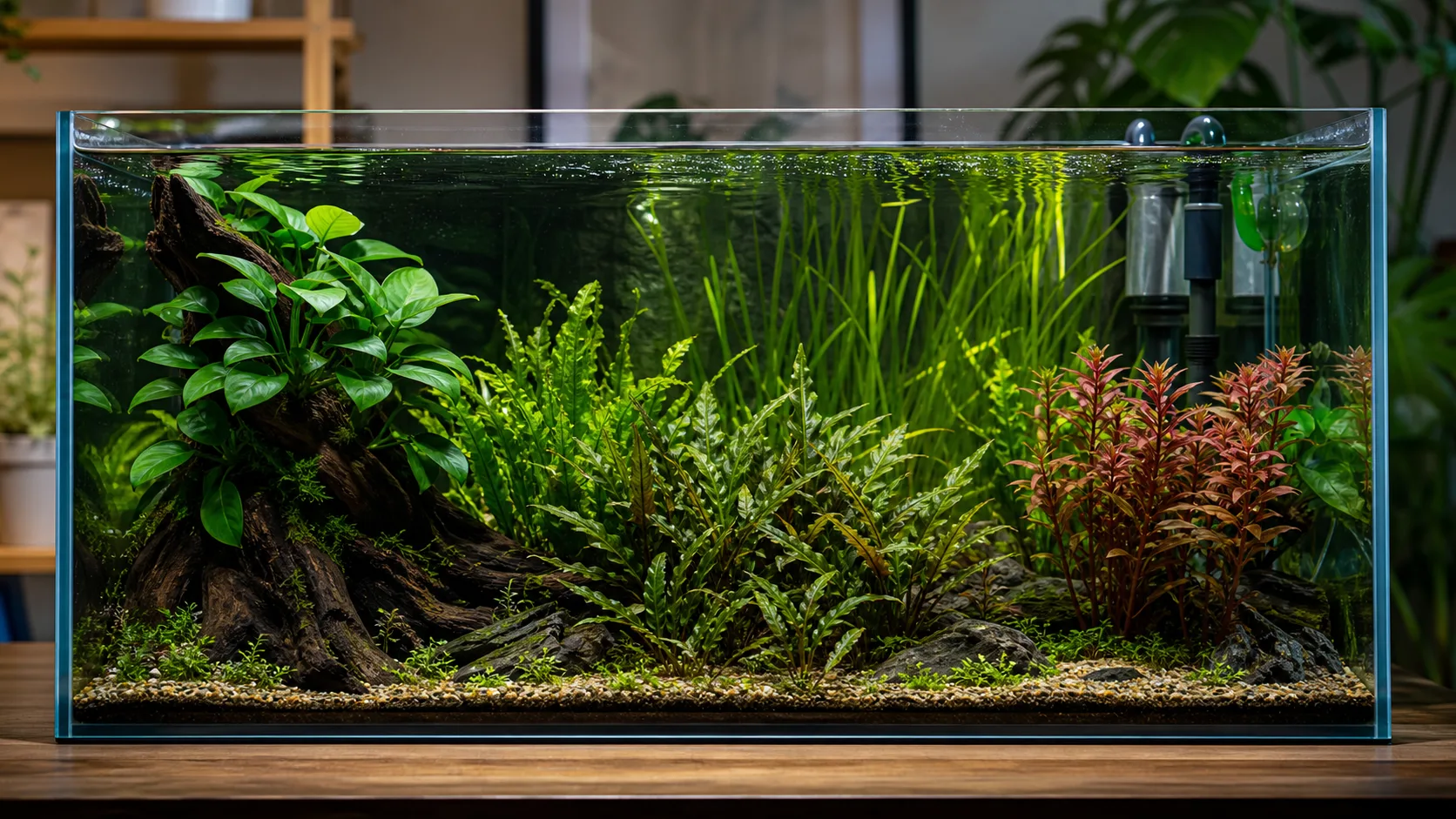
A practical planted-aquarium guide to choosing easy, advanced, low-light, CO₂, foreground, stem, shrimp-safe, and aquascaping plants.
Diagnose aquarium plant deficiencies by leaf age and symptom: yellowing, pinholes, twisting, and stunting. Read the pattern, then fix it safely.
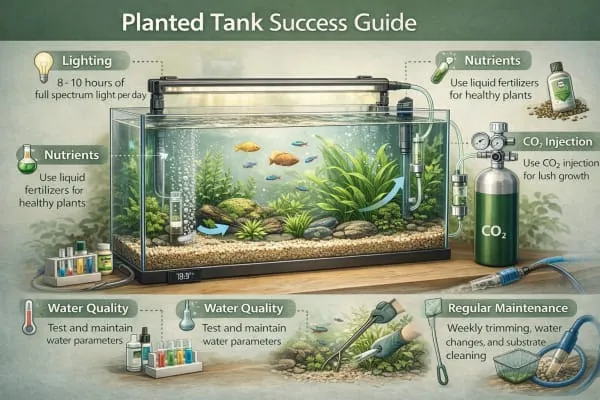
Grow a thriving planted aquarium: substrate, plant placement, feeding and dosing, pruning for density, and beating algae. Beginner-safe, expert-deep.