
The Ultimate Guide to Choosing Aquarium Plants
A practical planted-aquarium guide to choosing easy, advanced, low-light, CO₂, foreground, stem, shrimp-safe, and aquascaping plants.
On this page
Looking for Something Specific?
- Best beginner plants
- Best low light plants
- Best high light plants
- Best foreground plants
- Best midground plants
- Best background plants
- Best red plants
- Best floating plants
- Best epiphytes
- Best stem plants
- Best plants for shrimp tanks
- Best plants for goldfish
- Best plants for African cichlids
- Best plants for discus
- Best plants for nano aquariums
- Best plants for Dutch aquascapes
- Best plants for Nature Aquariums
- Best plants for jungle tanks
- Best plants for high-tech CO₂ tanks
- Best plants for low-tech aquariums
- Plants to avoid for beginners
Why Choosing the Right Plant Matters More Than Buying the Prettiest One
The fastest way to become frustrated with planted tanks is to shop from a photo instead of from your aquarium. A bright red stem plant, a perfect lawn of HC Cuba, or a rare Bucephalandra can look irresistible under store lighting. That does not mean it belongs in a low-light 20-gallon with no CO₂ and a busy owner. The plant has to match the tank, the tools, and the person maintaining it.
I have made that mistake more than once. Early on, I bought tiny portions of demanding plants because the label said “medium light” and I wanted the photo on the tag. What I really bought was a weekly trimming schedule, a CO₂ stability problem, and a front-row algae experiment. The plants were not bad. They were simply a poor match for the aquarium I had built.
The useful question is not “What is the best aquarium plant?” It is “What can grow predictably in this aquarium?” A predictable plant is more fun, looks better six months later, and teaches you more than a temperamental trophy plant that survives only long enough for a picture.
Match plants to five things before you order: the tank's size and depth, available light, whether you will inject CO₂, how you fertilize, and the amount of maintenance you genuinely enjoy. Then match them to the animals. Goldfish uproot and eat plants. African cichlids redecorate. Shrimp benefit from moss and fine cover. Discus like warmth, which quietly removes a lot of otherwise easy choices.
This guide covers the choosing half of the problem. Once you know what you want to grow, Where to Buy Aquarium Plants covers the buying half: sources, prices, quarantine, and how to recognize a healthy plant before it goes in your cart.
Understanding Plant Difficulty
“Beginner,” “easy,” and “low-tech” are useful labels, but they are not care instructions. A plant can be easy in one setup and difficult in another. Vallisneria is usually forgiving, for example, but it can sulk after certain liquid-carbon products or repeated uprooting. A red Rotala may be simple in a stable CO₂ tank and disappointing in a dim tank where it grows green and leggy.
| Level | What it usually means | Typical examples | What catches people out |
|---|---|---|---|
| Beginner | Tolerates imperfect light, nutrients, and missed maintenance | Anubias, Java fern, Cryptocoryne wendtii | Bad planting, especially buried rhizomes |
| Easy | Grows without CO₂ but still responds to care | Bacopa, water wisteria, Vallisneria | Underestimating eventual size or trimming |
| Intermediate | Wants reasonably consistent light and nutrition | Rotala rotundifolia, Staurogyne repens, Monte Carlo | Trying to use high light without stable CO₂ |
| Advanced | Demands stable CO₂, clean flow, and purposeful fertilization | Tonina, Eriocaulon, HC Cuba | Chasing a deficiency with random additives |
| Expert | Small margin for error or specialized water requirements | Syngonanthus and sensitive collector plants | Changing several variables at once |
What makes a plant difficult is usually not one magic parameter. It is the number of things that must stay aligned. CO₂-sensitive plants notice a big daily swing before a fish keeper does. High light creates growth potential, but that potential must be met with carbon and nutrients. Some plants need soft, acidic water to look their best. Some are slow enough that algae can settle on them before they can replace a damaged leaf. Others grow so fast that the difficulty is keeping them shaped rather than keeping them alive.
Growth speed matters more than most care cards admit. Hornwort can forgive a lot because it grows quickly and pulls nutrients from the water. Bucephalandra can be perfectly healthy while making a leaf only occasionally. The first asks you to prune; the second asks you to leave it alone. Neither is automatically easier, but each rewards a different kind of patience.
Choosing Plants by Aquarium Type
Low-tech aquariums
A low-tech aquarium generally has moderate or low light, no pressurized CO₂, and a reasonable weekly water change. It is not a neglected tank. It is a tank with modest growth expectations. The best choices are Anubias, Java fern, Bolbitis, Cryptocoryne wendtii, Cryptocoryne lutea, Vallisneria, Amazon sword, Bacopa, water wisteria, Java moss, hornwort, Salvinia, and frogbit.
Keep lighting modest, often six to eight hours at first. Use a complete liquid fertilizer if fish waste alone is not keeping plants healthy, and use root tabs under heavy root feeders. Do not force a carpet. Monte Carlo may live in a low-tech tank, but a dense flat lawn is much less likely without CO₂. Expect slower, sturdier growth and allow months rather than weeks for a layout to fill in.
Avoid buying a collection of red stems, tiny high-demand carpeting plants, or plants sold only as a laboratory tissue culture cup because they look fresh. Tissue culture is excellent for pest control, but it does not turn an advanced plant into an easy plant.
Medium-tech aquariums
This is the sweet spot for many long-term hobbyists: a good planted light, a nutritious substrate or root tabs, regular liquid fertilizer, and perhaps a modest amount of CO₂. Plants such as Rotala rotundifolia, Ludwigia repens, Staurogyne repens, Hygrophila pinnatifida, dwarf sagittaria, and many Cryptocoryne species become very satisfying here.
Medium-tech works best when you choose a lane. Either run low-to-moderate light with no gas, or increase light and provide stable injected CO₂. The awkward middle is high light with inconsistent carbon. That setup grows algae with impressive enthusiasm. If you are already there, the Algae Control: Root Cause Playbook explains how to rebalance instead of endlessly scrubbing. Plan on weekly trims of fast stems, periodic replanting of tops, and a 30 to 50 percent water change.
High-tech CO₂-injected aquariums
High-tech is not just a bright light and a diffuser. It is a system where light, carbon, nutrients, flow, and maintenance are deliberately balanced. That opens the door to carpets of Monte Carlo or HC Cuba, compact red stems, Pogostemon stellatus, Glossostigma, Tonina, Syngonanthus, and more delicate Eriocaulon.
Use a reliable regulator, consistent photoperiod, strong but non-destructive circulation, and a complete dosing plan. The plants can grow dramatically faster, which means trimming and water changes become part of the design process. A high-tech tank that is ignored for three weeks does not become low-tech. It becomes an expensive algae farm.
Nature aquariums
Nature Aquarium style is about a convincing natural scene, usually organized around stone or wood and a limited palette of plants. Good choices include mosses, ferns, Anubias, Bucephalandra, Cryptocoryne, small foreground plants, and a few carefully placed stems for depth. Think in masses, not in one specimen of every species.
Moderate-to-high light and CO₂ are common, but they are not the visual goal. The goal is a mature composition where plants soften hardscape without hiding it. Avoid a dozen competing leaf shapes, large sword plants in a small scene, or fast stems that block the focal point. Maintenance is selective: trim the plant that breaks the silhouette, not every plant simply because it can be cut.
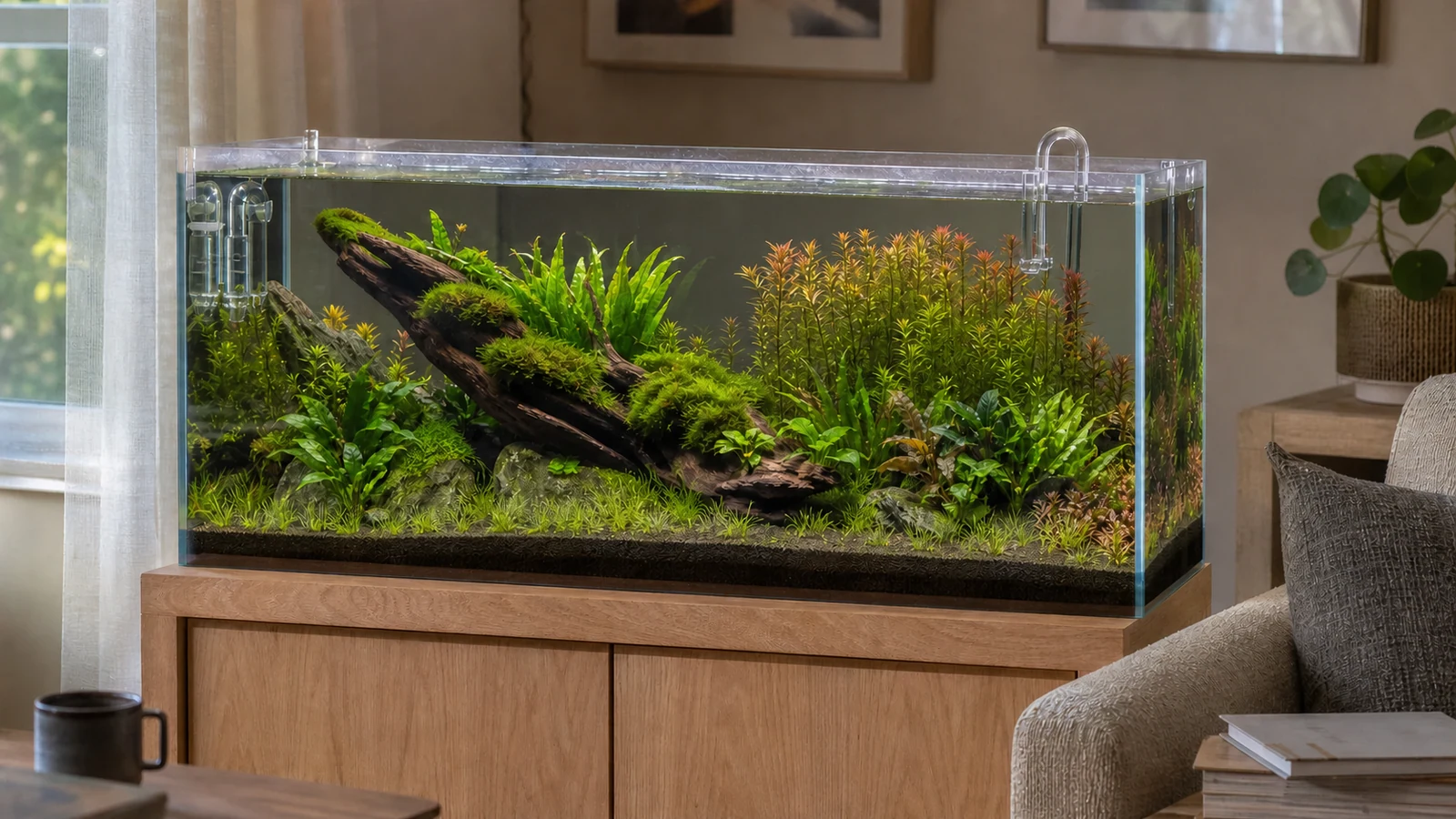
Dutch aquariums
Dutch-style planting is gardening underwater. It relies on distinct groups, leaf texture, height, and color rather than dramatic stone. Rotala, Ludwigia, Alternanthera reineckii, Limnophila, Hygrophila, Bacopa, Pogostemon stellatus, and compact midground species do well here. Most serious Dutch layouts benefit from injected CO₂, full fertilization, and disciplined trimming.
The common mistake is buying one pot of each plant. A Dutch group needs enough stems to read as a group from the front glass. Choose fewer species, buy enough of each, and give each group room. High light is useful, but stable CO₂ and regular trimming are what keep the lower stems leafy and the color honest.
Jungle aquariums
A jungle tank is not an unmaintained tank. It is a deliberately dense, layered tank where growth looks abundant rather than geometric. Cryptocoryne, Java fern, Bolbitis, Vallisneria, water wisteria, Hygrophila, floating plants, mosses, and swords are ideal. Lower light often helps the mood and reduces the need for constant pruning.
Feed the root feeders, thin floaters so they do not black out the whole tank, and remove decaying leaves before they gather in the thicket. Avoid demanding miniature carpets and color plants that need repeated shaping. A jungle tank succeeds when the plants look relaxed, not when every square inch is filled.
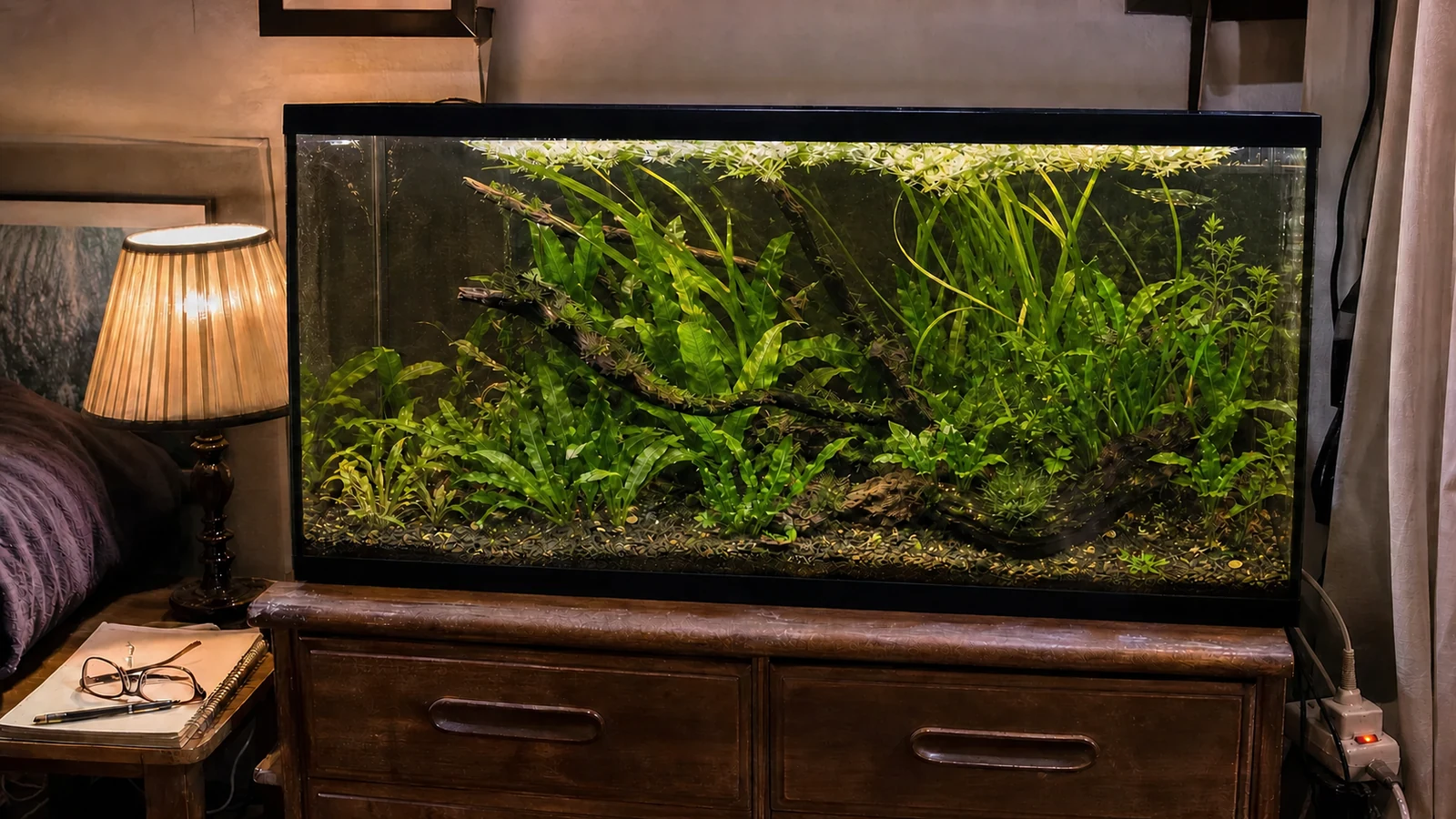
Blackwater aquariums
Blackwater setups are often dim, tannin-rich, and built around wood, leaf litter, and open space. Anubias, Java fern, Bolbitis, Cryptocoryne, some floating plants, and mosses are safer than sun-hungry stems. The amber water itself is not a fertilizer, and a tank under dense floating cover may be far darker than its light fixture suggests.
Use restrained lighting, a light liquid fertilizer, and root tabs for crypts if the substrate is inert. Avoid carpeting plants, most red stems, and plants that need strong light to stay compact. The beauty of blackwater is atmosphere, so leave room for it.
Shrimp tanks
Shrimp love fine-leaved cover, grazing surfaces, and calm corners. Java moss, Christmas moss, Subwassertang, Anubias nana petite, Bucephalandra, Cryptocoryne, small ferns, frogbit, and Salvinia are excellent. Moss is not mandatory, but it gives newborn shrimp somewhere to feed and hide.
The bigger issue is safety. Avoid plants with unknown pesticide exposure, rinse and quarantine new stock, and be wary of aggressive treatments. Use fertilizers consistently but do not panic-dose iron or traces because one leaf looks pale. Stable water and clean, gradual changes matter more to shrimp than a perfect plant palette.
Nano tanks
Nano tanks reward small leaves and slow restraint. Anubias nana petite, small Bucephalandra, Java fern trident, Cryptocoryne parva, Cryptocoryne lucens, Staurogyne repens, dwarf sagittaria, mosses, and modest patches of Monte Carlo are better scaled than Amazon swords or jungle Vallisneria.
Lighting and CO₂ swings happen quickly in small volumes. Start with a shorter photoperiod, use very small fertilizer doses measured accurately, and do not cram every available plant into a ten-gallon. A plant that reaches 18 inches is a background plant only until it hits the water surface and shades everything below.
Large display aquariums
Large tanks absorb visual scale. Use tall Vallisneria, large Amazon swords, Crinum, giant Hygrophila, mature Java fern, Bolbitis, and substantial groups of stems. Small plants still work, but they need repetition. One tiny Anubias on a six-foot tank disappears.
Large tanks are more stable chemically but physically more demanding. Plan fertilization and trimming so you can reach every area. Strong circulation is valuable, especially through dense plant beds, but do not blast delicate leaves or keep fish from resting.
Aquascaping competition tanks
Competition tanks usually ask more of both the grower and the plants. The chosen species must hit peak condition at a particular moment. HC Cuba, Glossostigma, Utricularia graminifolia, fine mosses, Rotala varieties, and precision-trimmed stems are common, but they need a mature routine before the final weeks.
Avoid trying a new demanding species on the deadline layout. Grow it in a separate tank first if you can. The best competition plant is the one you know how to bring into form on schedule, not the rarest name on a sales list.
Choosing Plants as Your Experience Grows
Complete beginners should buy plants that teach the fundamentals without punishing every missed water change: Anubias, Java fern, Cryptocoryne wendtii, Vallisneria, Bacopa, water wisteria, hornwort, and floaters. A first planted aquarium benefits from a mix of slow plants for structure and fast plants for nutrient uptake. Put the slow rhizome plants on wood and the fast stems or floaters where they can help during the new-tank phase.
Intermediate hobbyists can add stem grouping, color, and a modest carpet. This is the time for Rotala rotundifolia, Ludwigia repens, Hygrophila pinnatifida, Staurogyne repens, Monte Carlo, and Pogostemon stellatus. Learn to trim and replant stems, read new growth, and make one change at a time.
Experienced aquascapers can choose plants for composition rather than mere survival. They can use demanding plants because their CO₂, flow, and dosing routine are already reliable. Experts chasing difficult species should expect a learning curve with each plant. A successful Tonina tank does not guarantee a successful Syngonanthus tank. Keep notes, save healthy cuttings, and do not assume an expensive plant is a personal verdict.
Best Beginner Plants
| Plant | Growth and placement | Light and CO₂ | Feeding | Common mistake |
|---|---|---|---|---|
| Anubias | Slow, attach to wood or stone | Low to medium, no CO₂ needed | Liquid fertilizer, light feeding | Burying the rhizome |
| Java fern | Slow to moderate, attach to hardscape | Low to medium, no CO₂ needed | Mostly water-column feeding | Burying the rhizome or cutting healthy leaves |
| Java moss | Moderate, tie or tuck on wood | Low to medium, no CO₂ needed | Liquid fertilizer helps | Letting debris collect inside it |
| Cryptocoryne wendtii | Slow to moderate rosette, midground | Low to medium, no CO₂ needed | Root tab plus liquid is ideal | Moving it repeatedly after it melts |
| Vallisneria | Fast runners, background | Low to medium, no CO₂ needed | Root tabs help greatly | Planting the crown too deeply |
| Amazon sword | Moderate to large rosette, background | Medium preferred, no CO₂ needed | Heavy root feeder | Underfeeding its roots |
| Water wisteria | Fast stem, background or floating | Low to medium, no CO₂ needed | Liquid fertilizer | Planting a whole bunch as one clump |
| Bacopa | Moderate upright stem, midground/back | Low to medium, no CO₂ needed | Liquid fertilizer | Expecting it to stay red in shade |
| Hornwort | Fast, float or lightly anchor | Low to medium, no CO₂ needed | Takes nutrients from water | Being surprised when it sheds needles during a move |
| Frogbit and Salvinia | Fast floaters, surface | Low to medium, no CO₂ needed | Water-column nutrients | Covering all surface gas exchange |
Anubias is still one of the best beginner plants because it makes a tank look intentional even when it grows slowly. Its thick horizontal rhizome must remain above the substrate. Tie it with thread, use a tiny spot of aquarium-safe gel, or wedge it into a crevice. If you bury the rhizome, it may rot from the middle while the leaves stay deceptively green for a while.
Java fern follows the same rule. The roots can grip wood or stone, but the rhizome belongs in open water. Black dots under old leaves are often baby plantlets, not a disease. Java moss is tougher than it looks, though it traps mulm. Thin it periodically so water can move through it.
Cryptocoryne wendtii earns its reputation because it tolerates a wide range of conditions once rooted. It may melt after planting, especially if it was grown emersed. Leave the crown and roots in place unless the crown is soft. New submerged leaves often return in a few weeks. Vallisneria and Amazon swords want their roots fed. A root tab below them can make a much larger difference than another splash of liquid fertilizer.
Water wisteria, Bacopa, hornwort, frogbit, and Salvinia are valuable because they grow fast. Fast plants are practical in a new aquarium because they use available nutrients and make the tank feel planted quickly. They are also honest teachers. If new growth is pale, twisted, or stunted, look at light, nutrients, and CO₂ before adding a mystery remedy. The Plant Deficiency Atlas puts pictures next to those symptoms so you can name the problem before you dose anything.
Intermediate and Advanced Plants
Rotala rotundifolia is one of the friendliest “serious aquascape” stems. It grows green in modest conditions and becomes denser and warmer in color with stronger light and stable CO₂. Ludwigia repens has larger, broader leaves and gives a layout a different texture. Both need trimming. Cut healthy tops, replant the best ones, and eventually remove old bare bases rather than expecting them to recover forever.
Hygrophila pinnatifida is a beautiful, oddly textured plant that can be rooted or attached around hardscape. It can send runners and becomes invasive in a good way, so prune with intention. Staurogyne repens is a reliable low midground plant, though it looks better after repeated trims. Monte Carlo can carpet with CO₂ and moderate-to-high light, but it needs circulation across the substrate and a careful start. Pogostemon stellatus is dramatic, but it tells on unstable conditions with sparse, awkward growth.
Advanced species are demanding because the margin narrows. Tonina and Syngonanthus often prefer soft water, clean circulation, stable CO₂, and a reliable nutrient routine. Eriocaulon can stall when moved or when the substrate is poor. Red stems often need strong light, stable CO₂, and deliberate nutrition to stay compact and colorful. “Red” is not a promise. Healthy green growth is better than starving a plant in pursuit of a photograph.
Bucephalandra collector species are usually not difficult because of CO₂ demand. They are difficult because they are slow, expensive, sometimes misidentified, and easy to smother with algae or rot if the rhizome is buried. Utricularia graminifolia, Glossostigma, and HC Cuba are often sold as carpet plants, but all reward stable CO₂, good flow, and patient planting. HC Cuba especially is happier when you plant many small plugs with space between them instead of one dense muddy clump.
Foreground, Midground, and Background Plants
| Zone | Good choices | Typical height | Growth and maintenance |
|---|---|---|---|
| Foreground | Monte Carlo, dwarf hairgrass, dwarf sagittaria, Cryptocoryne parva, HC Cuba | 1 to 5 inches | Carpets need regular low trimming; sag and parva spread more slowly |
| Midground | Crypt wendtii, Staurogyne repens, Anubias nana, Bucephalandra, small Java fern | 3 to 10 inches | Most need occasional division or selective leaf removal |
| Background | Vallisneria, Amazon sword, Bacopa, Rotala, Ludwigia, water wisteria, Pogostemon stellatus | 10 to 30+ inches | Stems need frequent pruning; rosettes need root nutrition and room |
Foreground plants set the scale. In a nano, even dwarf sagittaria can feel tall. In a 75-gallon, a small Monte Carlo patch can look lost. Midground plants bridge hardscape and taller stems. Crypts are especially useful because their broad leaves slow the eye down between a fine carpet and vertical background stems. Background plants should hide equipment without turning the tank into a green wall.
Plant in groups. Three separate stems scattered across a tank look accidental. A cluster of ten looks like a choice. Leave a little open substrate and negative space. It is tempting to fill every inch on day one, but space is part of a planted layout and gives maintenance somewhere to happen.
Best Low-Light, High-Light, Red, Floating, and Stem Plants
Best low-light plants
Anubias, Java fern, Bolbitis, mosses, Cryptocoryne wendtii, Cryptocoryne lutea, Cryptocoryne lucens, and floating plants handle lower light well. “Low light” does not mean no light. It means a measured fixture, a reasonable photoperiod, and freedom from the pressure to grow a carpet. In dim tanks, slow growers are less likely to look ragged than stems reaching for the surface.
Best high-light plants
High light is most useful when paired with stable CO₂ and fertilization. Monte Carlo, HC Cuba, Glossostigma, dwarf hairgrass, Rotala varieties, Ludwigia varieties, Alternanthera reineckii, Pogostemon stellatus, Tonina, and many Eriocaulon species respond strongly. Without that balance, start with lower light and earn the increase.
Best red plants
Ludwigia repens, Ludwigia palustris, Rotala rotundifolia varieties, Rotala h'ra, Alternanthera reineckii, and some Cryptocoryne varieties offer red or bronze tones. Choose a red plant for its form as well as color. Ludwigia has bold leaves; Rotala is fine and airy; Alternanthera makes a heavier accent. Color varies with genetics, light, CO₂, nitrate level, and the individual plant. A healthy muted red is a success.
Floating plants
Frogbit, Salvinia, red root floater, water sprite, hornwort, and sometimes duckweed all give shade, nutrient uptake, and a natural look. They can also choke light and gas exchange. Corral them with airline tubing or a floating ring, leave a clear feeding area, and thin them every week. I have seen more “low-light plant failures” caused by an unchecked mat of frogbit than by a weak fixture.
Stem plants
Stems are the engine of many planted tanks: water wisteria, Bacopa, Hygrophila polysperma where legal, Rotala, Ludwigia, Limnophila, and Pogostemon. They primarily feed from the water column, though they root too. Plant individual stems a little apart, trim above a healthy node, and replant the best tops. Lower leaves falling off usually mean the bottom is shaded, circulation is poor, or the group is overdue for renewal.
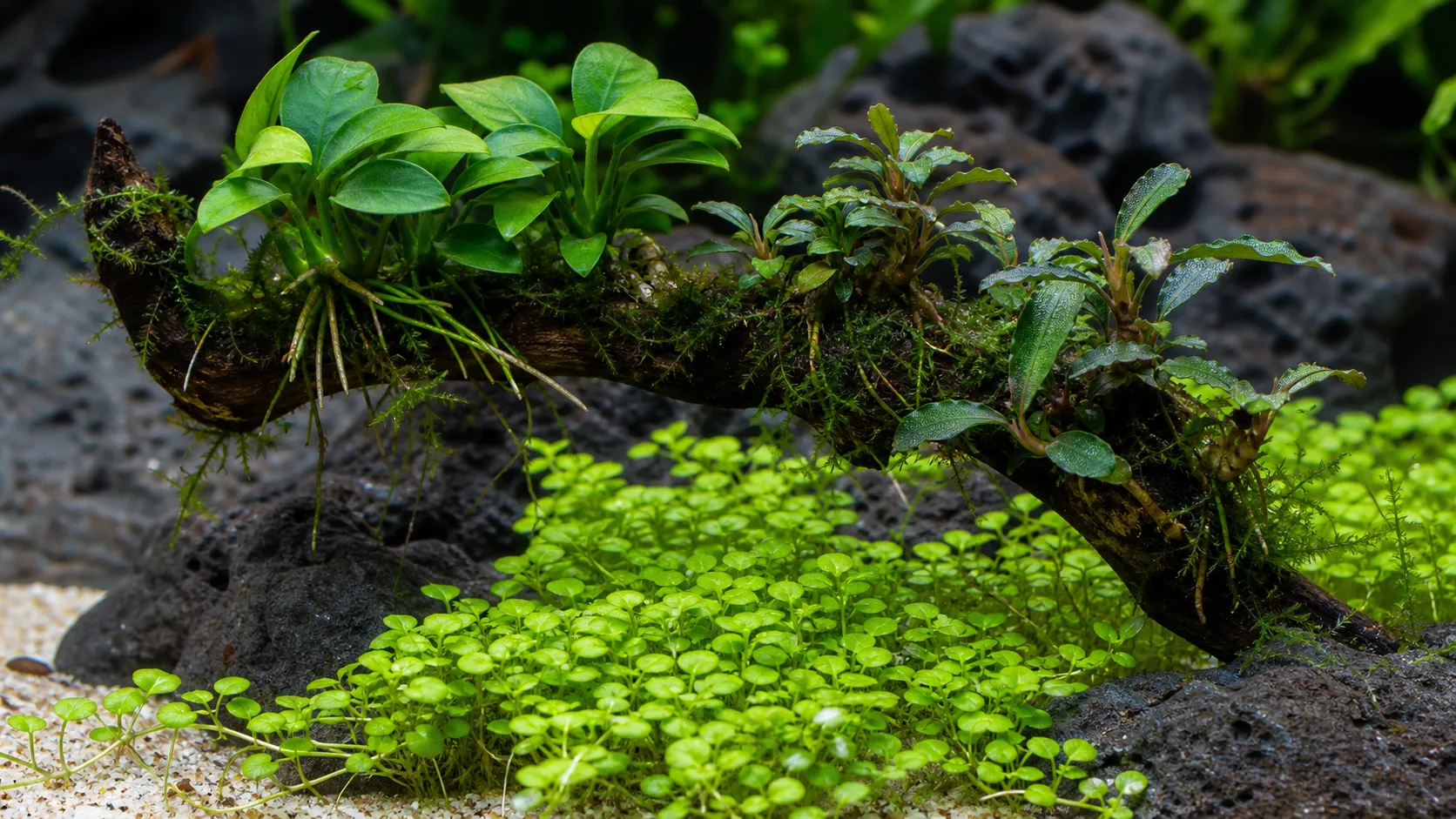
Epiphytes and Why the Rhizome Must Stay Exposed
Anubias, Bucephalandra, Java fern, and Bolbitis are epiphytes. Their rhizome is the sturdy horizontal stem from which leaves and roots grow. It needs water movement and oxygen around it. Burying it in gravel or soil can suffocate the tissue and cause rot.
Attach epiphytes to wood or stone with cotton thread, fishing line removed later, a small dot of aquarium-safe cyanoacrylate gel, or a natural crevice. Roots can grow into the hardscape over time. They take much of their nutrition from the water column, so liquid fertilizer is more useful than a root tab placed nearby. Slow growth is normal. Remove only damaged, algae-covered, or very old leaves. A hard prune of a small rhizome can set it back for months.
Root Feeders and Water-Column Feeders
This distinction is a guide, not a law. Nearly every aquarium plant can use nutrients from more than one place. The practical difference is where it has the most leverage.
| Plant type | Strongest nutrient route | Good examples | Best fertilizer approach |
|---|---|---|---|
| Root feeders | Substrate and root zone | Amazon sword, Cryptocoryne, Vallisneria, Echinodorus | Root tabs plus a modest complete liquid |
| Stem plants | Water column | Rotala, Ludwigia, Bacopa, Hygrophila | Regular complete liquid fertilizer |
| Rosette plants | Mostly roots, some leaves | Swords, crypts, dwarf sag | Root tabs, especially in inert gravel |
| Epiphytes | Water column | Anubias, Java fern, Bucephalandra, Bolbitis | Liquid fertilizer; never bury rhizomes |
| Floaters | Water column | Frogbit, Salvinia, red root floater | Liquid fertilizer and access to surface light |
An inert sand or gravel substrate is not a problem. It just means you are responsible for putting nutrition in the root zone of hungry rosettes. Conversely, rich aquasoil does not excuse you from liquid fertilizer in a high-growth stem tank. Watch new growth first. It is more useful than obsessing over a single old leaf that may have been damaged before you bought the plant.
Root Tabs
Root tabs are compact fertilizer capsules pressed into the substrate near heavy root feeders. They give swords, crypts, Vallisneria, dwarf sagittaria, and other rooted rosettes a local source of nutrients. I generally replace them every one to three months, depending on how hard the plant is growing, the substrate, and the product's instructions. A hungry sword in plain gravel often tells you plainly by slowing down and producing smaller leaves.
They are not necessary under every plant. Epiphytes attached to wood cannot use a tab placed in the sand. Fast stems may benefit only indirectly. In a deep active soil with a lightly planted low-tech tank, tabs may be optional for a while. In gravel with a big Amazon sword, they are one of the simplest upgrades you can make.
I generally prefer NilocG root tabs because they have consistently performed well for me, especially under crypts and swords. That is a personal preference, not a claim that the brand is the only good choice. Other quality root tabs work when they are placed near active roots and replaced before the plant has been hungry for weeks.
Liquid Fertilizers and What They Actually Supply
Plants use macronutrients in larger quantities: nitrogen, phosphorus, and potassium. Nitrogen supports leafy growth; phosphorus supports energy transfer and growth; potassium supports many cellular processes. They also need micronutrients, including iron and trace elements such as manganese, boron, zinc, copper, and molybdenum. The tiny quantities matter. More is not automatically better.
| System | Practical character | Best fit | Tradeoff |
|---|---|---|---|
| NilocG | Flexible separate and complete products, useful for EI-style dosing | Growers who like adjusting a routine | Requires measuring and understanding the plan |
| Thrive | Convenient all-in-one options | Busy planted tanks and simple schedules | Less granular control than separate solutions |
| Aquarium Co-op Easy Green | Straightforward all-in-one approach | Beginner to intermediate community tanks | Root feeders may still need tabs |
| Tropica | Clear low-energy and specialized product lines | Low-tech and moderate planted tanks | Follow the system rather than guessing from bottle size |
| ADA | Integrated premium aquascaping approach | Layout-focused high-tech systems | Cost and complexity can be higher |
I have had particularly good results using NilocG fertilizers, although products like Thrive and other reputable brands also work well when used consistently. The best bottle is one you can dose accurately, afford to replace, and understand. Switching brands every time a leaf looks odd usually creates more variables than it solves.
Start with the label schedule or a known routine, test nitrate when it is relevant to your tank, and adjust slowly. In a fish-heavy low-tech aquarium, a complete trace supplement may be all that is needed. In a planted CO₂ tank with frequent water changes, macro and micro dosing may be necessary. Do not dose around a water change only because that is when you remember. Tie the routine to predictable days.
EI Dosing in Plain English
Estimative Index, usually called EI, is a deliberately generous nutrient method. You dose enough macros and micros that plants should not run short, then perform a substantial weekly water change to reset accumulation. It removes some of the guesswork from chasing exact nutrient numbers. Instead of trying to prove the aquarium has 7.3 ppm of something, you provide a known surplus and keep the system fresh with water changes.
EI works especially well in CO₂-injected, fast-growing tanks. Its advantages are consistency, strong growth, and fewer deficiency games. Its disadvantages are that it expects disciplined water changes, may be more fertilizer than a lightly planted tank needs, and can feel wasteful to someone who wants a leaner approach. It is not a cure for poor CO₂, poor flow, or excessive light. The Aquarium Dosing Calculator on this site can do the arithmetic for your tank volume, and logging doses and nitrate tests in the AquaLens app keeps the routine tied to real dates instead of memory.
Lean dosing supplies closer to the minimum the plants consume. It can work beautifully, especially in lower-energy tanks, but it asks for more careful observation. I personally like the flexibility of NilocG products for EI-style dosing, but hobbyists succeed with many nutrient systems. Pick the system that matches your maintenance habits. A perfect spreadsheet does little for a tank whose water change never happens.
CO₂ Injection: The Tool That Changes Plant Selection
CO₂ is the largest single change you can make to the list of plants that grow easily. Aquatic plants use dissolved carbon dioxide for photosynthesis. Natural fish respiration and surface exchange provide some carbon, but a brightly lit planted tank can use it faster than it is replaced. Pressurized injection raises available carbon and lets demanding plants grow denser, faster, and more compactly.
It is worth adding when you want carpets, tidy red stems, high-density Dutch planting, faster recovery after trimming, or more predictable high-light growth, and you are willing to maintain it every day. It is not worth adding just because someone on a forum says every planted tank needs it. A stable low-tech aquarium is usually better than an unstable CO₂ aquarium. For a full walkthrough of regulators, diffusers, and tuning, see CO2 Injection: Beginner-to-Pro Setup; the CO₂ Level Estimator on this site turns your pH and KH readings into a rough dissolved-CO₂ figure.
The hardware and the goal
A pressurized system normally includes a cylinder, regulator with solenoid, bubble counter, tubing, check valve, and a diffuser or reactor. The bubble counter helps you repeat a setting. It does not measure dissolved CO₂. A diffuser creates fine bubbles that dissolve as they travel; a reactor dissolves gas in plumbing and can be efficient for larger tanks. Either works if the gas reaches the entire aquarium.
A drop checker is a rough visual indicator using a reference solution. It is useful as a trend tool, not a precision instrument. Check it during the photoperiod, understand its delay, and do not keep turning the bubble rate up until it looks a particular shade. The actual safety signal is livestock behavior combined with stable plant growth and surface movement.
Many planted-tank keepers aim for approximately a 1 pH-unit drop from fully degassed water as a rough starting point, but that is not a universal target or a substitute for watching animals. Start conservatively, increase in small steps, and give the tank time to respond. Fish gasping at the surface, shrimp acting distressed, or sudden inactivity are warnings to reduce CO₂ and increase surface agitation immediately.
Timing, circulation, and surface agitation
Start CO₂ before lights come on so the target level is present when plants begin using it. Turn it off before lights out, often one to two hours beforehand, with the exact schedule tuned to your tank. A solenoid makes that repeatable. Good circulation distributes CO₂ into dense plant beds. Dead spots often show up as poor growth or algae on one side of the tank.
Surface agitation is a tradeoff. Too little can limit oxygen exchange, especially overnight. Too much drives off CO₂ and makes injection less efficient. I prefer a gentle surface ripple that keeps oxygen exchange healthy without turning the surface into whitewater. At night, extra agitation can be helpful because plants and fish are all respiring.
Common CO₂ mistakes and safety
The classic mistake is trying to fix algae by increasing CO₂ sharply in one afternoon. Another is changing light, fertilizer, flow, and gas at once, then not knowing which change mattered. Leaks, a clogged diffuser, an empty cylinder, and a poorly aimed outlet can create day-to-day swings that plants hate.
Keep the cylinder upright and secured. Use a check valve to keep water out of equipment. Do not rely on a drop checker alone. Watch fish each morning when the gas is on, and again after any adjustment. CO₂ makes Monte Carlo, HC Cuba, Glossostigma, red Rotala, Alternanthera, Tonina, and many fine-leaved stems dramatically easier, but it rewards steadiness far more than maximum bubble rate.
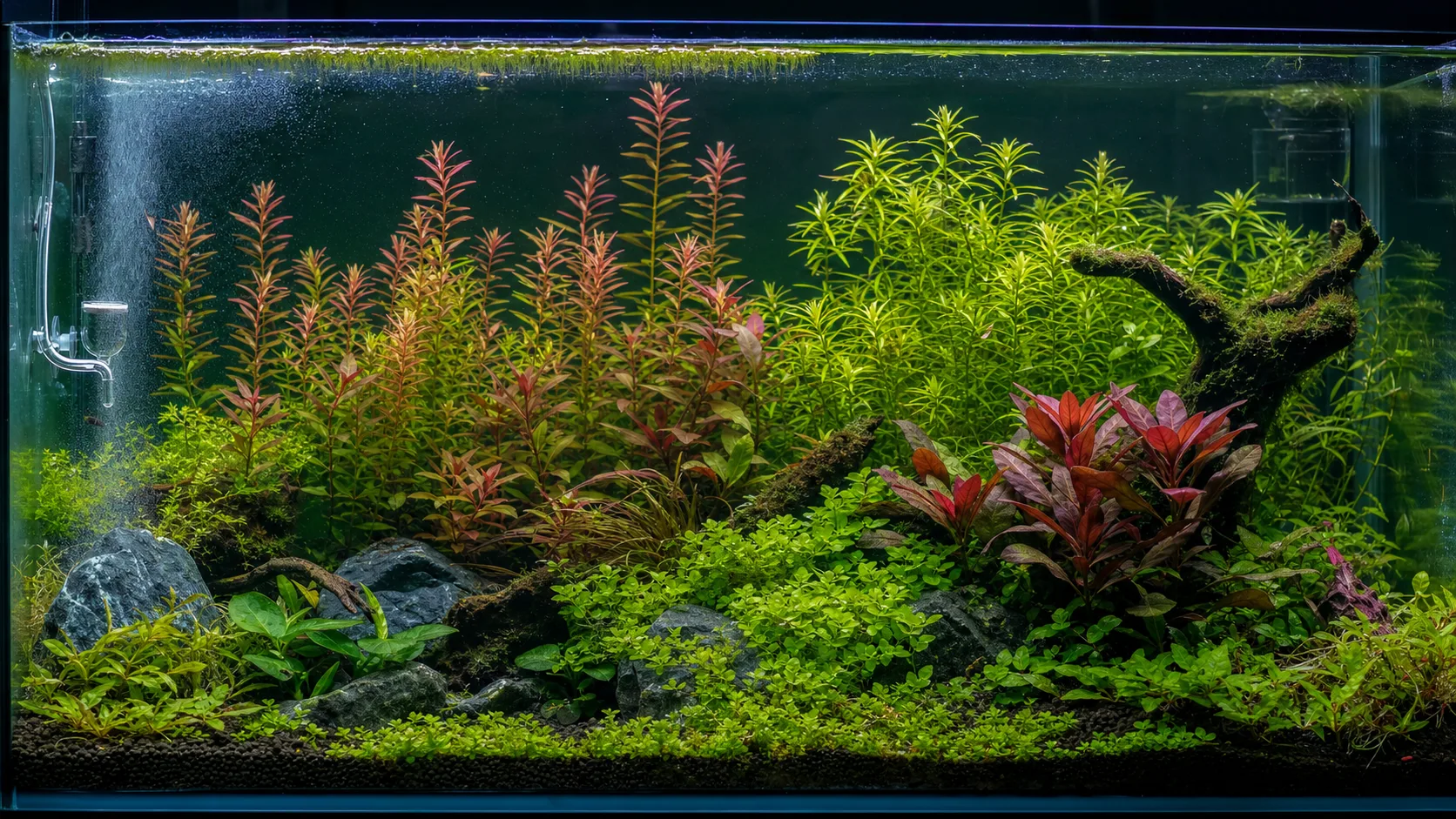
Emersed Versus Submerged Plants
Many commercial aquarium plants are grown emersed, with their roots wet but leaves in air. It is often cleaner, faster, and easier for growers. Their air-grown leaves can be thicker, broader, and quite different from the underwater form. After planting, the plant has to rebuild leaves designed for water. That transition is ordinary horticulture, not a bad shipment. Where to Buy Aquarium Plants explains why growers produce plants this way and how to shop for submerged-grown stock when you want to skip the transition entirely.
Cryptocoryne commonly melts hard. Swords, Hygrophila, stems, and tissue-culture plants can also lose older leaves. Remove leaves only after they become transparent, mushy, or obviously decaying. Keep a firm crown, rhizome, bulb, or growing tip in place and wait. Fresh submerged growth may arrive in two to six weeks; crypts can take longer. Good roots and a firm crown matter more than the old leaves.
Be concerned when a rhizome turns soft, a crown smells foul, a bulb is hollow, every stem becomes mushy from the base, or there is no new growth after a reasonable stable recovery period. Do not keep uprooting a plant to inspect it. That turns a normal transition into a repeated injury.
Plant Melt: What Is Normal and What Is Not
Plant melt happens because a leaf is not a permanent object. It was built for a particular environment. Changes in light, CO₂, temperature, water hardness, substrate, or growth form can cause the plant to reclaim an old leaf and build a new one. Crypt melt is famous, but Vallisneria, swords, and stems also have their version of it.
Normal melt is localized to old leaves while the growth point stays firm. Recovery is measured in new leaves, roots, runners, or healthy stem tips. Give a newly planted aquarium stable light, gentle nutrition, and time. Remove decomposing tissue so it does not foul the water. Do not respond by extending the photoperiod, doubling fertilizer, or repeatedly relocating the plant.
If a plant is melting from the center out, review planting depth first. A buried Anubias rhizome, a deeply planted Vallisneria crown, or a crushed crypt crown will not recover through better dosing. Then check temperature, CO₂ stability, and whether the plant is actually aquatic. If it keeps declining and you cannot tell why, the AquaLens app can analyze a photo of the struggling plant alongside your logged water history, which is context a generic symptom list cannot offer.
Lighting Without the Hype
Light drives growth, but more light is not a free upgrade. It increases demand for carbon, nutrients, and maintenance. Low light favors slower, forgiving plants. Medium light expands the palette. High light is a specialized tool for compact growth, carpets, and color when the rest of the system can keep up.
PAR, photosynthetically active radiation, is more meaningful than wattage, but even PAR numbers do not tell the whole story. Fixture height, tank depth, floating plants, water clarity, and hardscape shadows all change what reaches a leaf. Use published measurements when available, then observe plant response.
Start most new planted tanks around six hours of light and move toward seven or eight only after growth is stable. A long photoperiod does not compensate for a weak light. It usually gives algae a longer workday. Spectrum matters less than people think once you have a decent planted fixture, though a balanced daylight range makes plants and fish look natural. Pick an intensity and schedule you can repeat, then let plants tell you if they need more. For fixture choices, PAR ranges, and photoperiod planning in more depth, see Planted Tank Lighting Without Guesswork.
Plants to Avoid for Beginners
Avoid is not the same as never buy. These plants are just poor first projects when the basics are still new: HC Cuba, Glossostigma, Utricularia graminifolia, Tonina, Syngonanthus, most delicate Eriocaulon, demanding rare Bucephalandra, very red Rotala varieties, Alternanthera reineckii in a no-CO₂ tank, carpet seed packets, and any plant sold without a credible scientific name.
I would also avoid buying expensive tiny portions of a plant whose care you cannot yet describe. You do not need CO₂ to be a real planted-tank keeper. You do need to know why a plant is in the tank and what you will do if it starts struggling. If you are handed an unlabeled bag or an optimistic trade name, the AquaLens app can identify plants from a photo and pull up their care requirements from its species library, and it tells you when it is not sure rather than forcing an answer.
32 Common Beginner Mistakes
- Buying by color alone. Ask whether the plant will stay that color under your light and CO₂ level.
- Burying Anubias or Java fern rhizomes. Attach them to hardscape instead.
- Planting a whole stem bunch as one plug. Separate stems so light and flow reach the bases.
- Using high light before carbon and nutrients are stable. This is a reliable algae shortcut.
- Leaving the light on ten or twelve hours. Start shorter and earn a longer schedule.
- Changing fertilizer, light, and CO₂ together. You lose the ability to diagnose the result.
- Expecting instant carpets. Most healthy carpets fill in over months, not weekends.
- Mistaking emersed transition for death. Look for a firm growth point and wait for submerged leaves.
- Pulling up crypts every few days. Rooted crypts dislike being reset.
- Ignoring root tabs under swords and crypts. Heavy root feeders need a usable root-zone supply.
- Putting root tabs beside epiphytes. They feed primarily from the water column.
- Adding every plant in a different quantity of one. Repeated groups look better and establish better.
- Letting floaters cover the entire surface. Leave light and feeding lanes open.
- Treating all algae as a fertilizer shortage. Check light duration, CO₂ consistency, and circulation first.
- Chasing a sales photo. Nursery color may not be realistic for your setup.
- Using liquid carbon as a substitute for pressurized CO₂. It is not the same thing and can harm some plants when misused.
- Skipping water changes in a high-growth tank. Nutrient dosing needs a reset and debris removal.
- Overcleaning filters and substrate at once. Preserve biological stability.
- Letting moss become a debris sponge. Thin and swish it gently during maintenance.
- Buying unlabeled “rare” plants. A pretty plant with an uncertain identity is hard to care for or resell.
- Assuming any red plant is easy. Most need better conditions than the label suggests.
- Overdosing iron to force red color. It can create problems without producing the desired color.
- Placing a tall plant in front of a short one. Plan the view from the front glass.
- Forgetting that fish alter plant choices. Goldfish, cichlids, and herbivores change the plan.
- Adding new plants without rinsing or quarantining when needed. Protect shrimp and sensitive tanks.
- Using garden fertilizer. Use aquarium-safe products with known ingredients.
- Pruning every leaf with a spot. Keep enough healthy tissue for the plant to recover.
- Never renewing old stem bases. Replant healthy tops when the lower group gets bare.
- Ignoring flow behind dense plants. Dead spots lead to poor growth and detritus buildup.
- Starting with too little plant mass. Fast plants and floaters help new tanks find balance.
- Assuming a plant is aquatic because it was sold near aquariums. Verify the species.
- Giving up after two weeks. Plant adjustment often takes longer than the first burst of enthusiasm.
Planting With Goldfish, African Cichlids, and Discus
Goldfish are charming demolition crews. Choose tough, bitter, or easily replaceable plants: Anubias attached to heavy wood or stone, Java fern, Bolbitis, Vallisneria in protected planters, hornwort, and water sprite. Even these are not guaranteed. Keep expectations practical and avoid expensive carpets.
African cichlids often dig and rearrange substrate. Anubias and Java fern attached to rocks are the usual starting point. Vallisneria can work in some setups if its roots are protected, but plant survival depends on the fish and their behavior. Do not fight a hardscape-building fish with a delicate rooted aquascape.
Discus like warm water, usually around 82 to 86°F, which narrows the plant list. Amazon swords, Vallisneria, Anubias, Java fern, Cryptocoryne species that tolerate warmth, and some stems can work. Choose plants that are comfortable at the fish's temperature rather than trying to keep a cool-water favorite alive at the edge of its range.
Frequently Asked Questions
What is the easiest aquarium plant?
Anubias and Java fern are among the safest first choices because they tolerate low light and do not need injected CO₂. Attach their rhizomes to hardscape rather than burying them.
Can aquarium plants grow without CO₂?
Absolutely. Many plants grow well with the carbon naturally available in a low-tech aquarium. They simply grow more slowly and the practical plant list is smaller.
Do I need a special substrate for aquarium plants?
No. Inert sand or gravel can support plants when you use root tabs for heavy root feeders and liquid fertilizer for water-column feeders. Active soil is helpful, not mandatory.
How many plants should I start with?
Start with enough mass to cover much of the intended planted area, especially with fast growers. A few lonely stems do little for appearance or early nutrient uptake.
What plants are best for a first ten-gallon tank?
Anubias nana petite, Cryptocoryne wendtii, small Java fern, moss, dwarf sagittaria, Bacopa, and a modest amount of frogbit are appropriately sized, forgiving choices.
Why are my new aquarium plants melting?
They may be changing from emersed to submerged growth or reacting to new water conditions. Keep a firm crown or rhizome planted and judge recovery by new growth, not old leaves.
How long does plant melt last?
Many plants show fresh growth in two to six weeks. Crypts and some bulbs can take longer. Soft crowns, rotting rhizomes, or no growth after a stable extended period deserve investigation.
Can I put Anubias in gravel?
Its roots can touch gravel, but the horizontal rhizome should remain exposed. Attach the plant to wood or stone instead of burying it.
Are root tabs necessary?
They are especially useful for Amazon swords, crypts, Vallisneria, and other root feeders in inert substrate. They are far less useful for epiphytes and floaters.
How often should I replace root tabs?
Every one to three months is a practical starting range. Growth rate, substrate, and the product's instructions determine the real schedule.
What is the best fertilizer for aquarium plants?
The best one is a complete, aquarium-safe system you will dose consistently. NilocG, Thrive, Aquarium Co-op, Tropica, ADA, and other reputable systems can all work.
Do fish waste provide enough fertilizer?
Sometimes for a lightly planted, fish-stocked tank, but often not for strong plant growth. Root feeders and high-growth stem tanks usually need intentional supplementation.
Why are my leaves turning yellow?
Check which leaves are affected. Old leaves naturally age; pale new growth can point to nutrient availability, light, CO₂, or root issues. Change one likely cause at a time.
Why did my red plant turn green?
Most red plants lose color in lower light or less stable CO₂. The plant may still be healthy. Do not starve it merely to chase a deeper red.
What are the best low-light plants?
Anubias, Java fern, Bolbitis, mosses, Cryptocoryne wendtii, and Cryptocoryne lutea are reliable low-light choices.
What plants make the best carpet?
Monte Carlo is a popular manageable carpet with CO₂. HC Cuba and Glossostigma are more demanding. Dwarf sagittaria is a less formal low-tech alternative.
Can Monte Carlo grow without CO₂?
It may survive and spread slowly under favorable conditions, but a dense compact carpet is much more reliable with stable injected CO₂ and good light.
What is EI dosing?
Estimative Index is a generous nutrient-dosing approach paired with large regular water changes. It aims to prevent deficiencies instead of holding every nutrient at a precise low number.
Does EI dosing cause algae?
Not by itself. Algae is more often linked to unstable CO₂, excessive light, poor circulation, or a newly establishing tank. EI still requires water changes and balance.
How long should aquarium lights stay on?
Six hours is a sensible starting point for a new planted tank. Many established tanks run seven or eight hours, adjusted according to plant growth and algae.
Do aquarium plants need darkness?
Yes. Plants benefit from a consistent day-night cycle. Leaving lights on continuously does not create continuous healthy growth.
What is a drop checker for?
It is a delayed visual trend indicator for dissolved CO₂. Use it with livestock behavior and a stable routine, not as a single precise safety meter.
How much CO₂ is safe for fish?
There is no one bubble-count answer because tank size, flow, and surface movement differ. Start low, increase gradually, and reduce gas immediately if livestock show distress.
Should I run an air stone with CO₂?
During the light period, excessive aeration can waste CO₂. Gentle surface movement is still important. Extra nighttime aeration can improve oxygen availability.
What plants are good for shrimp?
Mosses, Subwassertang, small Anubias, Bucephalandra, crypts, small ferns, and controlled floaters offer grazing surface and cover. Use shrimp-safe plant sources and quarantine when prudent.
Can aquarium plants hurt shrimp?
The plant is rarely the problem. Pesticide residue, unknown treatments, or hitchhikers are the risk. Tissue culture and careful quarantine reduce it.
What plants survive goldfish?
Attached Anubias, Java fern, Bolbitis, hornwort, water sprite, and sometimes protected Vallisneria are the practical starting list. No plant is completely goldfish-proof.
What plants work with African cichlids?
Attached Anubias and Java fern are the most reliable because digging cichlids cannot easily uproot them. Rooted plants need protection and realistic expectations.
What plants are good with discus?
Amazon swords, Vallisneria, Anubias, Java fern, selected crypts, and warm-tolerant stems work when they tolerate the discus tank's higher temperature.
Should I trim plant roots before planting?
Remove dead or damaged roots. Healthy long roots can be shortened enough to plant comfortably, but do not strip a good root system just to make it look tidy.
How do I plant stem plants?
Remove any weight, separate individual stems, and plant them with space between. Use tweezers in deep substrate and avoid crushing the lower stem.
How do I prune stem plants?
Cut above a healthy node. Replant the best tops when needed and remove old bare bases once they stop contributing to a full group.
Can I add plants to an uncycled aquarium?
Yes. Plants can be present from day one and may use some nitrogen waste, but they do not replace cycling or water testing.
Are tissue-culture plants easier?
They are usually cleaner and less likely to carry pests, but their care requirement is the same species requirement. They also need an adjustment period after the gel is rinsed away.
Why is there algae on slow-growing plants?
Slow leaves give algae time to settle, especially in excessive light or weak flow. Reduce the underlying imbalance, clean gently, and add faster-growing competition if appropriate.
Can I use plant seeds for an aquarium carpet?
Avoid mystery aquarium seed packets. Many sprout terrestrial plants that later die underwater. Buy a named true aquatic carpeting plant instead.
What are epiphyte plants?
They are plants such as Anubias, Bucephalandra, Java fern, and Bolbitis that attach to hardscape. Their rhizomes must not be buried.
Do I need to test nitrate in a planted tank?
It is useful, especially when learning your tank's fertilizer needs. It does not tell the whole nutrient story, but it can reveal whether a heavily planted tank is running empty or accumulating waste.
Can I mix low-tech and high-tech plants?
Yes, but the tank conditions decide which ones thrive. Easy plants usually tolerate high-tech conditions, while demanding plants often disappoint in a low-tech setup.
What should I buy after mastering beginner plants?
Try a grouped planting of Rotala rotundifolia or Ludwigia repens, Staurogyne repens, and a small Monte Carlo patch if your light and CO₂ routine are stable. Add one challenge at a time.
Conclusion
Healthy aquarium plants are not the result of finding the most difficult or expensive species. They are the result of a good match. Choose plants that fit your light, your CO₂ decision, your available time, your fish, and the shape of the aquarium. Give them stable conditions before you give them more intensity.
Balance is the whole game. Light creates demand. Nutrients feed growth. CO₂ supplies carbon. Maximizing one while neglecting the others is how planted tanks become frustrating. Start with resilient plants, learn what healthy new growth looks like, and make small changes you can explain. The Planted Tank Success Guide is a good next read once your first plants are in, and Where to Buy Aquarium Plants will help you source them well.
Based on my own experience, I tend to use NilocG fertilizers and root tabs because they have consistently worked well for me. That does not make them the only answer. Many excellent planted tanks are grown with Thrive, ADA, Tropica, Aquarium Co-op, and other quality systems. Consistency, observation, and a sensible plant choice matter far more than the logo on the bottle.
If you want help holding all of this together, the AquaLens app identifies plants from a photo, keeps your test, dosing, and trimming history in one journal, and flags water trends before your plants show them. It is free to start.
Choose the plants, then grow them with confidence
AquaLens identifies plants from a photo, logs your tests, dosing, and trims, and spots the water trends that show up before your plants do.
Keep reading
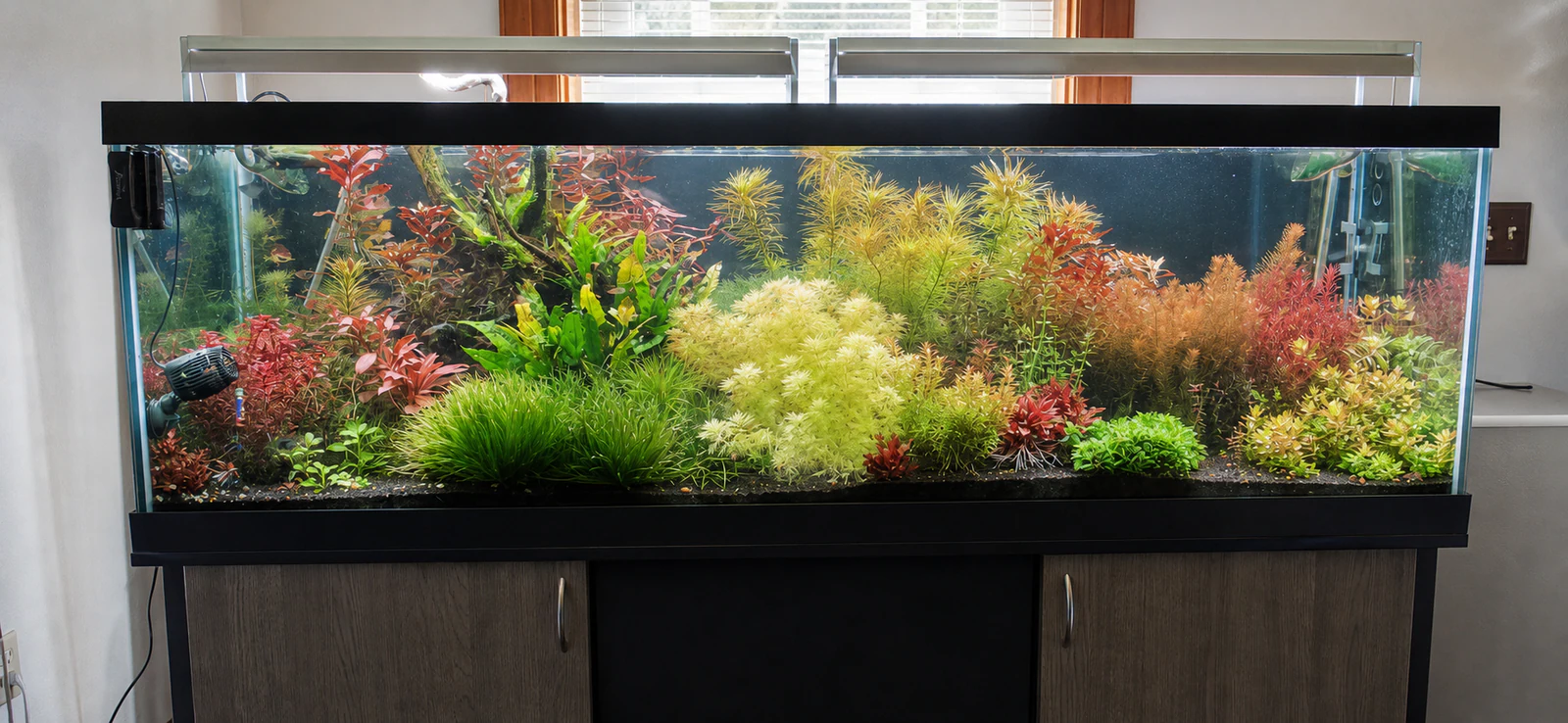
Compare online aquarium plant stores, local hobbyists, tissue culture, prices, pests, shipping, quarantine, and how to choose healthy plants.
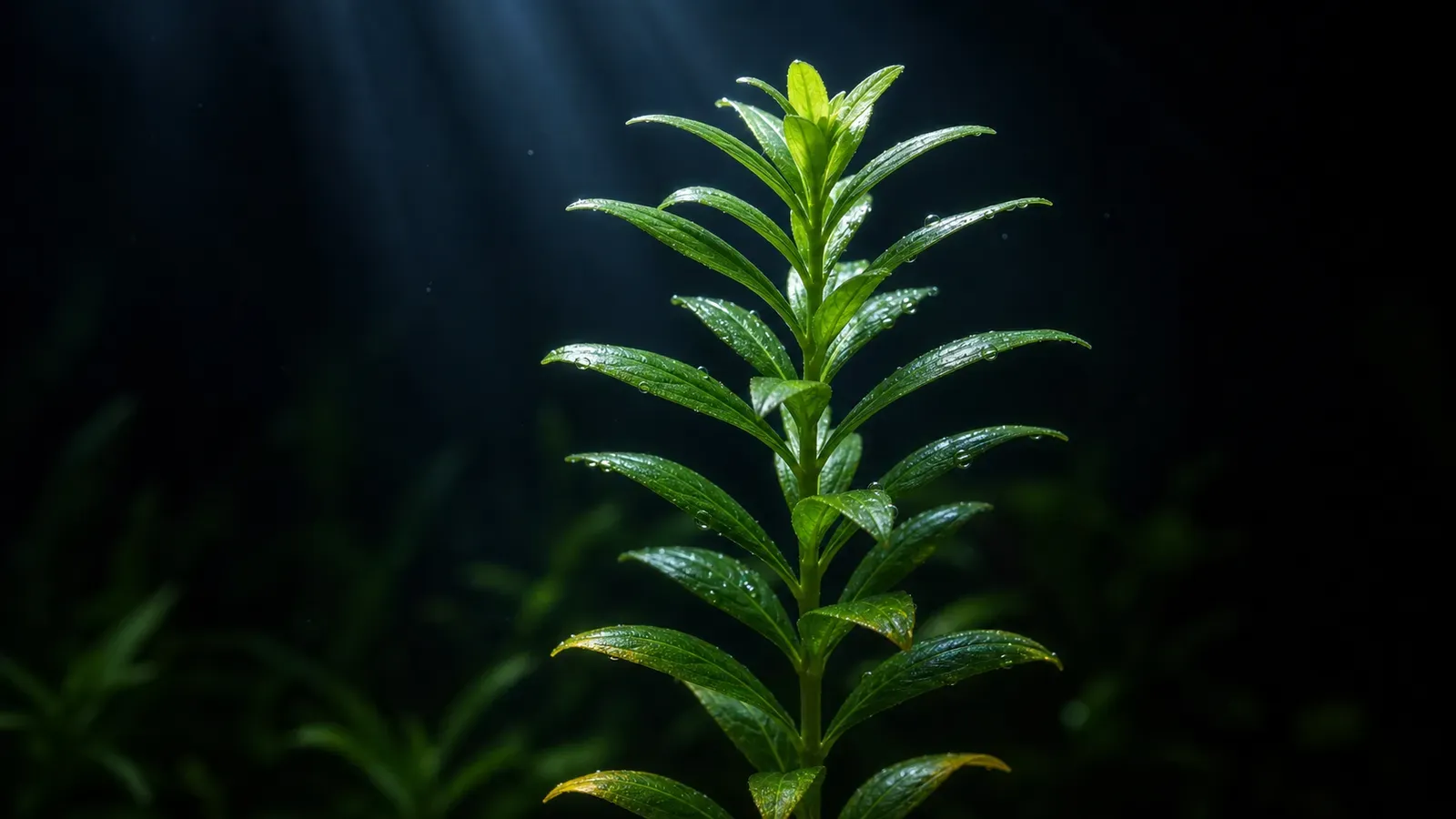
Diagnose aquarium plant deficiencies by leaf age and symptom: yellowing, pinholes, twisting, and stunting. Read the pattern, then fix it safely.
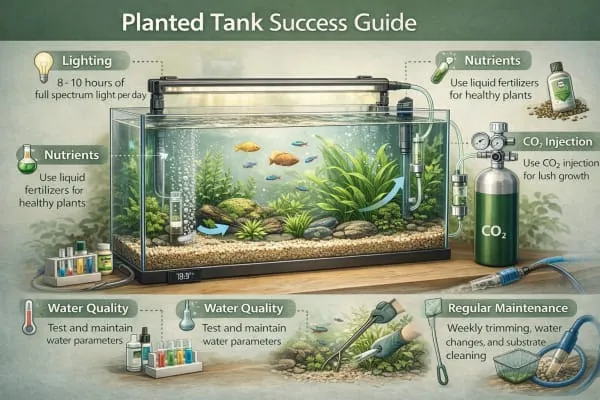
Grow a thriving planted aquarium: substrate, plant placement, feeding and dosing, pruning for density, and beating algae. Beginner-safe, expert-deep.