Dwarf Ambulia Care Guide
Limnophila sessiliflora · Freshwater Plant
What Dwarf Ambulia look like
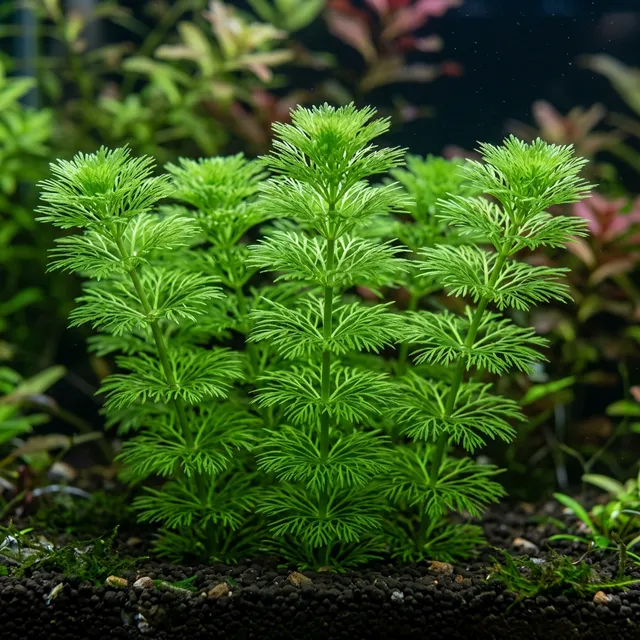
Limnophila sessiliflora, commonly known as Dwarf Ambulia, exhibits a graceful, upright growth form characterized by its finely dissected, feathery leaves arranged in whorls along the stem. The plant can reach a maximum height of approximately 2 to 15 inches, making it suitable for various aquarium sizes. The leaves are bright to medium green, creating a soft, fluffy appearance that enhances the aesthetic appeal of aquatic environments. Each whorl consists of multiple, deeply divided leaves that resemble delicate green feathers, contributing to a bushy columnar structure. Unlike hornwort, Dwarf Ambulia possesses a more structured morphology, lacking broad flat leaves and exhibiting a distinctively elegant profile. This species does not exhibit sexual dimorphism, as it is a non-flowering aquatic plant, and its primary defensive adaptation lies in its rapid growth and dense foliage, which can provide shelter and protection from herbivores.
Behavior & temperament
Dwarf Ambulia is primarily a benthic plant that thrives in still or slow-moving waters, often found in the shallow regions of Southeast Asian freshwater habitats. It does not exhibit social behavior as it is a plant; however, it plays a crucial role in the aquatic ecosystem by providing shelter and breeding grounds for various fish species. The plant's growth habit allows it to form dense colonies, which can serve as a refuge for smaller fish and invertebrates. In terms of reproduction, Dwarf Ambulia propagates vegetatively through stem cuttings, making it an efficient colonizer in suitable environments. Its temperament is passive, contributing to a harmonious aquarium setting when paired with compatible aquatic life.
Diet & feeding
Dwarf Ambulia is an obligate photosynthetic organism, relying on light to synthesize its food through the process of photosynthesis. In captivity, it requires a nutrient-rich substrate and adequate lighting to thrive, with supplemental CO2 injection enhancing growth and vitality.
Behind the name
Limnophila (from Greek 'limnos' meaning 'lake' and 'philos' meaning 'loving'); sessiliflora (from Latin 'sessilis' meaning 'sitting' and 'flora' meaning 'flowering', referring to its flowerless nature).
Plan your tank
Check the numbers before you buy: tank volume, a stocking plan, cycle progress, water changes, and your ongoing care routine.
Keep reading
Diagnose aquarium plant deficiencies by leaf age and symptom: yellowing, pinholes, twisting, and stunting. Read the pattern, then fix it safely.
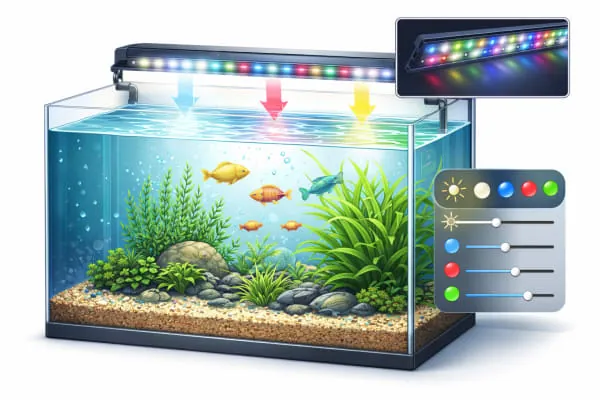
PAR-first planted tank lighting: choose intensity by what you grow, set photoperiod and spectrum, kill shadows, and hold algae back without overspending.

Aquarium CO₂ injection made safe: how carbon, light, and nutrients balance, which system to buy, and how to dial it in without gassing your fish.
Keeping Dwarf Ambulia?
AquaLens identifies your fish and plants from a photo, tracks water chemistry, and flags health issues early — free on iOS and Android.