Black Darter Tetra Care Guide
Poecilocharax weitzmani · Freshwater Fish
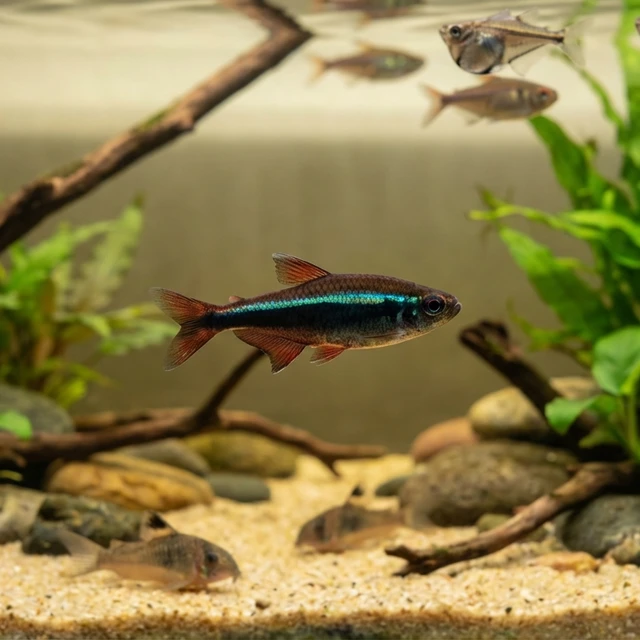
What Black Darter Tetra look like
The Black Darter Tetra (Poecilocharax weitzmani) exhibits a distinctive elongated, fusiform body shape, typically reaching a maximum adult size of 1.5 to 2 inches (3.8 to 5.1 cm). This species displays sexual dimorphism, with males possessing elaborate spade-shaped or lyretail caudal fins adorned with striking dark and light patterning, contrasting with the more subdued fin structure of females. The overall coloration is a dark body, which aids in camouflage within its natural habitat. Notably, the Black Darter Tetra features a well-defined lateral line system that enhances its sensory perception, allowing it to effectively hunt small prey. Its dentition is adapted for a predatory lifestyle, with small, sharp teeth suited for capturing and consuming microfauna. The species also exhibits defensive adaptations such as rapid darting movements to evade predators.
Behavior & temperament
In terms of behavior, the Black Darter Tetra is characterized as a micro predator that exhibits solitary hunting behavior rather than forming large schools, which is atypical for many tetras. It primarily occupies the mid to lower water column, where it actively darts after small prey items. This species is known for its agile and quick movements, which are essential for capturing elusive food. Breeding behavior is not extensively documented, but it is presumed to be an egg scatterer, releasing fertilized eggs among vegetation. The temperament of the Black Darter Tetra is generally peaceful, although it can exhibit territoriality during breeding periods, particularly among males vying for dominance.
Diet & feeding
In the wild, the Black Darter Tetra primarily feeds on small invertebrates and zooplankton, demonstrating a preference for live food sources. In captivity, it thrives on a varied diet that includes high-quality flake foods, live or frozen foods such as daphnia and brine shrimp, and should be supplemented with protein-rich offerings to mimic its natural predatory habits.
Behind the name
The genus name Poecilocharax derives from the Greek 'poecilos' (variegated) and 'charax' (a type of fish), while the species name 'weitzmani' honors the ichthyologist who contributed to its discovery.
Plan your tank
Check the numbers before you buy: tank volume, a stocking plan, cycle progress, water changes, and your ongoing care routine.
Keep reading

Choose compatible fish: school sizes, swimming zones, aggression, temperature and hardness matching, and honest bioload math for a peaceful community.

Quarantine new fish, spot the early warning signs, and treat disease without wrecking your tank. A practical freshwater fish health guide.

Acclimate new fish, shrimp, and coral safely: temperature floating, drip acclimation, plop-and-drop for shipped livestock, and the first 24 hours.
Keeping Black Darter Tetra?
AquaLens identifies your fish and plants from a photo, tracks water chemistry, and flags health issues early — free on iOS and Android.