Clown Squeaker Care Guide
Synodontis decorus · Freshwater Fish
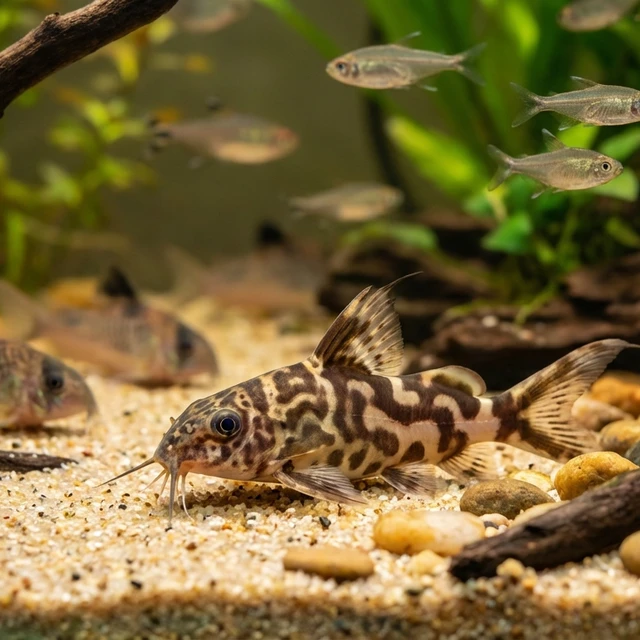
What Clown Squeaker look like
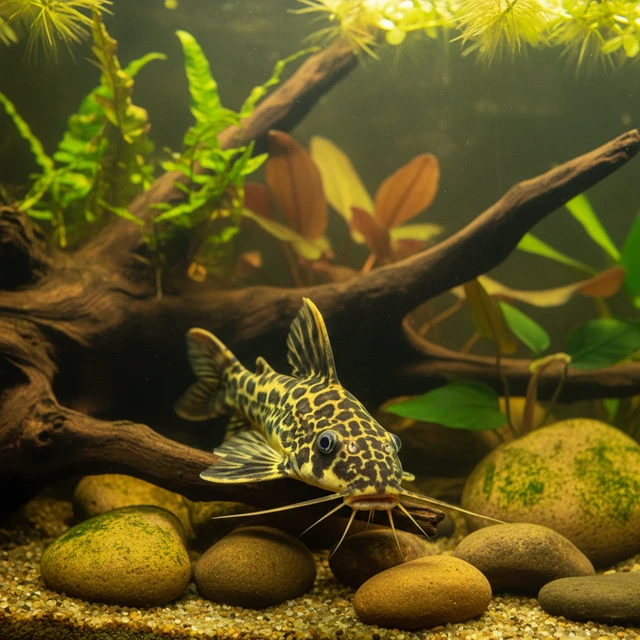
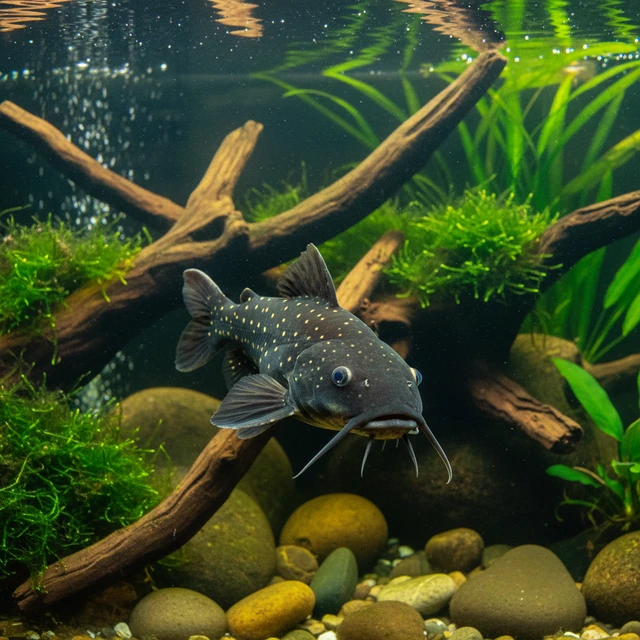
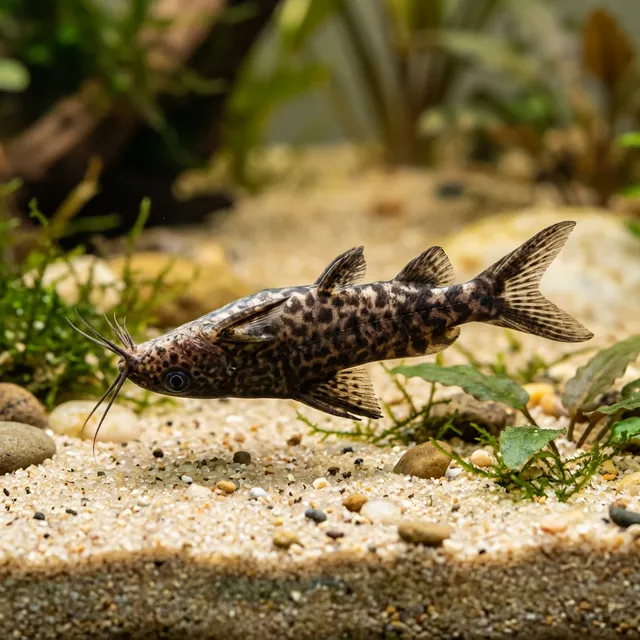
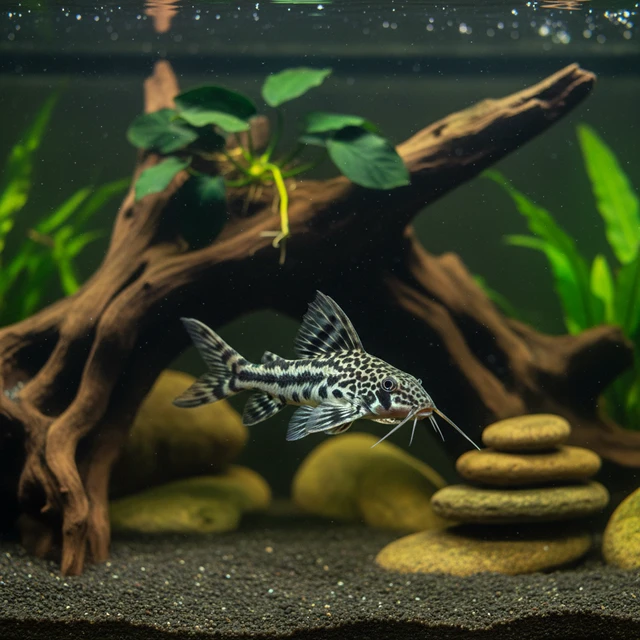
Synodontis decorus, commonly known as the Clown Squeaker, exhibits a medium to large size, typically reaching lengths of 8 to 12 inches (20 to 30 cm) in adulthood. This species is characterized by a fusiform, silver-white body adorned with large, bold dark blotches and spots, which serve as a form of disruptive coloration against predators. The dorsal fin is particularly striking, featuring a long, trailing filament that becomes more pronounced in mature individuals, enhancing its visual appeal. The presence of branched barbels is notable, aiding in sensory perception in its natural habitat. The lateral line system is well-developed, facilitating the detection of water movements and vibrations, which is critical for its benthic lifestyle. Sexual dimorphism is subtle, with males typically exhibiting slightly more elongated dorsal fin filaments compared to females, particularly during breeding periods. Defensive adaptations include its ability to produce a squeaking sound, generated by the movement of its pectoral spines, which can deter potential threats.
Behavior & temperament
The Clown Squeaker is primarily a benthic dweller, often found in the lower strata of freshwater environments in the Congo River basin. This species is not an obligate schooler but tends to exhibit social behavior, often found in small groups or pairs, especially during breeding seasons. It demonstrates a relatively peaceful temperament, although it can exhibit territoriality during spawning. Breeding behavior involves egg scattering, where females release eggs onto flat surfaces, and males fertilize them shortly after. The Clown Squeaker is known for its inquisitive nature, often exploring its environment and interacting with both conspecifics and other species within the aquarium setting.
Diet & feeding
In the wild, the Clown Squeaker is an omnivore, feeding on a varied diet that includes detritus, small invertebrates, and plant matter. In captivity, it thrives on a balanced diet that includes high-quality pellets, frozen or live foods such as bloodworms and brine shrimp, along with occasional vegetable matter to ensure optimal health.
Behind the name
Synodontis (from Greek 'syn' meaning together and 'odous' meaning tooth); decorus (Latin for 'decorated' or 'adorned').
Plan your tank
Check the numbers before you buy: tank volume, a stocking plan, cycle progress, water changes, and your ongoing care routine.
Keep reading

Choose compatible fish: school sizes, swimming zones, aggression, temperature and hardness matching, and honest bioload math for a peaceful community.
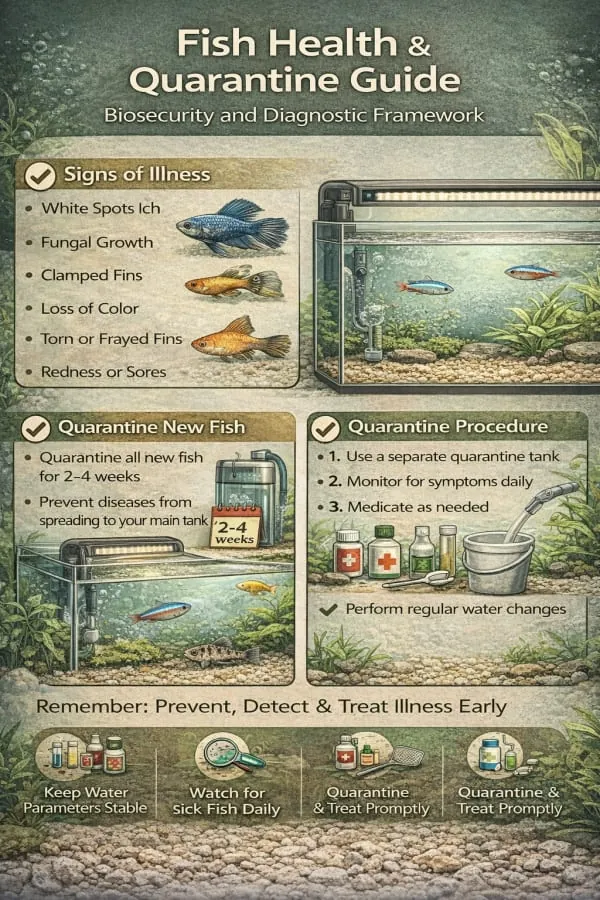
Quarantine new fish, spot the early warning signs, and treat disease without wrecking your tank. A practical freshwater fish health guide.

Acclimate new fish, shrimp, and coral safely: temperature floating, drip acclimation, plop-and-drop for shipped livestock, and the first 24 hours.
Keeping Clown Squeaker?
AquaLens identifies your fish and plants from a photo, tracks water chemistry, and flags health issues early — free on iOS and Android.