Dwarf Halfbeak Care Guide
Dermogenys siamensis · Freshwater Fish
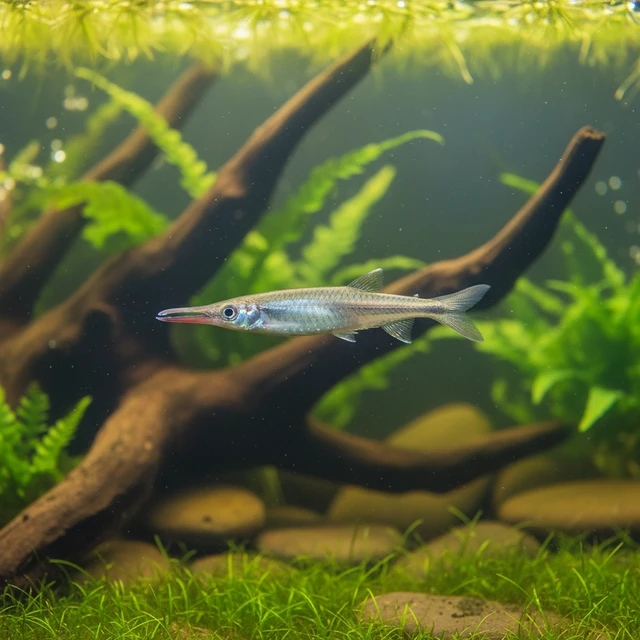
What Dwarf Halfbeak look like
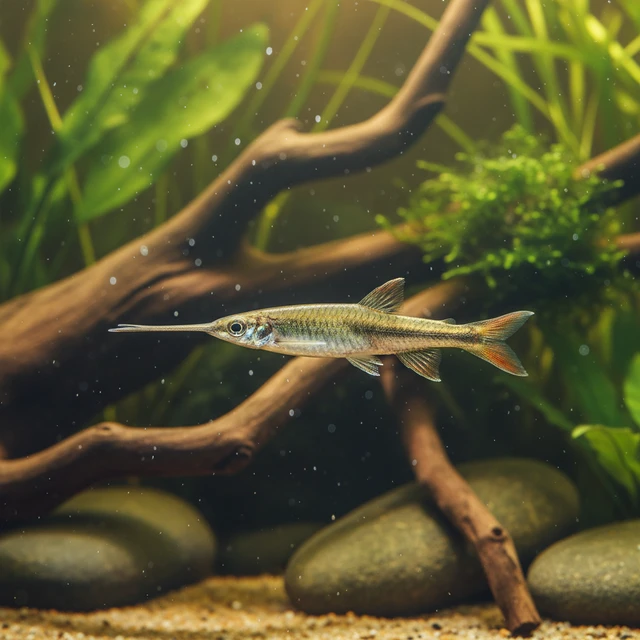
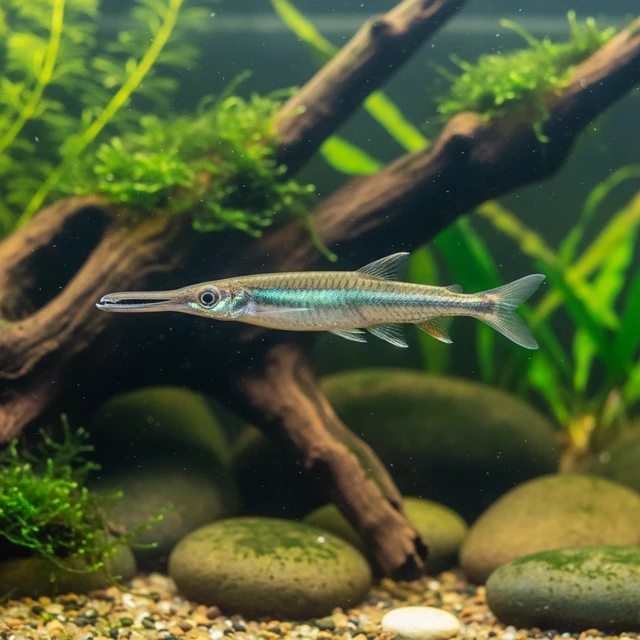
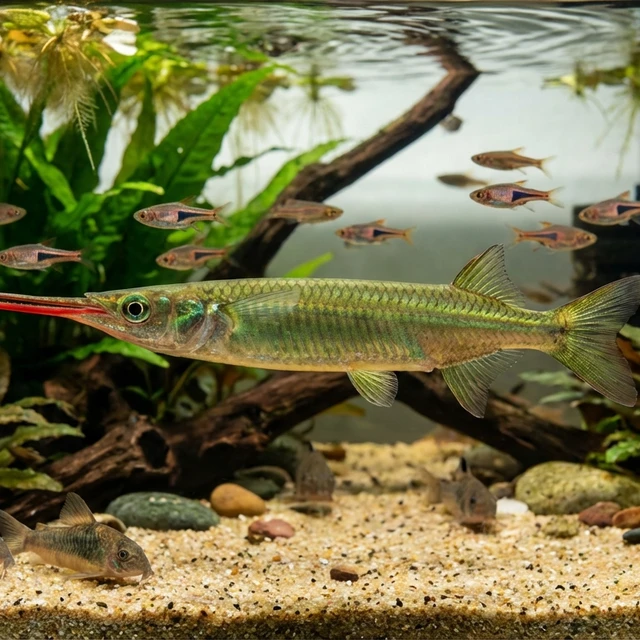
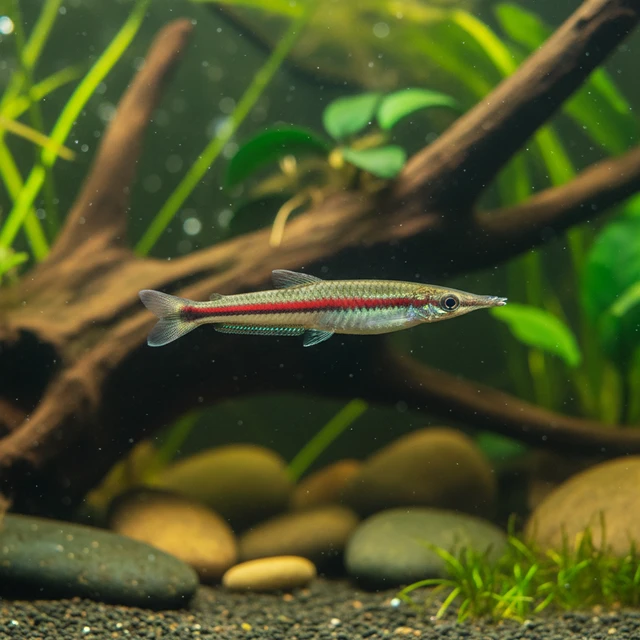
Dermogenys siamensis, commonly known as the Dwarf Halfbeak, exhibits a slender, torpedo-shaped body that typically reaches a maximum adult size of approximately 2-3 inches (5-7.5 cm). This species is characterized by its distinctive elongated lower jaw, which extends significantly beyond the upper jaw, giving it a unique appearance among its relatives. The body coloration is primarily silvery-green, which aids in camouflage against the reflective surface of the water. Males can be distinguished by their modified anal fin, which is adapted for reproductive purposes. The Dwarf Halfbeak possesses a lateral line system that aids in detecting vibrations in the water, and its fins are well-developed for agile swimming, with a notable presence of a small adipose fin. Defensive adaptations include its small size and rapid swimming capabilities, allowing it to evade larger predators in its natural habitat.
Behavior & temperament
The Dwarf Halfbeak is a surface-dwelling fish that exhibits a primarily pelagic lifestyle, often found in the upper layers of the water column. It tends to be a social species, often observed in small groups, although it does not form large schools. This species is known for its relatively peaceful temperament, making it suitable for community tanks, but males can display territorial behavior during breeding. The Dwarf Halfbeak is a livebearer, with females giving birth to free-swimming young, and they exhibit interesting courtship behaviors that involve displays of fin movements and positioning. Their breeding behavior is characterized by a degree of parental care, as the young are often kept close to the surface where they are less vulnerable to predation.
Diet & feeding
In the wild, the Dwarf Halfbeak is an omnivorous surface hunter, primarily feeding on small insects, zooplankton, and plant matter. In captivity, it requires a varied diet that includes high-quality flake food, live or frozen foods such as brine shrimp and daphnia, and finely chopped vegetables to ensure proper nutrition.
Behind the name
Dermogenys (skin-born); siamensis (from Siam, the historical name for Thailand).
Plan your tank
Check the numbers before you buy: tank volume, a stocking plan, cycle progress, water changes, and your ongoing care routine.
Keep reading

Choose compatible fish: school sizes, swimming zones, aggression, temperature and hardness matching, and honest bioload math for a peaceful community.

Quarantine new fish, spot the early warning signs, and treat disease without wrecking your tank. A practical freshwater fish health guide.

Acclimate new fish, shrimp, and coral safely: temperature floating, drip acclimation, plop-and-drop for shipped livestock, and the first 24 hours.
Keeping Dwarf Halfbeak?
AquaLens identifies your fish and plants from a photo, tracks water chemistry, and flags health issues early — free on iOS and Android.