Twig Catfish Care Guide
Farlowella vittata · Freshwater Fish
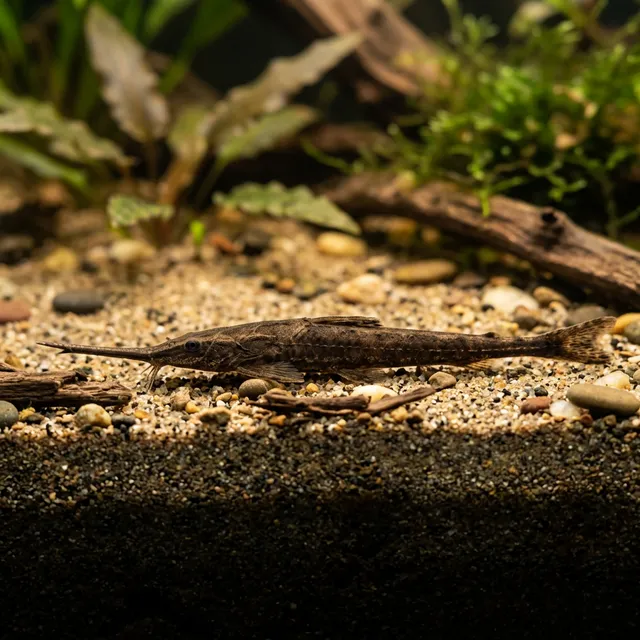
What Twig Catfish look like
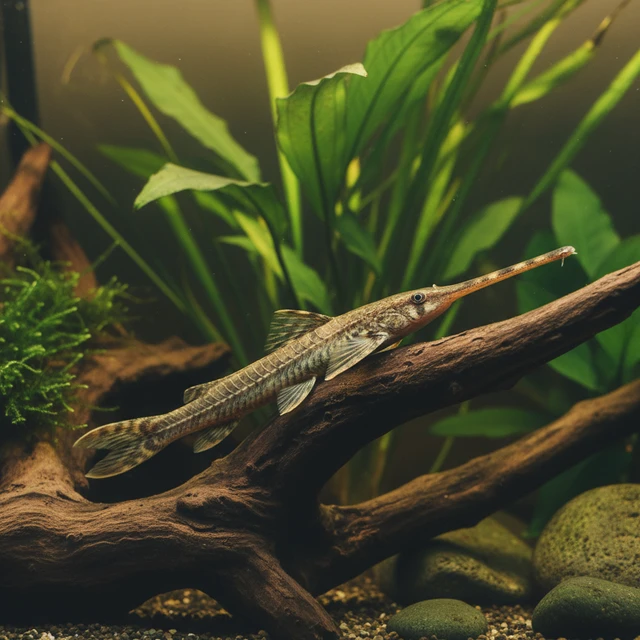
Farlowella vittata, commonly known as the Twig Catfish, exhibits an extraordinary elongated and laterally compressed body that can reach a maximum adult size of approximately 10 inches (25 cm). Its morphology is characterized by a slender, stick-like appearance, allowing it to blend seamlessly into its natural habitat of submerged twigs and branches. The head features an elongated, needle-like snout equipped with a specialized oral sucker adapted for grazing on biofilm and algae. The body is adorned with a series of small, bony plates typical of the Loricariidae family, providing some degree of protection against predation. Notably, the Twig Catfish lacks the robust armor seen in some of its relatives, which enhances its camouflage but may leave it more vulnerable. It possesses a well-developed lateral line system, aiding in navigation and detection of movement in its environment, and its caudal fin is forked, facilitating agile movements in tight spaces.
Behavior & temperament
Farlowella vittata is primarily a solitary and benthic species, often found resting motionless against submerged structures, where its remarkable camouflage allows it to evade detection by both predators and prey. This species exhibits a non-aggressive temperament, preferring to avoid confrontation; however, it can display territorial behavior during breeding periods. The Twig Catfish is an egg scatterer, with females laying adhesive eggs on surfaces such as leaves or rocks, which are then fertilized by males. This reproductive strategy is adapted to their natural habitat, ensuring that the eggs are well-hidden from potential threats. In the wild, they typically inhabit slow-moving waters, where they can utilize their elongated bodies to navigate through dense aquatic vegetation.
Diet & feeding
In its natural habitat, Farlowella vittata primarily feeds on algae, biofilm, and detritus, making it an obligate herbivore. In captivity, it requires a diet rich in plant matter, including high-quality spirulina flakes, blanched vegetables, and algae wafers to maintain optimal health.
Behind the name
Farlowella (named in honor of the American botanist and zoologist, Dr. Edward Farlow); vittata (Latin for 'striped' or 'banded', referring to the potential markings on the body).
Plan your tank
Check the numbers before you buy: tank volume, a stocking plan, cycle progress, water changes, and your ongoing care routine.
Keep reading
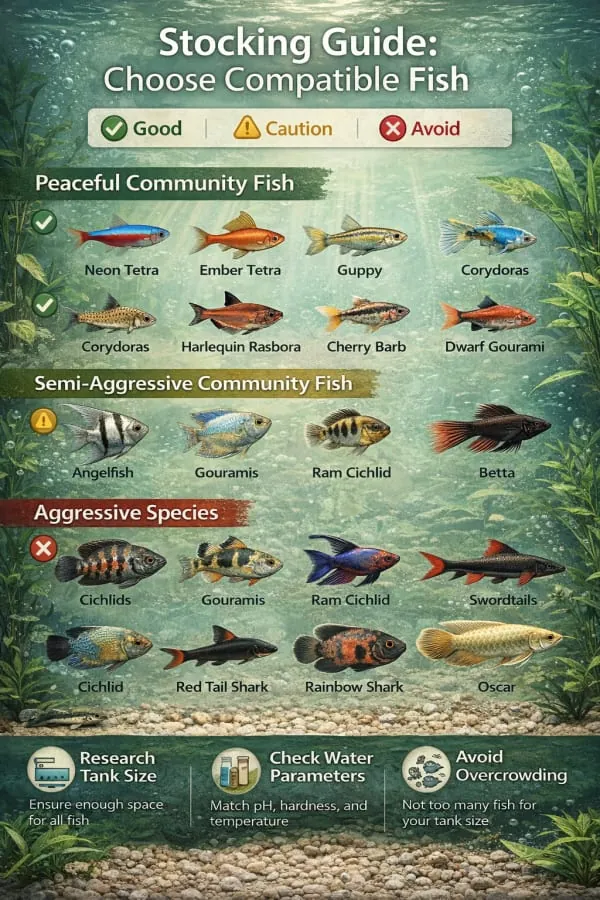
Choose compatible fish: school sizes, swimming zones, aggression, temperature and hardness matching, and honest bioload math for a peaceful community.
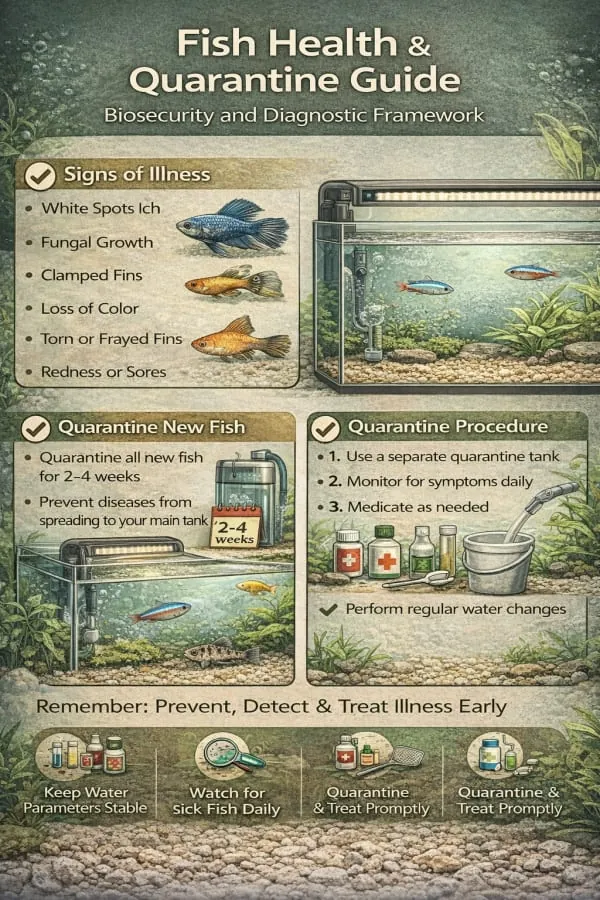
Quarantine new fish, spot the early warning signs, and treat disease without wrecking your tank. A practical freshwater fish health guide.
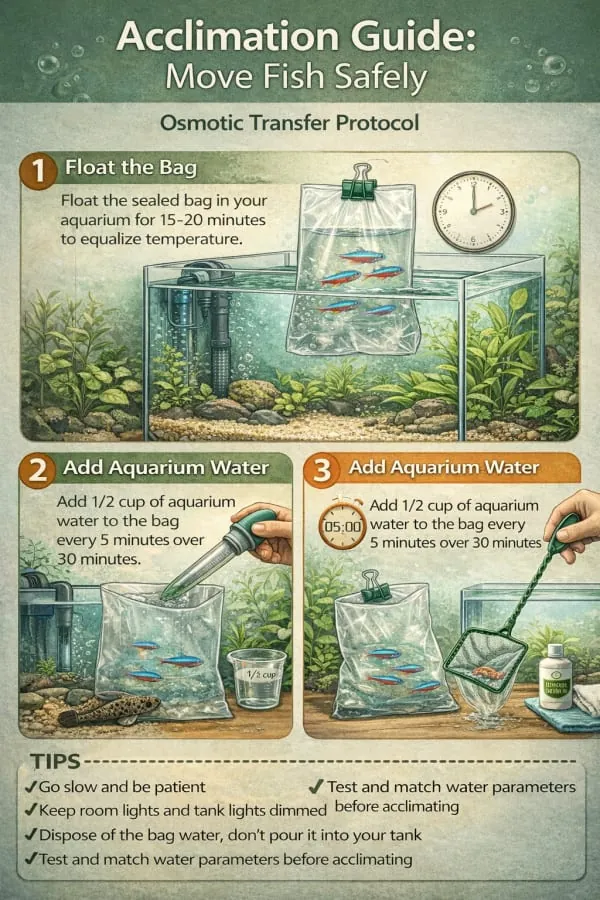
Acclimate new fish, shrimp, and coral safely: temperature floating, drip acclimation, plop-and-drop for shipped livestock, and the first 24 hours.
Keeping Twig Catfish?
AquaLens identifies your fish and plants from a photo, tracks water chemistry, and flags health issues early — free on iOS and Android.