Stick Catfish Care Guide
Farlowella acus · Freshwater Fish
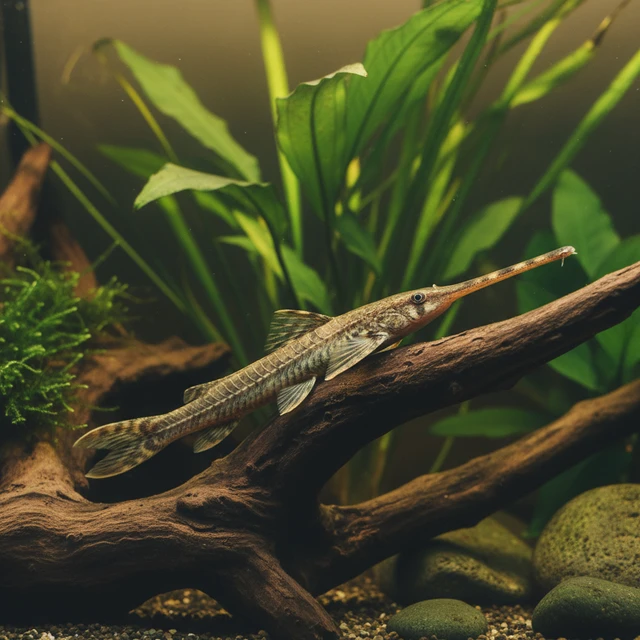
What Stick Catfish look like
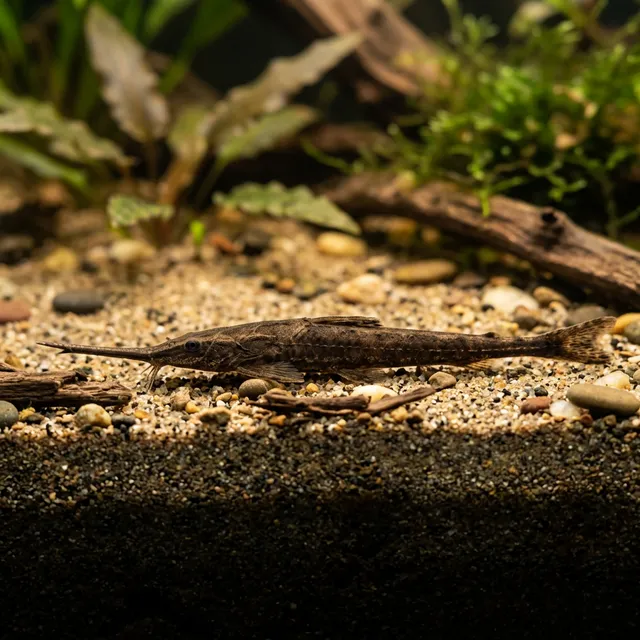
Farlowella acus, commonly known as the Stick Catfish, exhibits an elongated, laterally compressed body that can reach a maximum adult size of approximately 10 inches (25 cm). This species is characterized by its remarkably slender, stick-like appearance, featuring a highly elongated, needle-pointed rostrum that mimics the appearance of a broken twig, an adaptation that enhances its camouflage in its natural habitat. The head is elongated with a flattened snout, and the body is covered in bony plates typical of the Loricariidae family. Sexual dimorphism is subtle, with males generally exhibiting slightly more pronounced odontodes (bristle-like structures) on their pectoral fins during breeding periods. Defensive adaptations include its cryptic coloration and morphology, which allow it to blend seamlessly into the submerged vegetation and detritus of its environment, minimizing predation risk. The species also possesses a well-developed lateral line system, aiding in the detection of water movements, and features a small adipose fin that contributes to its streamlined shape.
Behavior & temperament
Farlowella acus is primarily a solitary and benthic species, often found resting motionless among submerged branches and leaf litter in slow-moving waters. While not an obligate schooler, it may occasionally be observed in loose aggregations, particularly during breeding seasons. This species exhibits a peaceful temperament, generally displaying low aggression levels towards conspecifics and other tank mates. Breeding behavior involves egg scattering, where females lay adhesive eggs on surfaces such as leaves or rocks, which the males subsequently guard. Their natural habitat is characterized by low light conditions, and they tend to dwell near the substrate, utilizing their elongated bodies to navigate through dense aquatic vegetation.
Diet & feeding
In the wild, Farlowella acus primarily feeds on algae, detritus, and biofilm that accumulates on submerged surfaces. In captivity, they require a diet rich in vegetable matter, including high-quality spirulina flakes, blanched vegetables, and algae wafers to meet their herbivorous dietary needs.
Behind the name
Farlowella (named in honor of the American ichthyologist, Dr. John Farlow); acus (Latin for 'needle', referring to its elongated, stick-like body).
Plan your tank
Check the numbers before you buy: tank volume, a stocking plan, cycle progress, water changes, and your ongoing care routine.
Keep reading

Choose compatible fish: school sizes, swimming zones, aggression, temperature and hardness matching, and honest bioload math for a peaceful community.
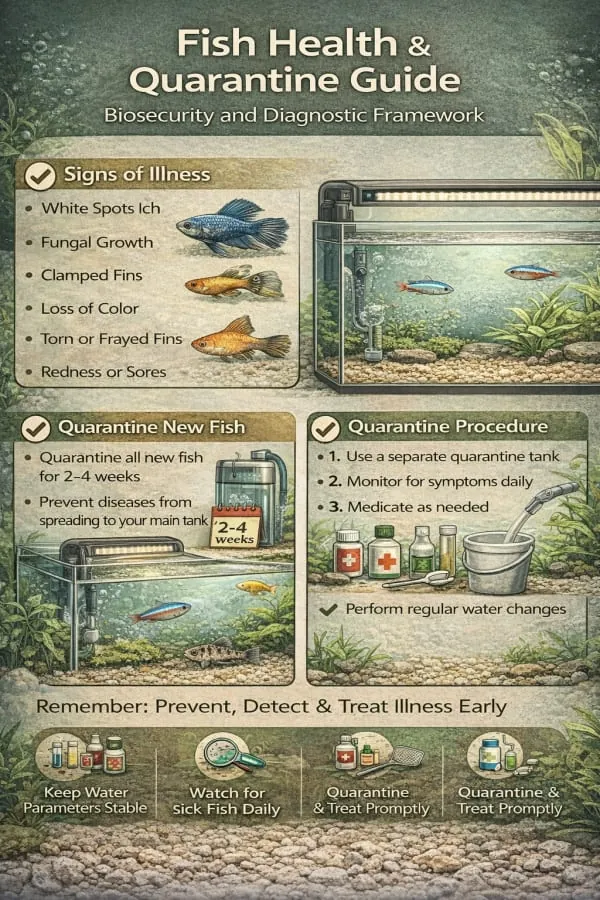
Quarantine new fish, spot the early warning signs, and treat disease without wrecking your tank. A practical freshwater fish health guide.
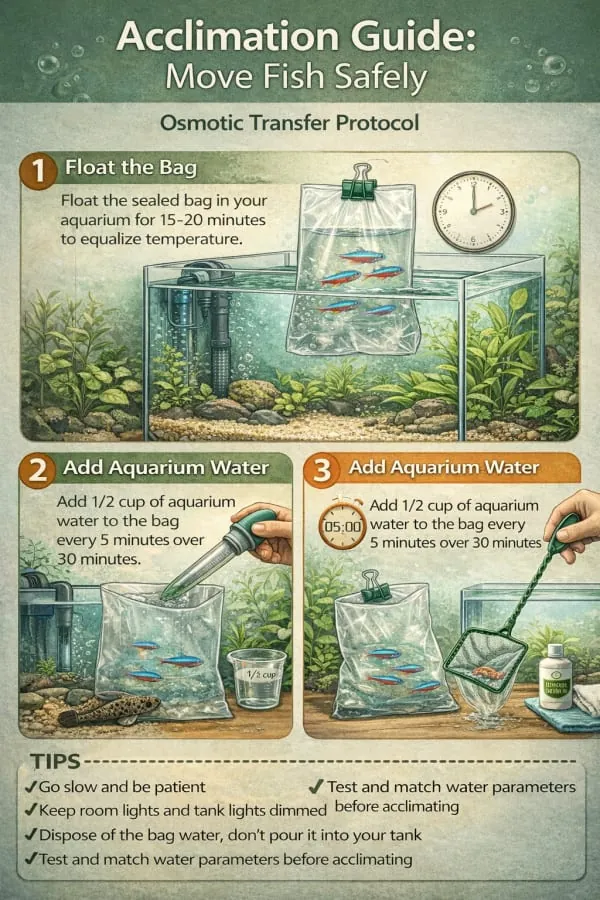
Acclimate new fish, shrimp, and coral safely: temperature floating, drip acclimation, plop-and-drop for shipped livestock, and the first 24 hours.
Keeping Stick Catfish?
AquaLens identifies your fish and plants from a photo, tracks water chemistry, and flags health issues early — free on iOS and Android.