Giant Freshwater Prawn Care Guide
Macrobrachium rosenbergii · Freshwater Invert
What Giant Freshwater Prawn look like
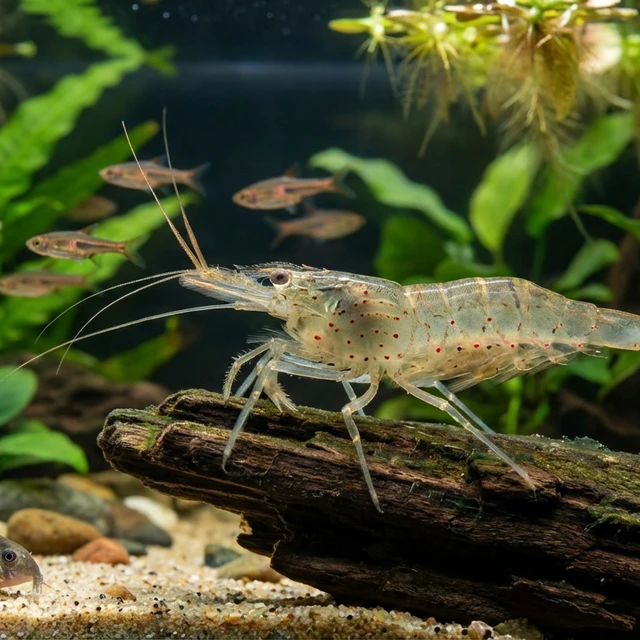
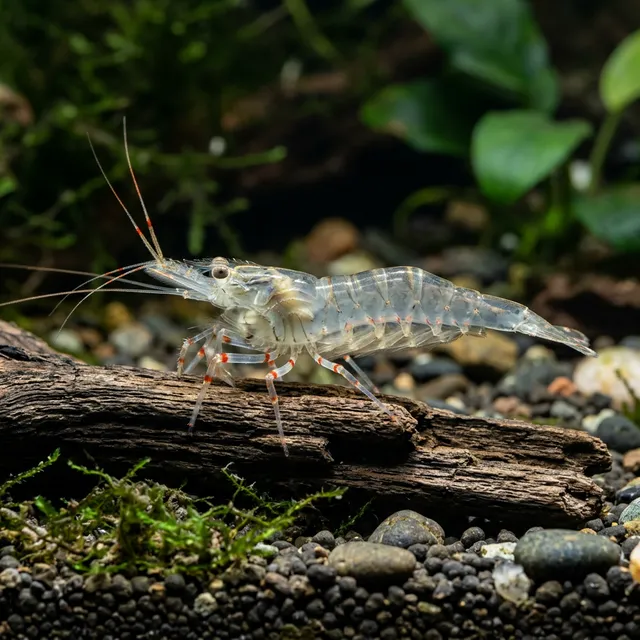
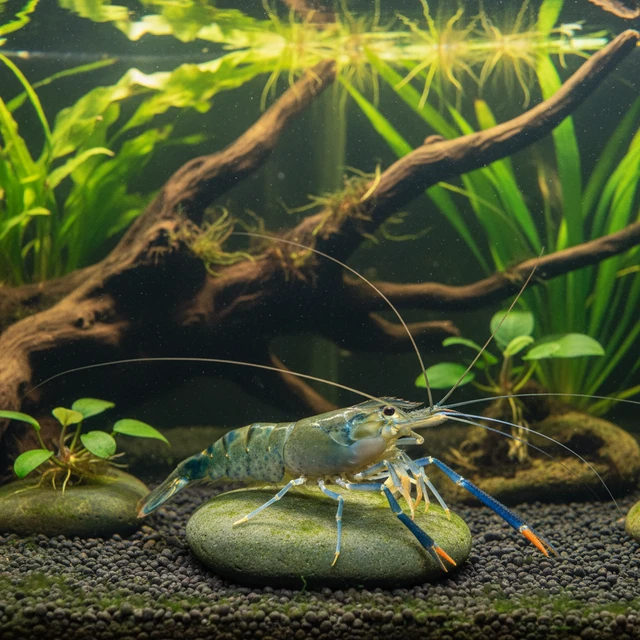
The Giant Freshwater Prawn, scientifically known as Macrobrachium rosenbergii, exhibits a robust and elongated body, typically reaching lengths of 12 inches (30 cm) or more, including its impressive chelipeds. Males are particularly distinguished by their extraordinarily long, blue-colored claws, which can exceed the length of their body, creating a striking visual contrast against their grayish-blue to greenish carapace. The prawn's body is laterally compressed, featuring a smooth exoskeleton adorned with a series of fine setae. The cephalothorax is well-defined, with prominent compound eyes situated on stalks, enhancing their visual acuity. Notably, this species possesses a pair of large, asymmetric chelae, with the larger claw exhibiting a more pronounced coloration and size in males, a clear example of sexual dimorphism. Defensive adaptations include the ability to blend into their aquatic environment due to their coloration and the presence of sharp spines along the carapace, which deter potential predators. The presence of a well-developed rostrum, characterized by a series of dorsal teeth, further enhances their predatory capabilities.
Behavior & temperament
In terms of behavior, Macrobrachium rosenbergii is primarily a benthic dweller, often found in freshwater habitats such as rivers, lakes, and estuaries in Southeast Asia. They exhibit a semi-social behavior, forming loose aggregations rather than strict schools, with a notable hierarchical structure where larger individuals dominate feeding and breeding opportunities. These prawns are opportunistic feeders, displaying both scavenging and predatory behaviors. During breeding, females engage in a unique reproductive strategy, where they are known to be egg scatterers, releasing fertilized eggs into the water column. The species is generally characterized by a moderate temperament, although males can exhibit territorial aggression, particularly during mating seasons or when competing for resources.
Diet & feeding
In the wild, the Giant Freshwater Prawn is an omnivore, feeding on a diverse diet that includes detritus, algae, and small aquatic organisms. In captivity, they require a balanced diet consisting of high-quality pellets, supplemented with live or frozen foods such as brine shrimp and bloodworms to ensure optimal health and growth.
Behind the name
The genus name 'Macrobrachium' is derived from the Greek words 'macro' (large) and 'brachion' (arm), referring to the large claws of these prawns. The species name 'rosenbergii' honors the German zoologist Hermann Rosenberg.
Plan your tank
Check the numbers before you buy: tank volume, a stocking plan, cycle progress, water changes, and your ongoing care routine.
Keep reading
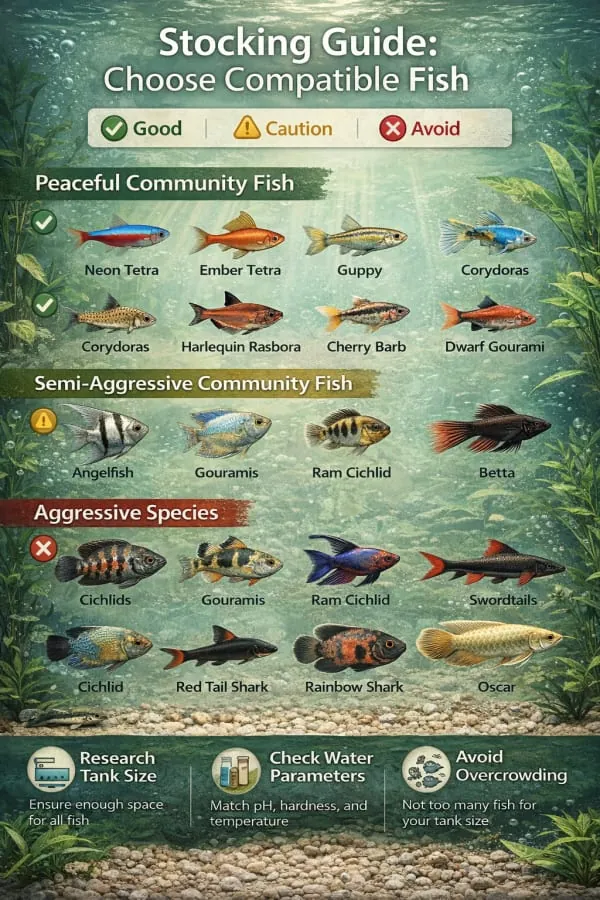
Choose compatible fish: school sizes, swimming zones, aggression, temperature and hardness matching, and honest bioload math for a peaceful community.
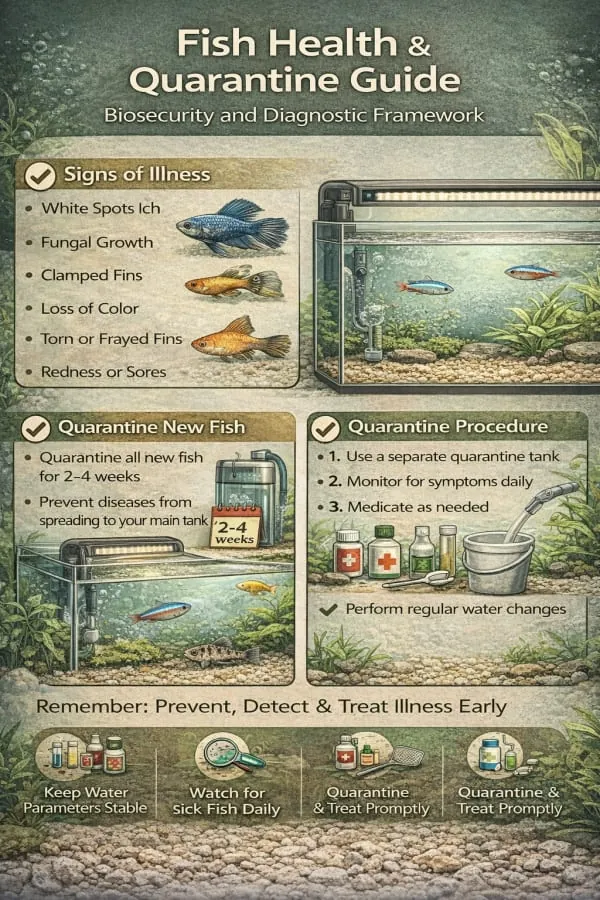
Quarantine new fish, spot the early warning signs, and treat disease without wrecking your tank. A practical freshwater fish health guide.
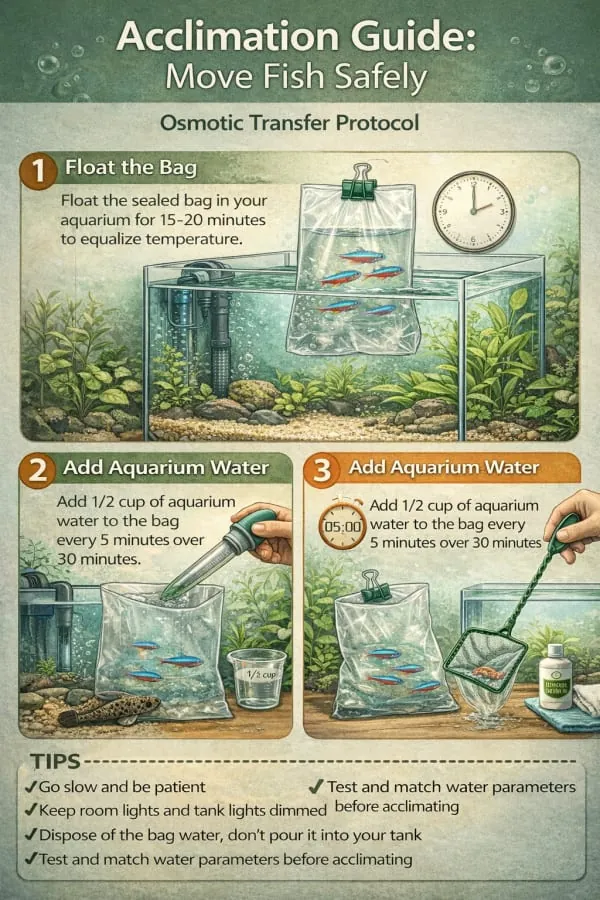
Acclimate new fish, shrimp, and coral safely: temperature floating, drip acclimation, plop-and-drop for shipped livestock, and the first 24 hours.
Keeping Giant Freshwater Prawn?
AquaLens identifies your fish and plants from a photo, tracks water chemistry, and flags health issues early — free on iOS and Android.