Java Moss Care Guide
Taxiphyllum barbieri · Freshwater Plant
What Java Moss look like
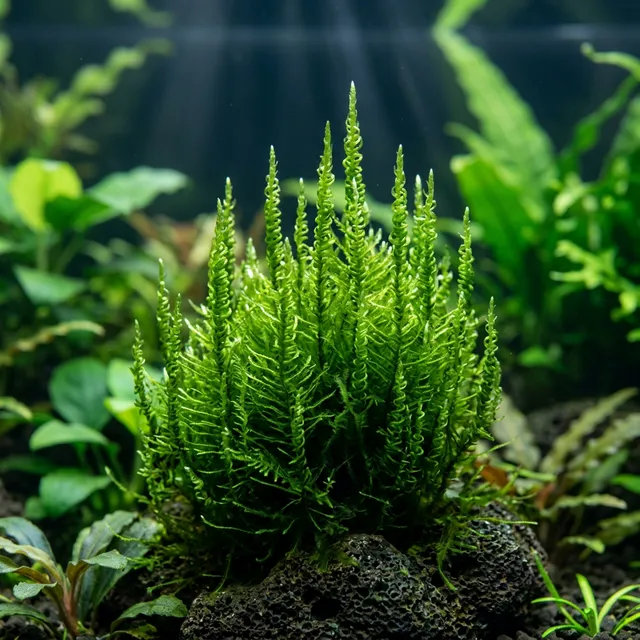
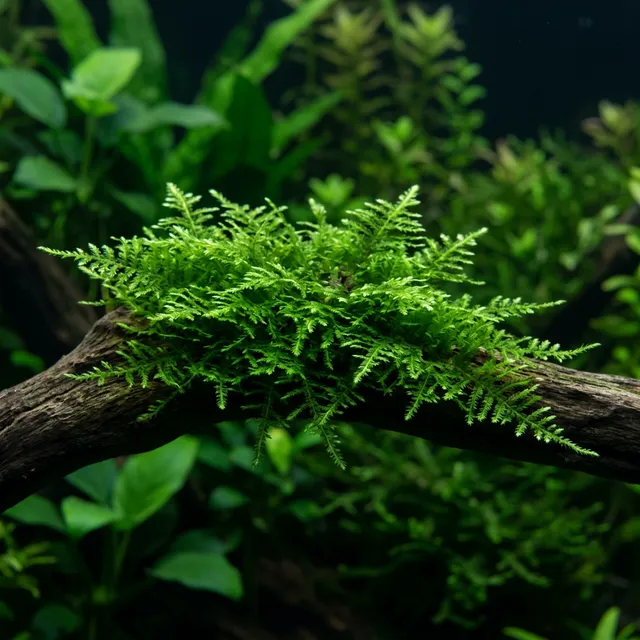
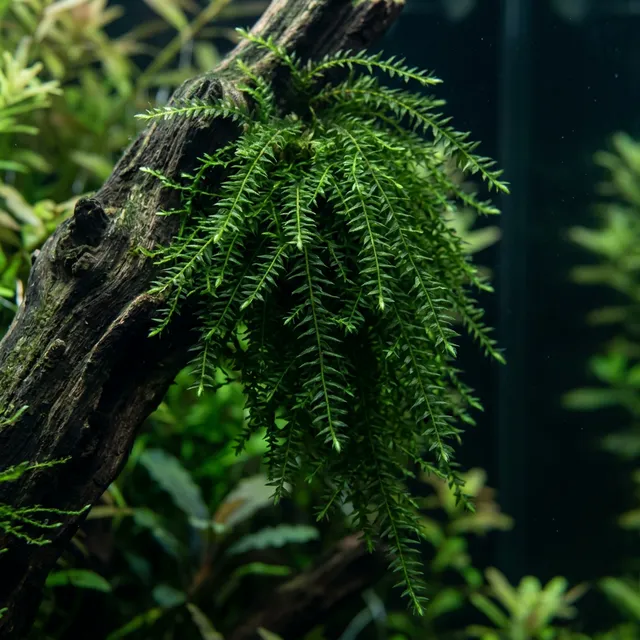
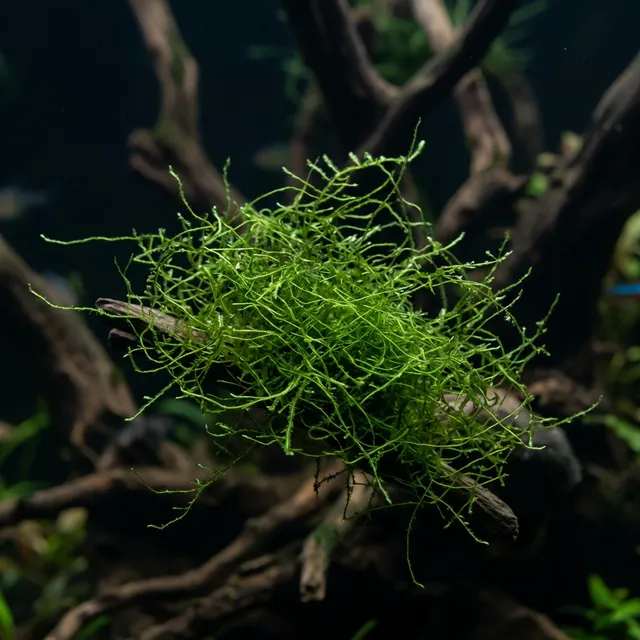
Taxiphyllum barbieri, commonly known as Java Moss, exhibits a unique morphology characterized by its fine, thread-like green filaments that can grow up to 20 cm in length, although it is typically found in smaller clumps. The plant is not rooted in substrate but rather attaches itself to various surfaces, including rocks, driftwood, and aquarium decorations, showcasing a highly adaptable growth pattern. Java Moss lacks true leaves; instead, it features small, scale-like structures called phyllids that are densely packed along the stems, giving it a lush appearance. This moss does not exhibit sexual dimorphism, as it reproduces asexually through fragmentation and sporulation. Its defensive adaptations include a high surface area that allows for efficient nutrient absorption and a habitat that provides shelter for small aquatic organisms, thus enhancing its ecological role in aquaria and natural habitats.
Behavior & temperament
Java Moss is primarily a benthic plant, thriving in still or slow-moving waters of Southeast Asia. It does not exhibit hierarchical social structures as it is a non-vascular plant; however, it can form dense mats that provide shelter and breeding grounds for various aquatic species. The moss is not aggressive and does not compete aggressively with other plants, instead coexisting harmoniously in community tanks. Its growth is influenced by light availability and water quality, and it can flourish in a variety of tank conditions, making it a popular choice for aquarists. Java Moss reproduces through fragmentation, where pieces of the plant can break off and grow into new individuals, contributing to its rapid spread in suitable environments.
Diet & feeding
Java Moss is an obligate photosynthetic organism, relying on light to produce energy through photosynthesis. In captivity, it requires moderate to high lighting conditions to thrive, along with nutrient-rich water to support its growth.
Behind the name
Taxiphyllum (arrangement of the leaves; from Greek 'taxis' meaning arrangement and 'phyllon' meaning leaf); barbieri (named in honor of a botanist or individual associated with the species).
Plan your tank
Check the numbers before you buy: tank volume, a stocking plan, cycle progress, water changes, and your ongoing care routine.
Keep reading
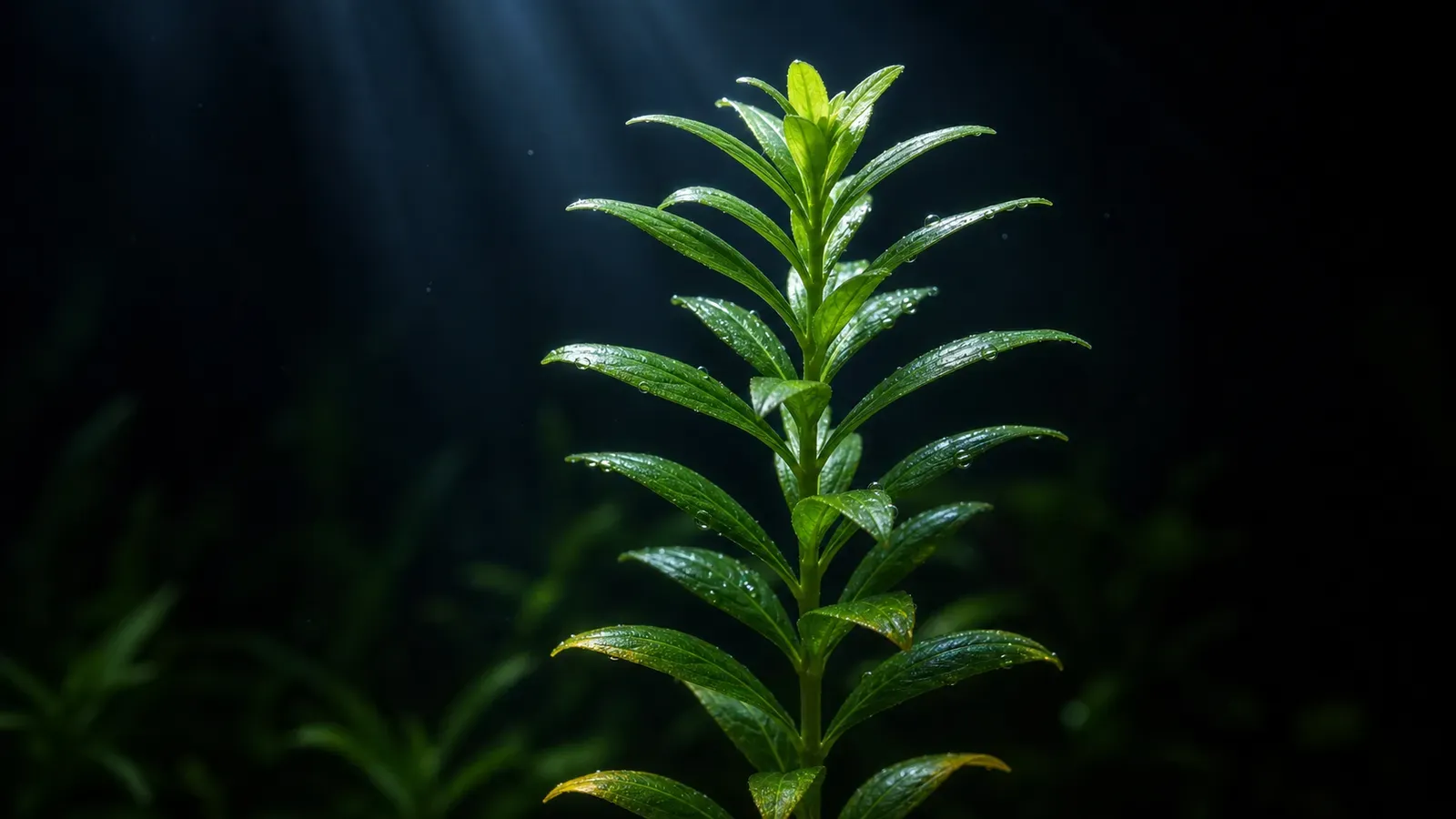
Diagnose aquarium plant deficiencies by leaf age and symptom: yellowing, pinholes, twisting, and stunting. Read the pattern, then fix it safely.

PAR-first planted tank lighting: choose intensity by what you grow, set photoperiod and spectrum, kill shadows, and hold algae back without overspending.

Aquarium CO₂ injection made safe: how carbon, light, and nutrients balance, which system to buy, and how to dial it in without gassing your fish.
Keeping Java Moss?
AquaLens identifies your fish and plants from a photo, tracks water chemistry, and flags health issues early — free on iOS and Android.