Christmas Moss Care Guide
Vesicularia montagnei · Freshwater Plant
What Christmas Moss look like
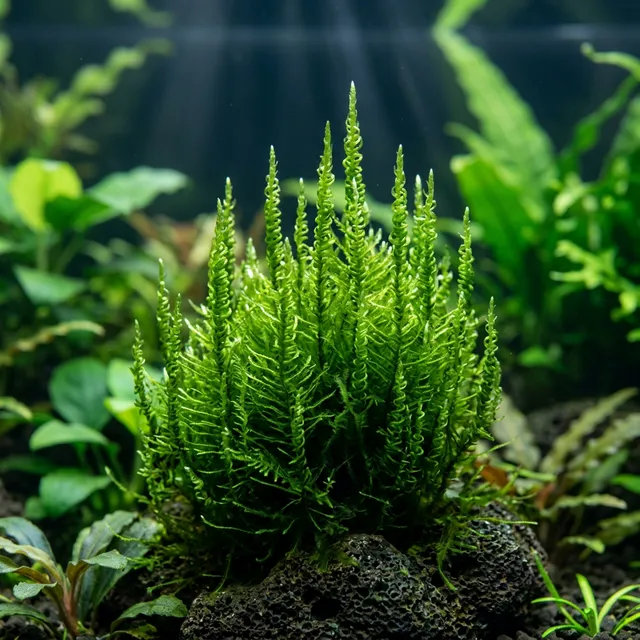
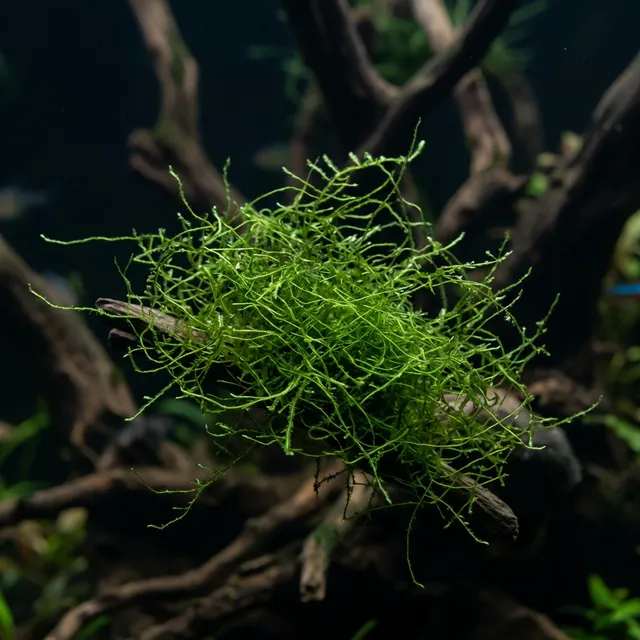
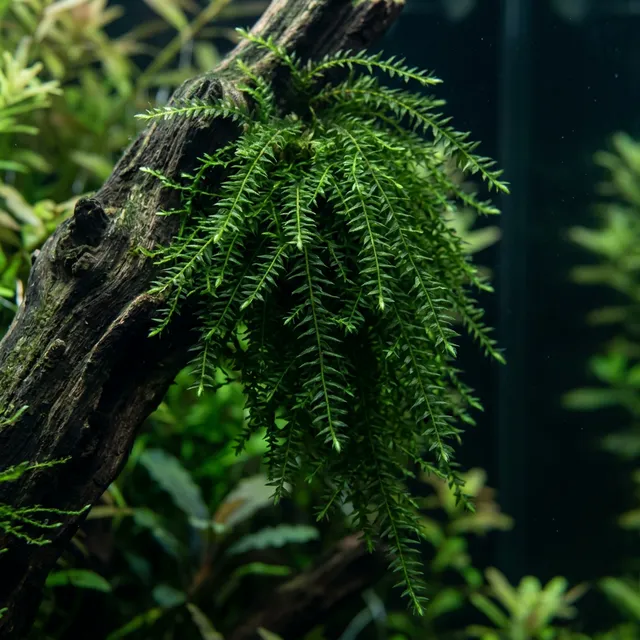
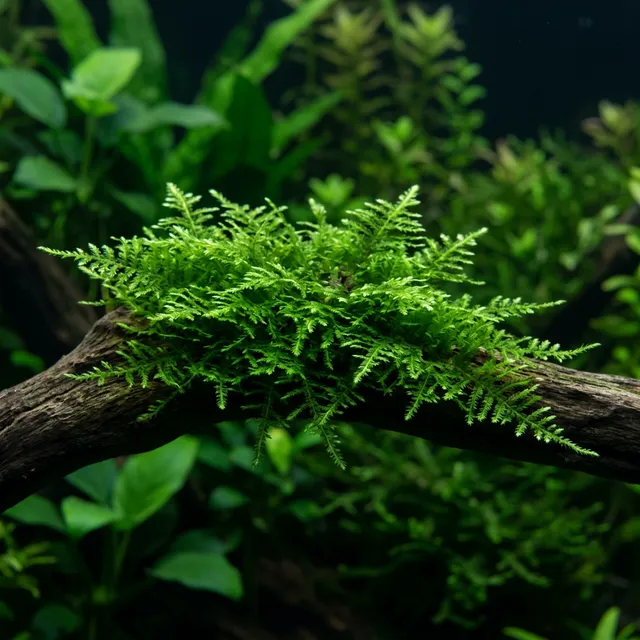
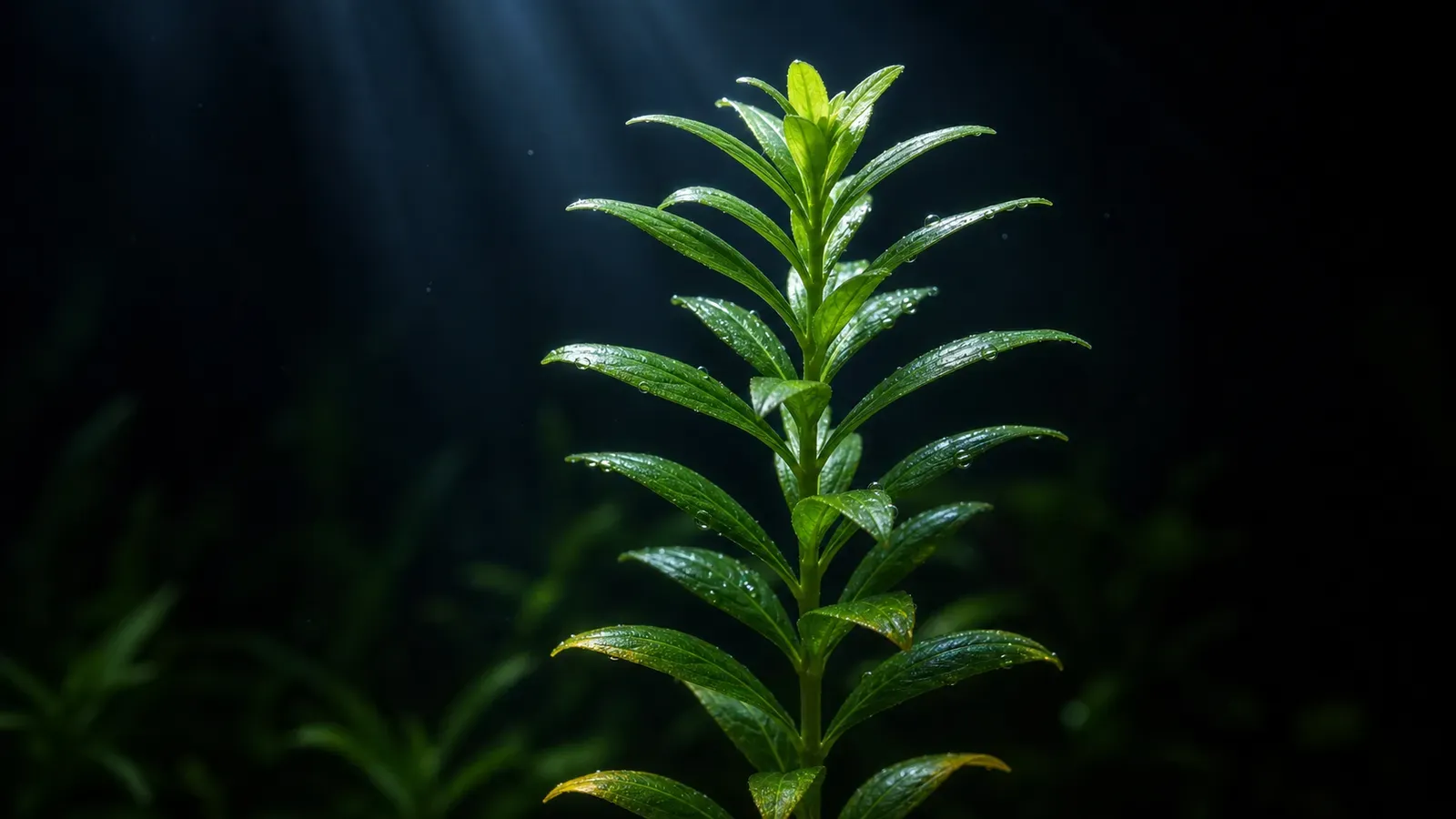
Vesicularia montagnei, commonly known as Christmas Moss, exhibits a distinctive morphology characterized by its lush, green, and feathery appearance. This moss typically grows in a dense, bushy form, reaching a maximum height of 5 to 15 centimeters. The leaves are small, lanceolate, and densely arranged along the stems, giving it a compact and textured appearance. The branching pattern is irregular, contributing to its aesthetic appeal in aquascaping. Unlike many aquatic plants, Christmas Moss does not possess true roots; instead, it anchors itself to substrates through rhizoids. Its unique adaptation includes the ability to thrive in a variety of light conditions, although it prefers moderate to high light for optimal growth. This species does not exhibit sexual dimorphism, as it reproduces through fragmentation and sporulation rather than sexual means, making it a fascinating addition to aquatic environments.
Behavior & temperament
Christmas Moss is primarily a benthic plant that thrives in still or slow-moving waters, often found in shaded areas of streams and rivers. It does not exhibit social behaviors as it is a non-mobile organism; however, it can form dense mats that provide habitat and shelter for various aquatic organisms. In terms of reproduction, Christmas Moss can reproduce vegetatively through fragmentation, where pieces of the moss can grow into new plants, and it also produces spores. Its growth is influenced by water quality and light availability, making it a resilient species that can adapt to various conditions. The temperament of this moss is non-aggressive, as it coexists harmoniously with other aquatic flora and fauna, contributing to the overall biodiversity of its habitat.
Diet & feeding
Christmas Moss is a photosynthetic organism that primarily relies on light for energy, absorbing nutrients from the water column and substrate. In captivity, it benefits from a nutrient-rich substrate and may require occasional supplementation with liquid fertilizers to promote healthy growth.
Behind the name
The genus name 'Vesicularia' is derived from the Latin 'vesicula', meaning 'small bladder', referring to the air-filled structures that help the plant float. The species name 'montagnei' honors the French botanist, indicating its discovery in mountainous regions.
Plan your tank
Check the numbers before you buy: tank volume, a stocking plan, cycle progress, water changes, and your ongoing care routine.
Keep reading
Diagnose aquarium plant deficiencies by leaf age and symptom: yellowing, pinholes, twisting, and stunting. Read the pattern, then fix it safely.

PAR-first planted tank lighting: choose intensity by what you grow, set photoperiod and spectrum, kill shadows, and hold algae back without overspending.

Aquarium CO₂ injection made safe: how carbon, light, and nutrients balance, which system to buy, and how to dial it in without gassing your fish.
Keeping Christmas Moss?
AquaLens identifies your fish and plants from a photo, tracks water chemistry, and flags health issues early — free on iOS and Android.