Javanese Ricefish Care Guide
Oryzias javanicus · Freshwater Fish
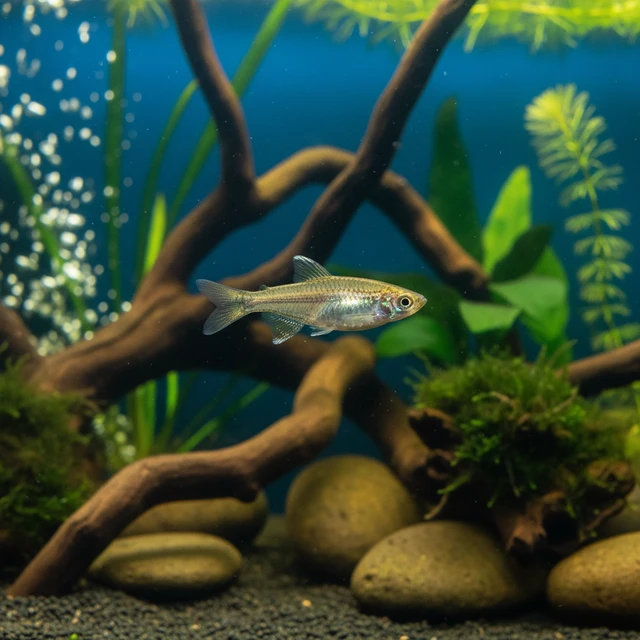
What Javanese Ricefish look like
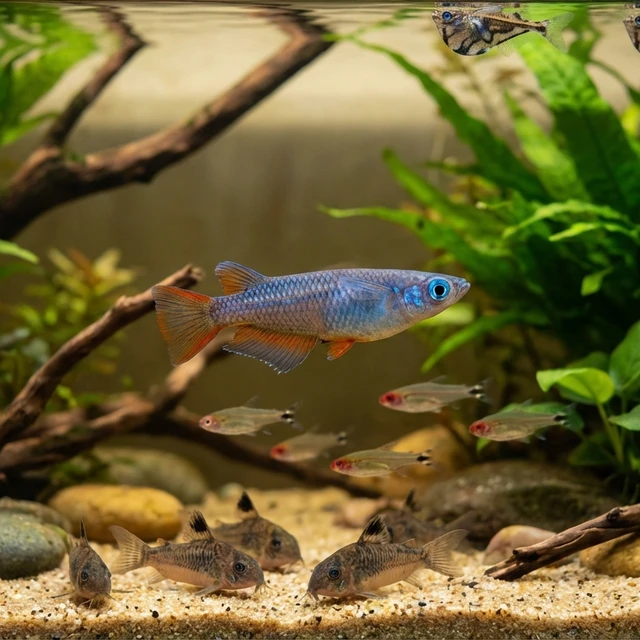
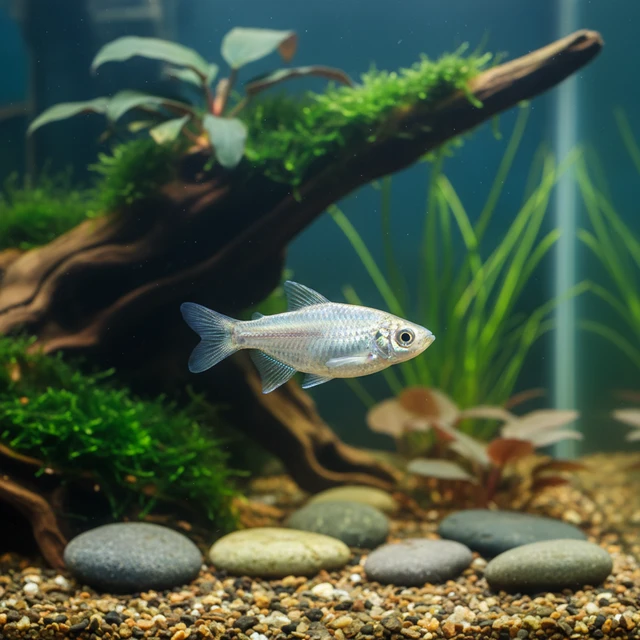
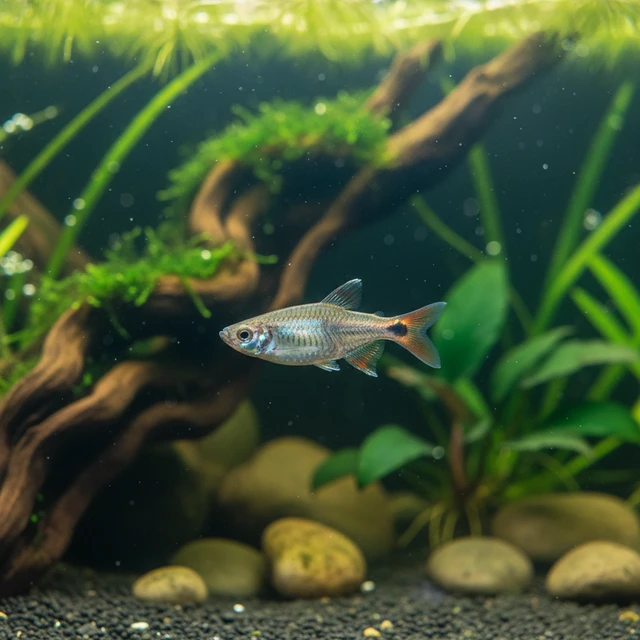
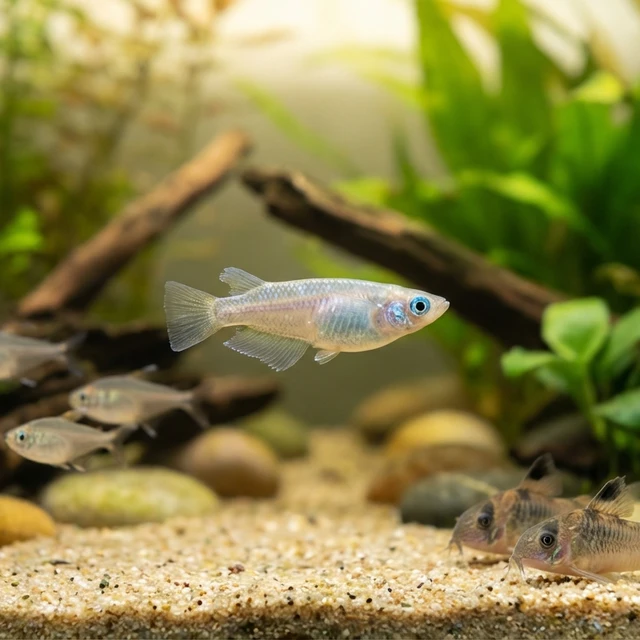
The Javanese Ricefish (Oryzias javanicus) exhibits a slender, fusiform body shape, typically reaching a maximum adult size of 1.5 inches (approximately 3.8 cm). This species is characterized by its translucent body, which allows for the visibility of internal structures, and a distinctive upturned mouth adapted for surface feeding. Males display a more vibrant coloration compared to females, often exhibiting subtle iridescence, particularly in the fins and body. The species possesses a well-defined lateral line, which aids in the detection of water movements, and its dentition is adapted for an omnivorous diet, featuring small, conical teeth. Notably, the Javanese Ricefish has a small adipose fin, contributing to its streamlined appearance, and its fins are generally delicate and transparent, enhancing its ethereal presence in the water column.
Behavior & temperament
Javanese Ricefish are primarily surface dwellers, often found in shallow, slow-moving waters of rice paddies and marshes. They exhibit a social behavior typical of small schooling fish, preferring to congregate in groups which provides safety in numbers. Their temperament is generally peaceful, making them suitable for community tanks; however, they can display mild territoriality during breeding periods. Breeding behavior involves egg scattering, where females release eggs over vegetation, and males fertilize them externally. This species thrives in a well-planted environment that mimics its natural habitat, providing both shelter and breeding grounds.
Diet & feeding
In the wild, the Javanese Ricefish is an omnivore, feeding on small invertebrates, algae, and detritus. In captivity, they require a varied diet that includes high-quality flake food, live or frozen foods such as brine shrimp and daphnia, and plant matter to ensure optimal health and coloration.
Behind the name
Oryzias (rice; relating to rice fields) and javanicus (of Java; indicating its geographic origin).
Plan your tank
Check the numbers before you buy: tank volume, a stocking plan, cycle progress, water changes, and your ongoing care routine.
Keep reading
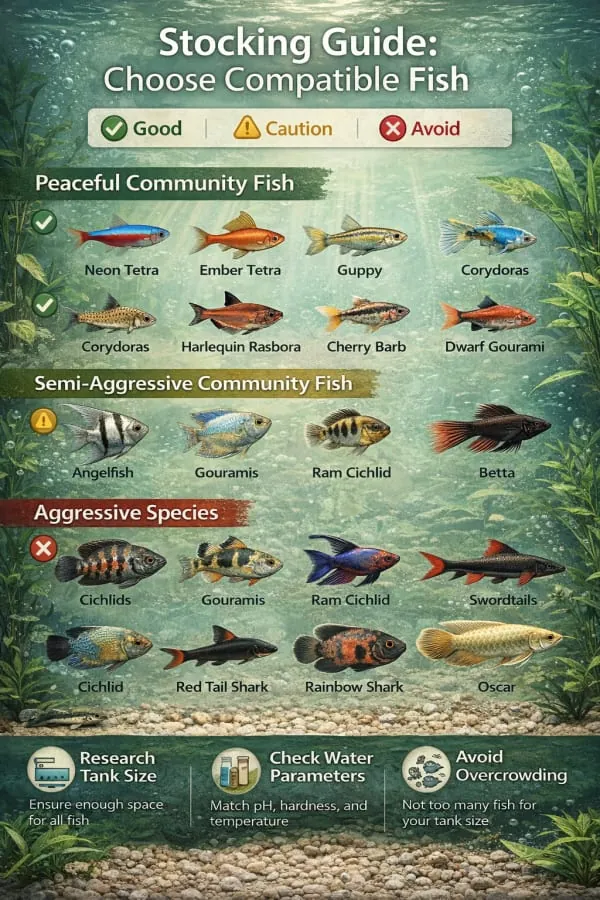
Choose compatible fish: school sizes, swimming zones, aggression, temperature and hardness matching, and honest bioload math for a peaceful community.
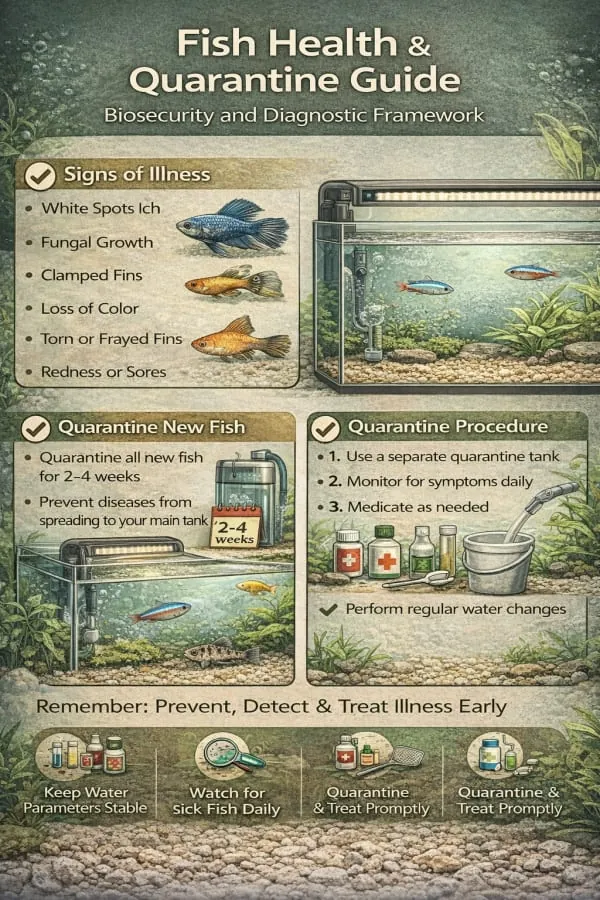
Quarantine new fish, spot the early warning signs, and treat disease without wrecking your tank. A practical freshwater fish health guide.
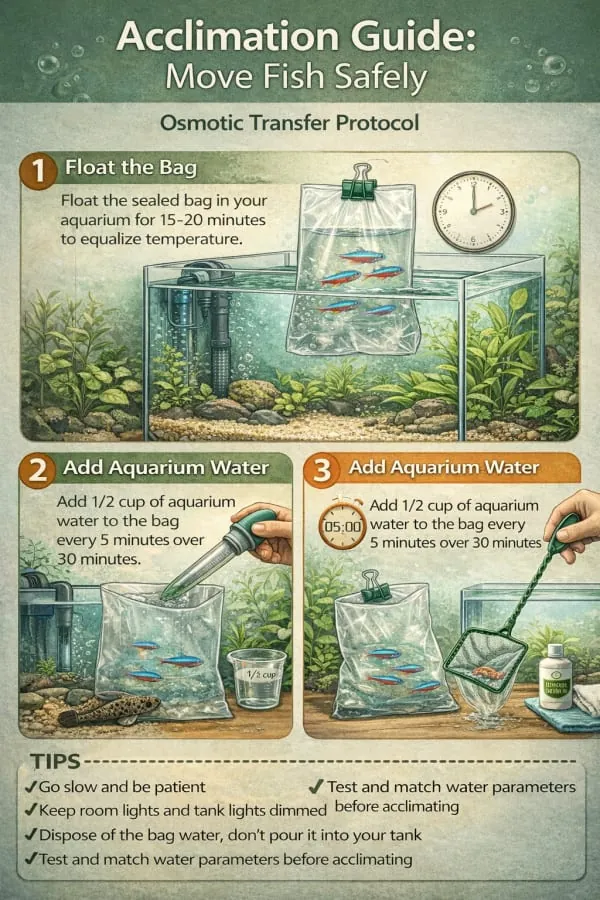
Acclimate new fish, shrimp, and coral safely: temperature floating, drip acclimation, plop-and-drop for shipped livestock, and the first 24 hours.
Keeping Javanese Ricefish?
AquaLens identifies your fish and plants from a photo, tracks water chemistry, and flags health issues early — free on iOS and Android.