Leopard Kuhli Loach Care Guide
Pangio shelfordii · Freshwater Fish
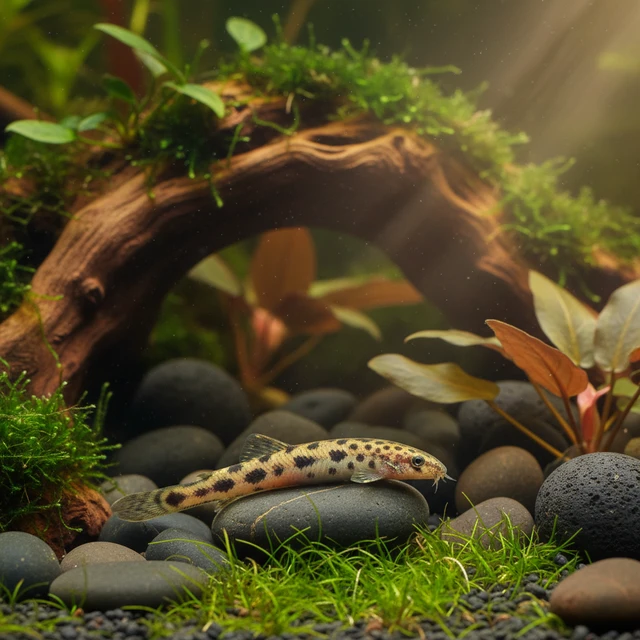
What Leopard Kuhli Loach look like
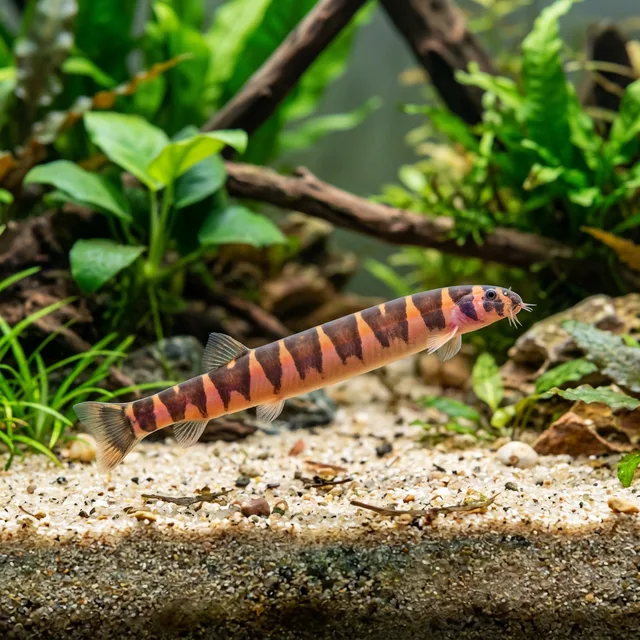
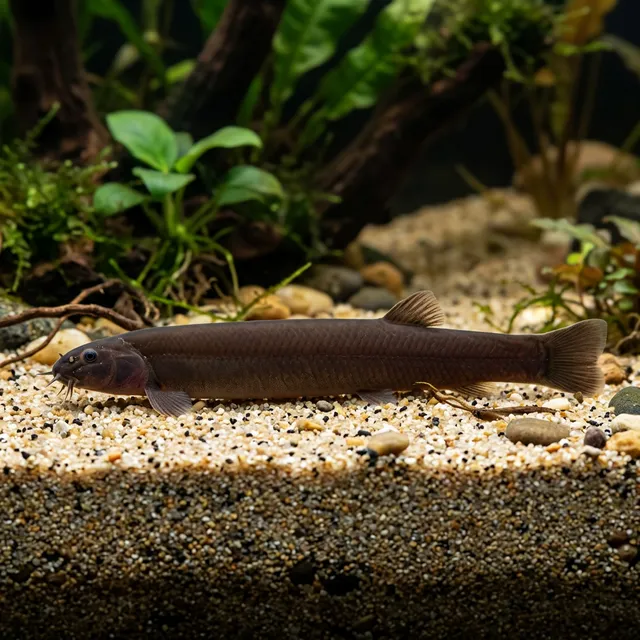
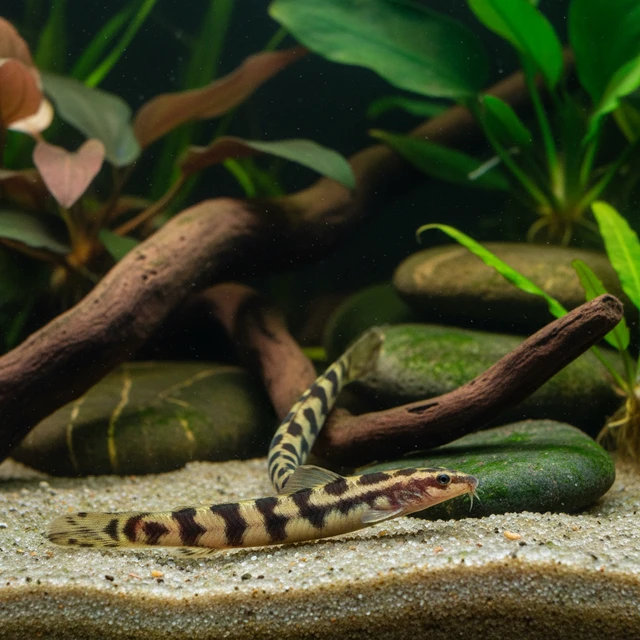
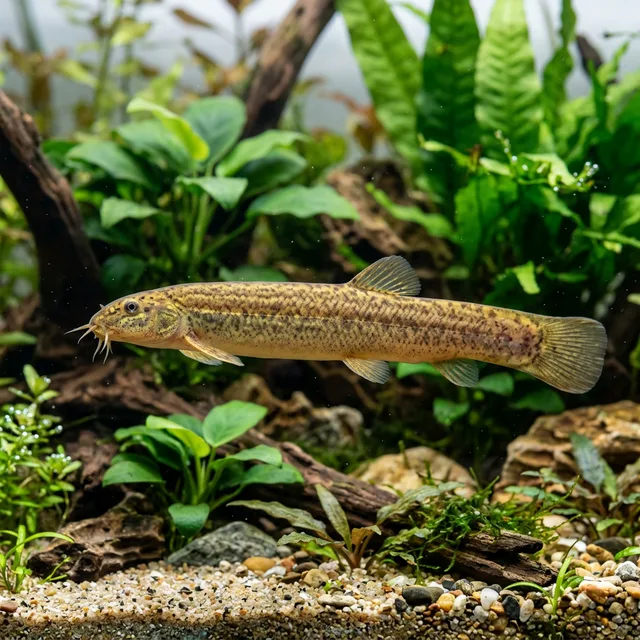
Pangio shelfordii, commonly known as the Leopard Kuhli Loach, exhibits a distinctive eel-like, elongated body that typically reaches a maximum adult size of 3 to 4 inches (7.5 to 10 cm). The body is laterally compressed with a smooth, slim profile, allowing for agile movement through its benthic habitat. Its coloration features a brown to tan background adorned with darker, leopard-like spots, which serve as a form of camouflage against the substrate. Unlike its common counterpart, the Kuhli Loach, this species lacks the typical banding pattern, making it easily identifiable. The Leopard Kuhli Loach possesses a small, rounded head with a terminal mouth equipped with fine, bristle-like dentition adapted for foraging detritus and small invertebrates. Notable morphological adaptations include a well-developed lateral line system for detecting vibrations in the water and a small adipose fin that contributes to its streamlined shape. Defensive adaptations include its ability to burrow into soft substrates, providing refuge from potential predators.
Behavior & temperament
The Leopard Kuhli Loach is primarily a nocturnal species, exhibiting a solitary or small group lifestyle rather than forming large schools. It typically dwells in the benthic zone of freshwater environments, where it forages among leaf litter and substrate. This species is known for its secretive behavior, often hiding in crevices or burrowing into the substrate during the day. Breeding behavior in captivity has not been extensively documented, but it is believed to be an egg scatterer, releasing fertilized eggs in sheltered areas. The temperament of the Leopard Kuhli Loach is generally peaceful, making it suitable for community tanks; however, it can exhibit territoriality when confined in smaller spaces.
Diet & feeding
In the wild, the Leopard Kuhli Loach is an omnivore, primarily feeding on detritus, small invertebrates, and plant matter. In captivity, it thrives on a varied diet that includes high-quality sinking pellets, frozen or live foods such as bloodworms and brine shrimp, and blanched vegetables to ensure proper nutrition.
Behind the name
Pangio (from the Greek 'pangios', meaning 'to be all' or 'to be everywhere'); shelfordii (named in honor of the naturalist and zoologist, Edward Shelford).
Plan your tank
Check the numbers before you buy: tank volume, a stocking plan, cycle progress, water changes, and your ongoing care routine.
Keep reading

Choose compatible fish: school sizes, swimming zones, aggression, temperature and hardness matching, and honest bioload math for a peaceful community.
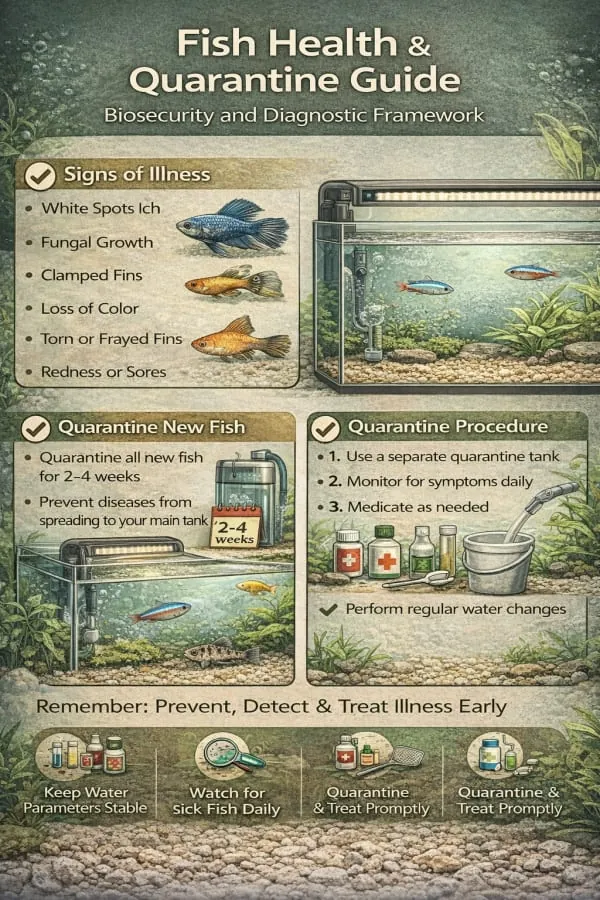
Quarantine new fish, spot the early warning signs, and treat disease without wrecking your tank. A practical freshwater fish health guide.

Acclimate new fish, shrimp, and coral safely: temperature floating, drip acclimation, plop-and-drop for shipped livestock, and the first 24 hours.
Keeping Leopard Kuhli Loach?
AquaLens identifies your fish and plants from a photo, tracks water chemistry, and flags health issues early — free on iOS and Android.