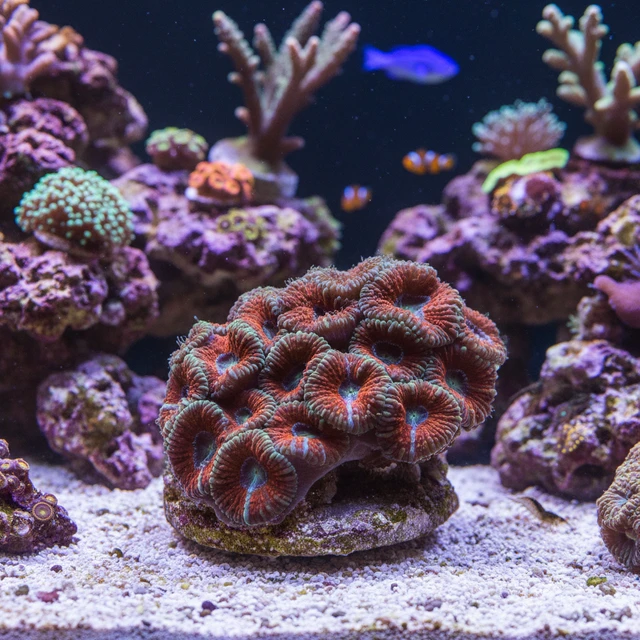
Micromussa Amakusensis Care Guide
Micromussa amakusensis · Saltwater LPS Coral
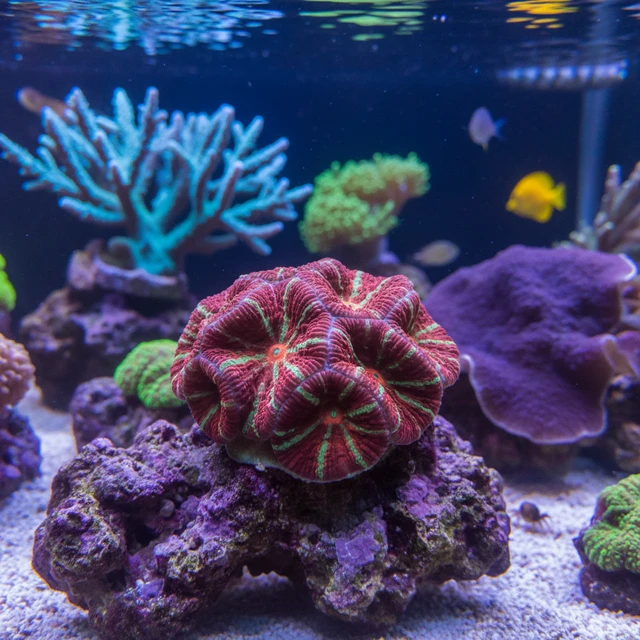
What Micromussa Amakusensis look like
Micromussa amakusensis exhibits a distinctive morphology characterized by its small, compact polyps that can reach up to 2.5 cm in diameter. The coral typically forms encrusting colonies with a rugged surface texture, displaying a range of vibrant colors including greens, reds, and purples. Each polyp possesses a prominent oral disc surrounded by short, fleshy tentacles that can extend significantly during feeding. The skeletal structure is composed of a robust calcium carbonate base, providing stability and resilience against environmental stressors. Notably, this species exhibits a unique arrangement of its mesenterial filaments, which play a crucial role in both feeding and defense, allowing for effective capture of prey and deterring potential predators. Sexual dimorphism is not pronounced in this species, although variations in coloration may suggest different genetic lineages.
Behavior & temperament
Micromussa amakusensis is predominantly a solitary coral, though it can form small colonies through asexual reproduction. It exhibits a nocturnal feeding behavior, extending its tentacles at night to capture zooplankton and other particulate matter from the water column. The coral is known to engage in aggressive interactions with neighboring corals, utilizing its stinging nematocysts to defend its territory. While generally passive, it can display territorial aggression towards other corals, particularly when space is limited. The polyp extension patterns are highly responsive to environmental cues, with rapid retraction in response to disturbances.
Diet & feeding
Micromussa amakusensis is a facultative carnivore, primarily feeding on zooplankton and phytoplankton in its natural habitat. In captivity, it thrives on a diet of finely chopped meaty foods, supplemented with liquid coral foods rich in amino acids and essential nutrients.
Behind the name
The genus name 'Micromussa' is derived from the Greek 'mikros' meaning 'small' and 'mussa' referring to a type of coral, while 'amakusensis' is derived from Amakusa, a region in Japan where this species is commonly found.
Plan your tank
Check the numbers before you buy: tank volume, salinity, salt mix, water changes, and your ongoing care routine. Keeping reef? Start from the Saltwater & Reef hub.
Keep reading
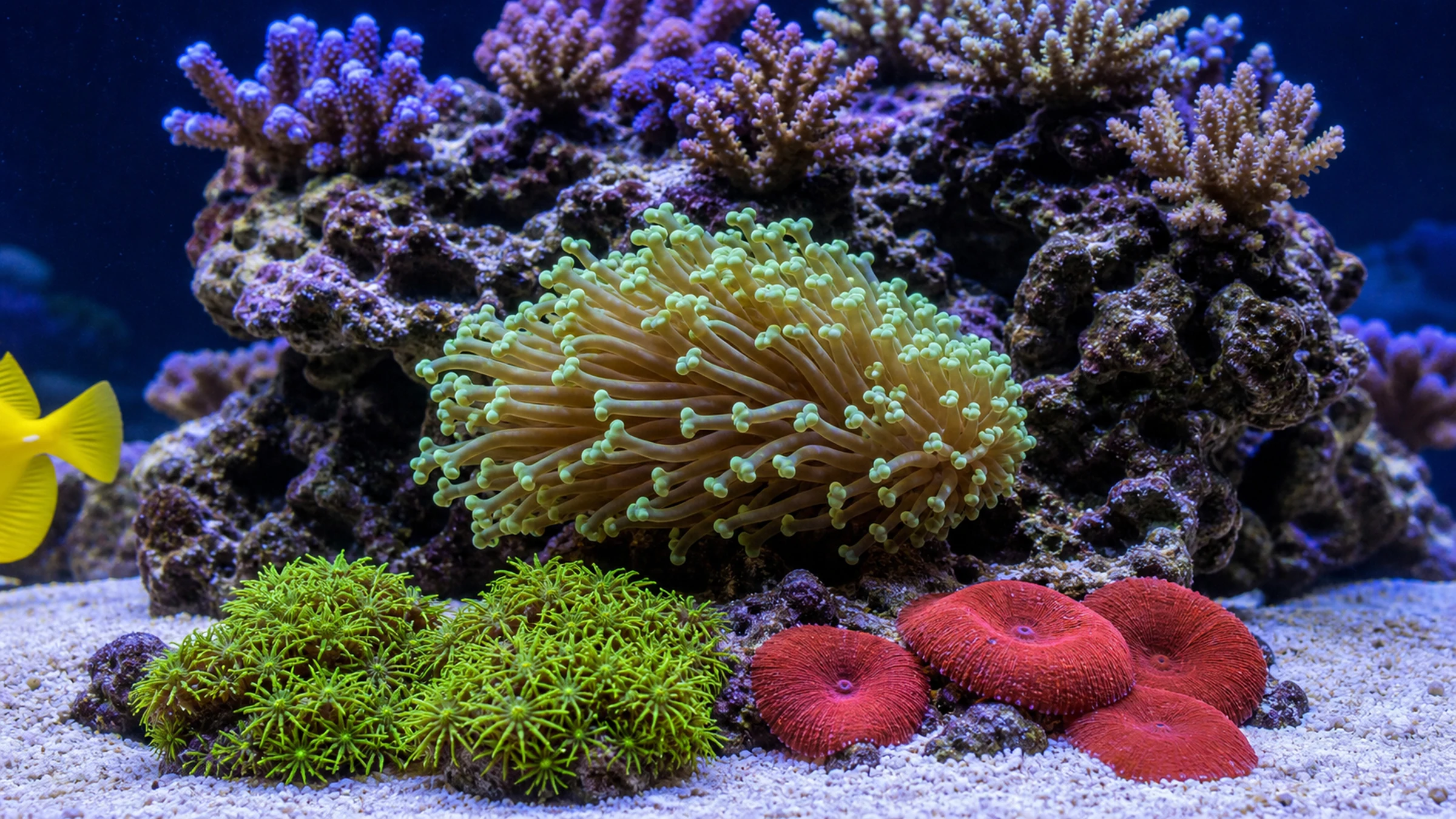
How to place corals by light and flow, PAR targets for softies, LPS, and SPS, dipping new corals for pests, and acclimating them without bleaching.
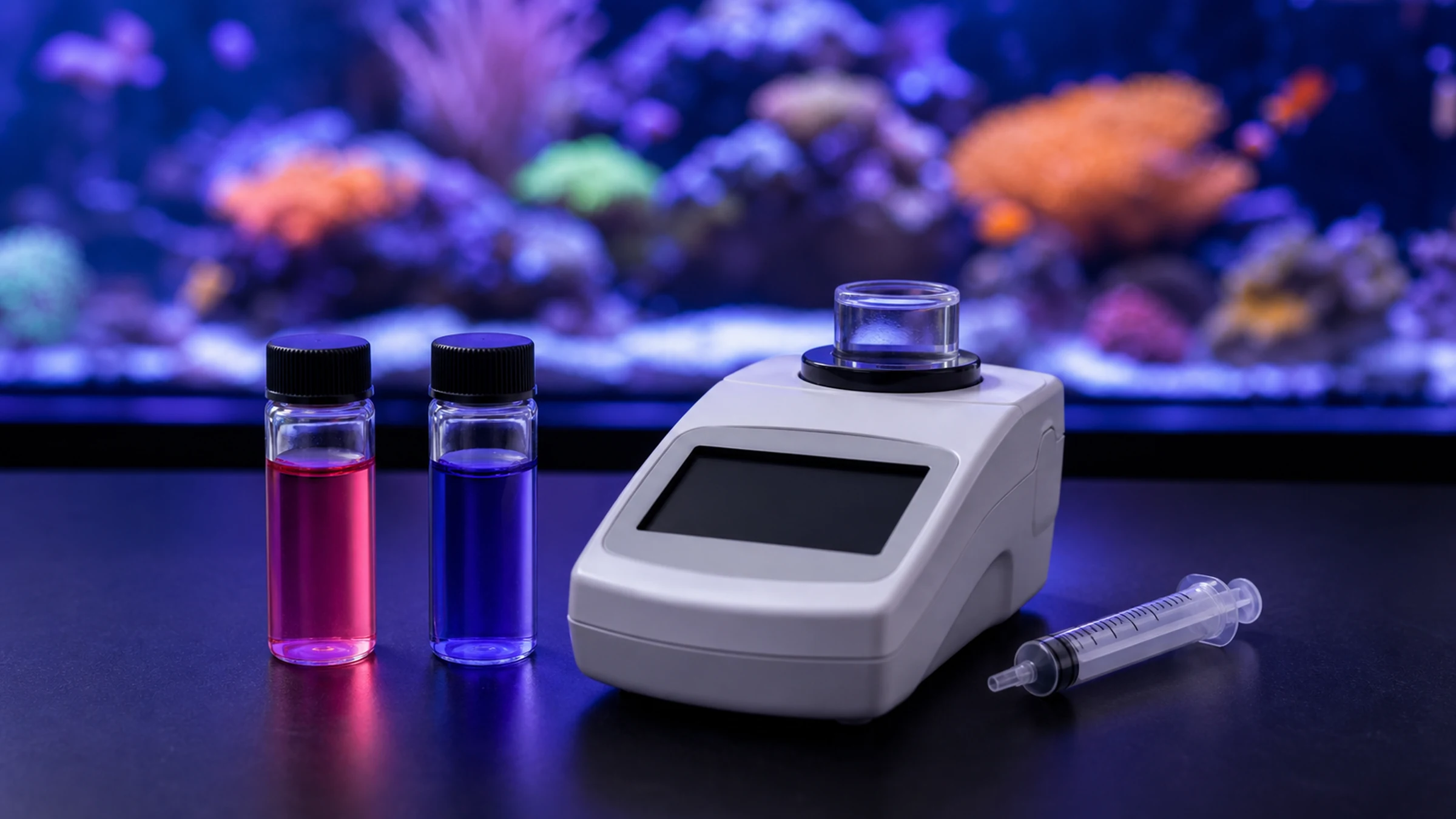
What every reef parameter means and where to keep it: salinity, temperature, pH, alkalinity, calcium, magnesium, nitrate, and phosphate.

Acclimate new fish, shrimp, and coral safely: temperature floating, drip acclimation, plop-and-drop for shipped livestock, and the first 24 hours.
Keeping Micromussa Amakusensis?
AquaLens identifies your fish and plants from a photo, tracks water chemistry, and flags health issues early — free on iOS and Android.