Panther Crab Care Guide
Parathelphusa pantherina · Freshwater Invert
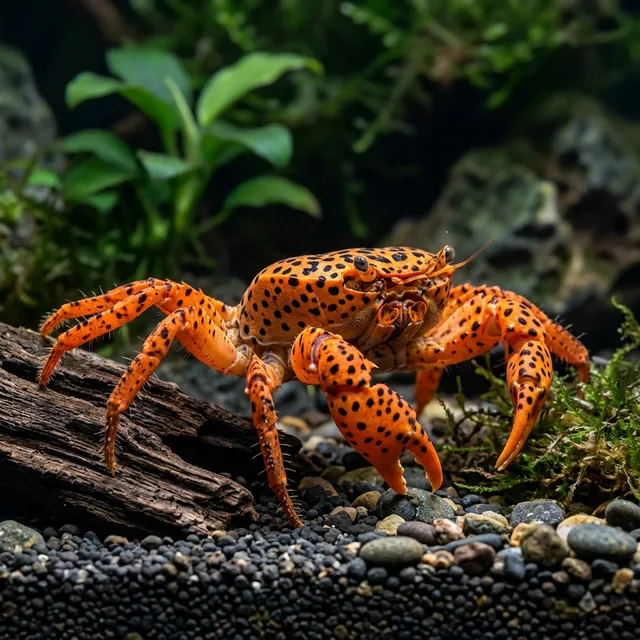
What Panther Crab look like
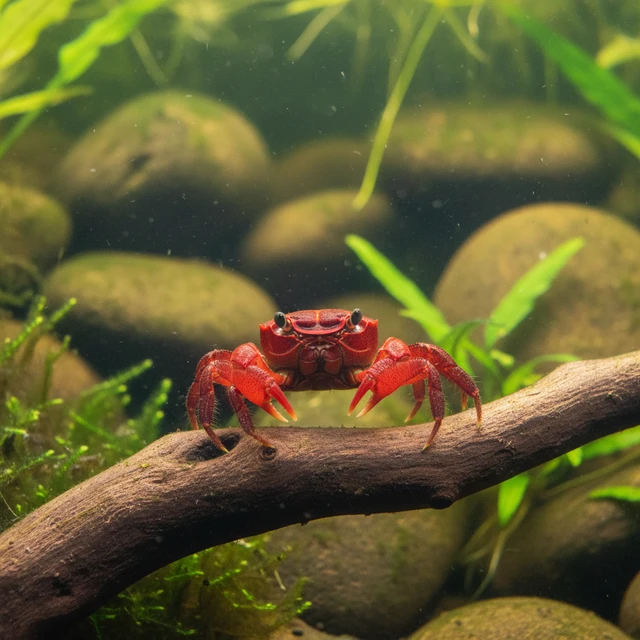
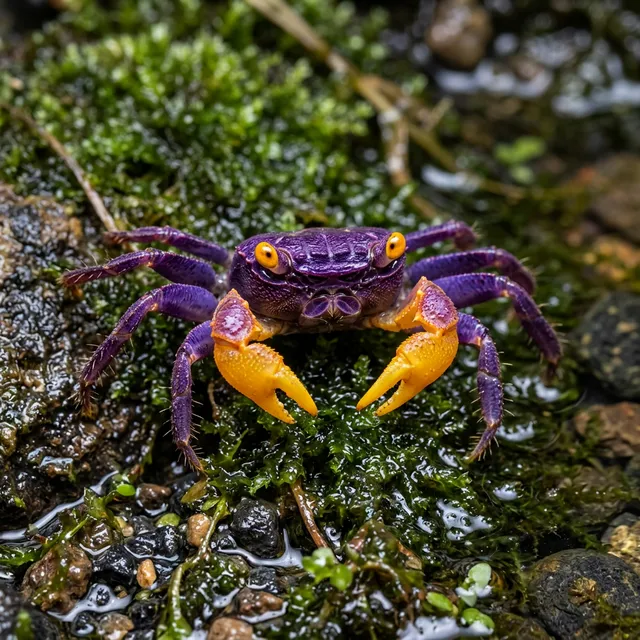
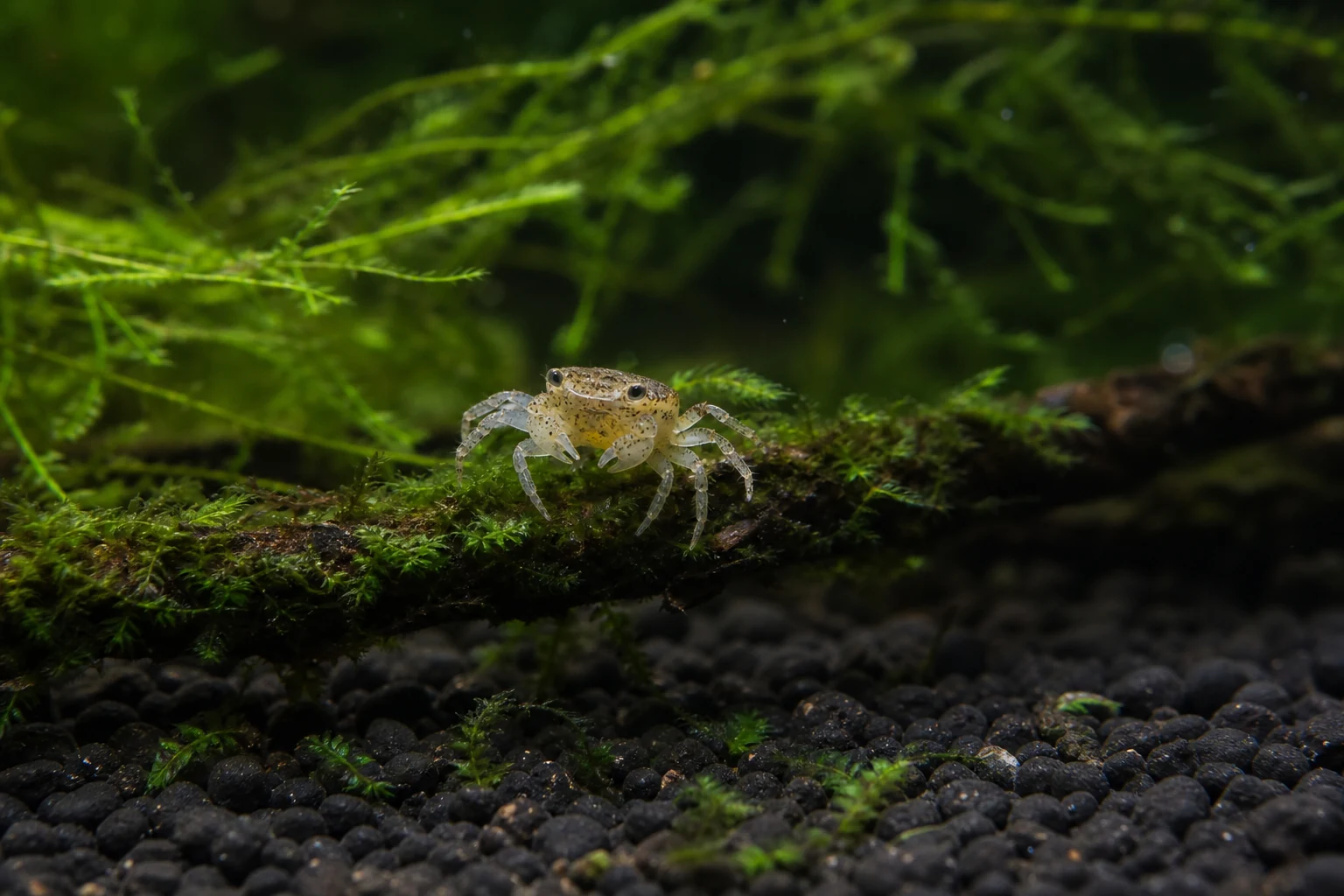
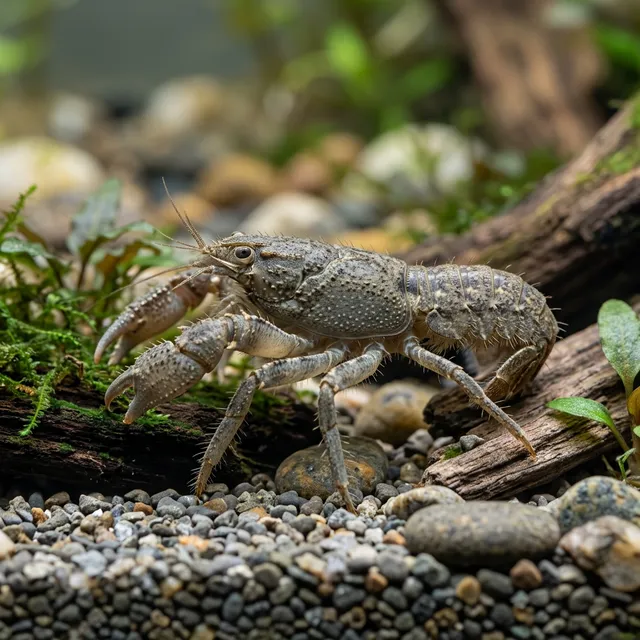
The Panther Crab (Parathelphusa pantherina) exhibits a robust and laterally compressed body structure, reaching a maximum adult size of approximately 6 to 15 centimeters. Its carapace is characterized by a vibrant orange to yellow hue, adorned with bold black leopard-like spots that provide both camouflage and a striking visual appeal. Sexual dimorphism is evident, with males typically displaying more pronounced coloration and larger claws compared to females. This species possesses a well-developed chelae, which are used for foraging and defense, and features a distinct, broad carapace with a smooth texture. The eyes are positioned on stalks, enhancing its visual acuity in its aquatic environment. Notably, the Panther Crab lacks an adipose fin, a common feature in many fish species, but compensates with its agile movements and ability to navigate both benthic and pelagic zones effectively.
Behavior & temperament
The Panther Crab is primarily a solitary and territorial species, often found dwelling in the benthic zone of freshwater habitats, particularly in the rivers and streams of Sulawesi. It exhibits a semi-nocturnal behavior, becoming more active during twilight hours when it forages for food. While not an obligate schooler, it may tolerate the presence of conspecifics, especially during breeding seasons. The breeding behavior involves egg scattering, with females laying eggs in safe, concealed locations to protect them from predation. This species displays a moderate level of aggression, particularly when defending its territory or during mating rituals, making it essential to provide ample space and hiding spots in captivity.
Diet & feeding
In the wild, the Panther Crab is an omnivore, feeding on a varied diet that includes detritus, plant matter, and small invertebrates. In captivity, it requires a balanced diet consisting of high-quality pellets, blanched vegetables, and occasional protein sources such as bloodworms or brine shrimp.
Behind the name
Parathelphusa (near crab); pantherina (referring to the panther-like spots on its carapace).
Plan your tank
Check the numbers before you buy: tank volume, a stocking plan, cycle progress, water changes, and your ongoing care routine.
Keep reading
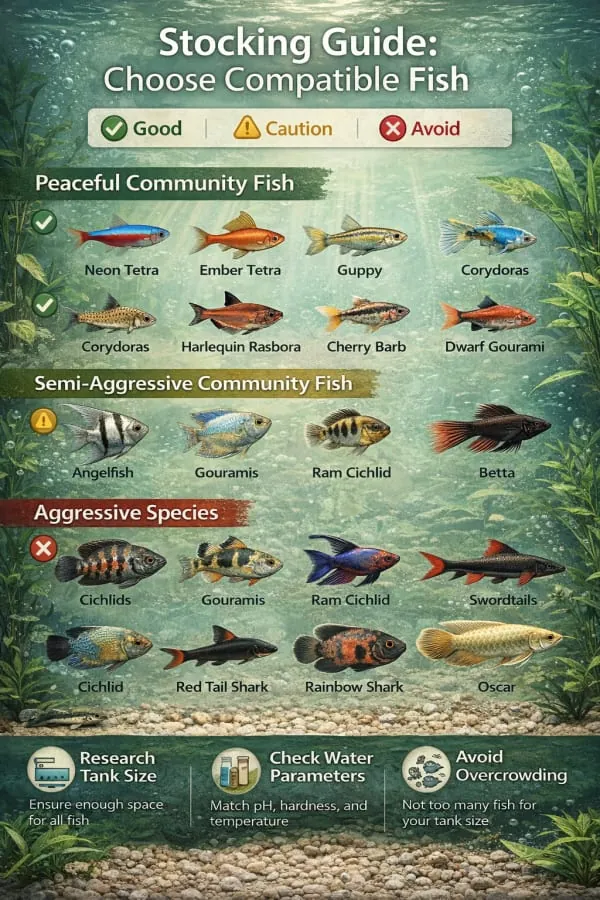
Choose compatible fish: school sizes, swimming zones, aggression, temperature and hardness matching, and honest bioload math for a peaceful community.
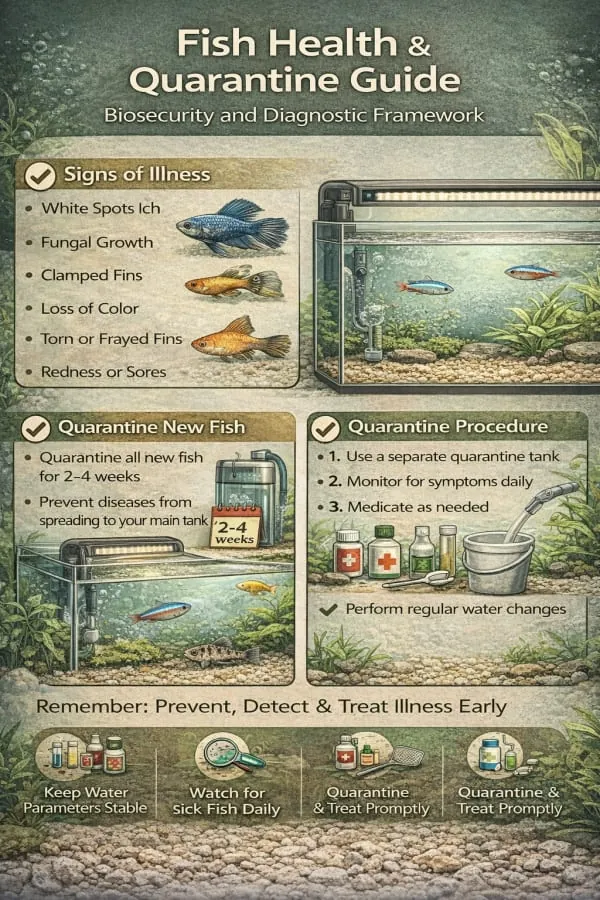
Quarantine new fish, spot the early warning signs, and treat disease without wrecking your tank. A practical freshwater fish health guide.
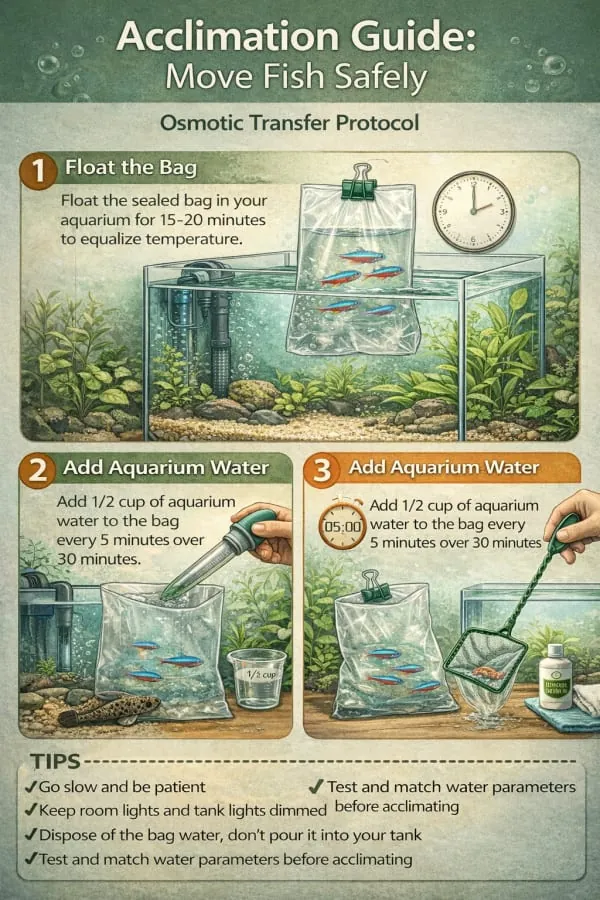
Acclimate new fish, shrimp, and coral safely: temperature floating, drip acclimation, plop-and-drop for shipped livestock, and the first 24 hours.
Keeping Panther Crab?
AquaLens identifies your fish and plants from a photo, tracks water chemistry, and flags health issues early — free on iOS and Android.