Vampire Crab Care Guide
Geosesarma dennerle · Freshwater Invert
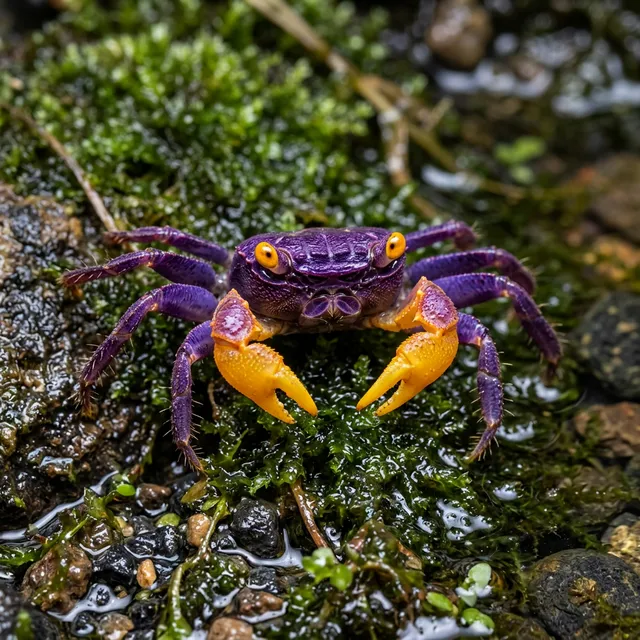
What Vampire Crab look like
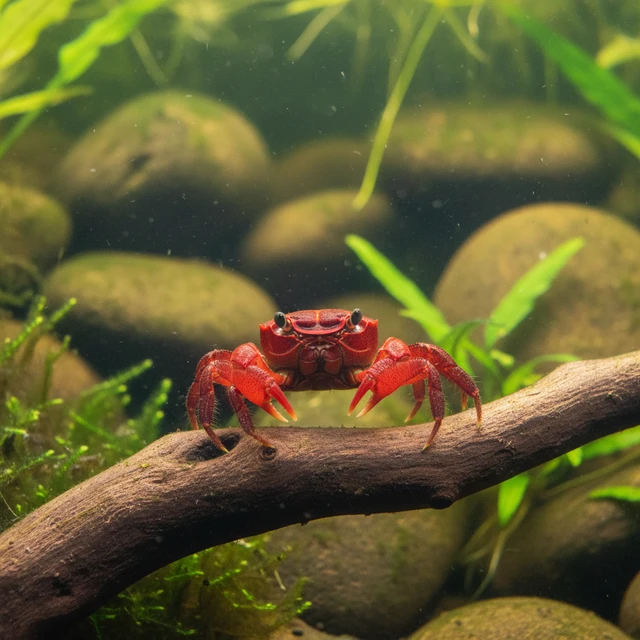
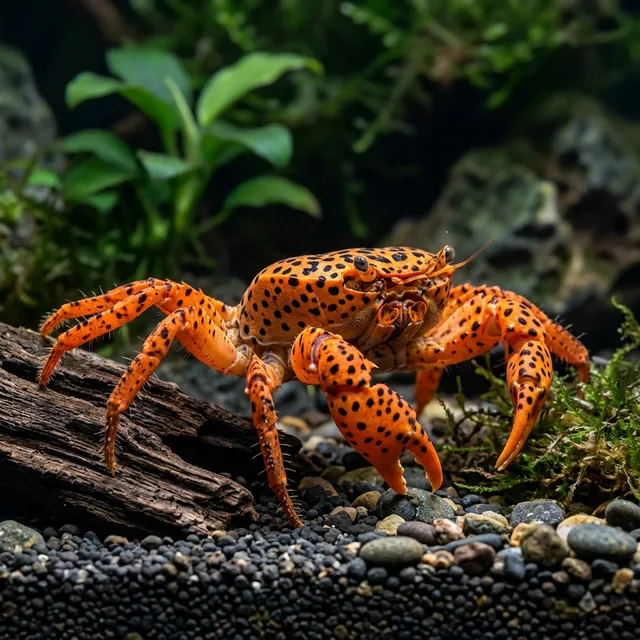
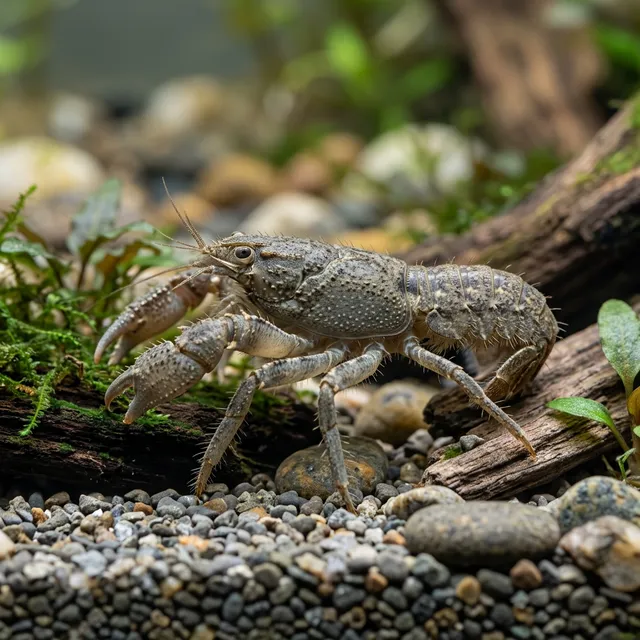
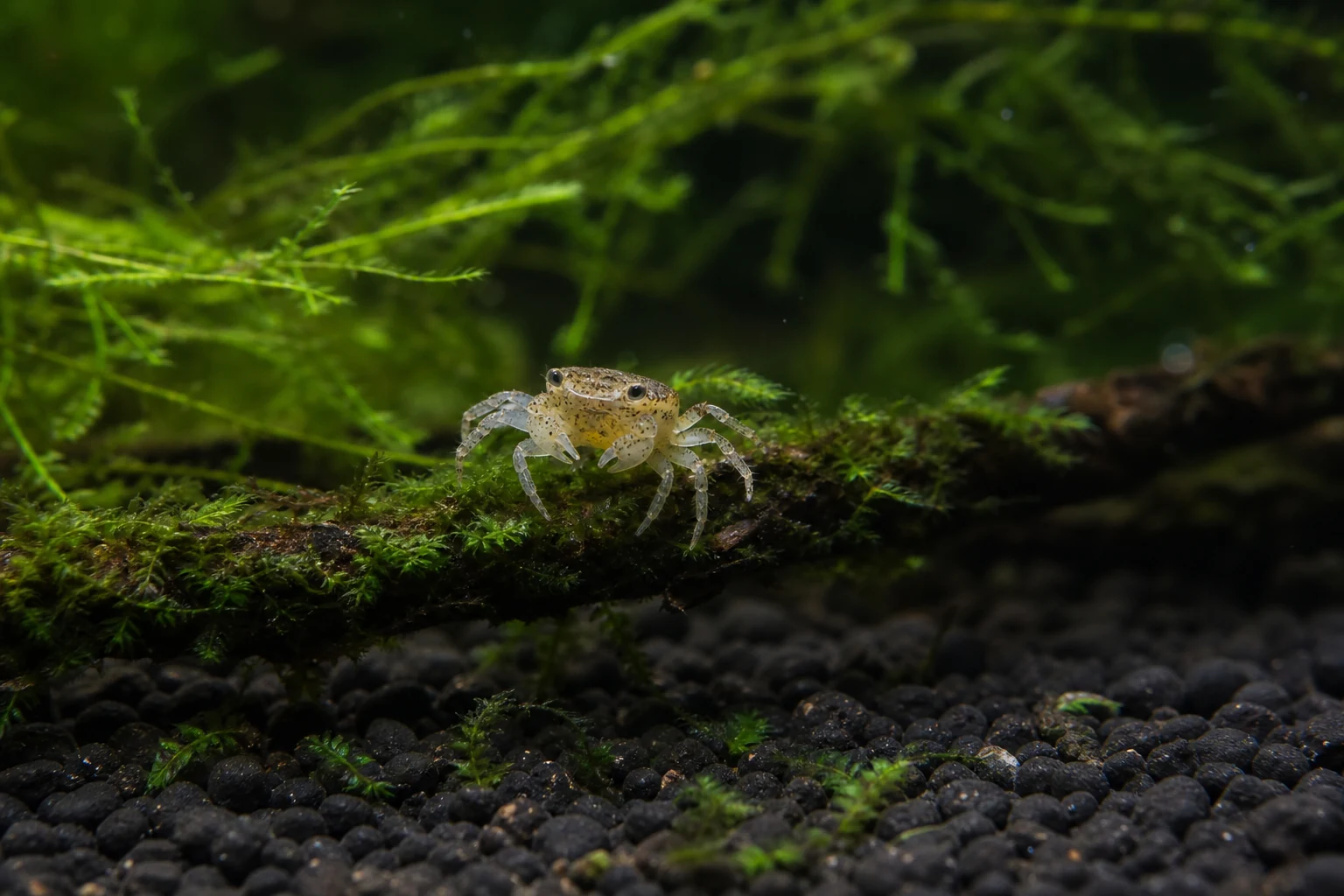
Geosesarma dennerle, commonly known as the Vampire Crab, exhibits a diminutive and semi-terrestrial morphology, typically reaching a maximum adult size of 1.5 inches (approximately 4 cm) across the carapace. The body is laterally compressed and displays a striking vivid purple coloration, which serves as a warning signal to potential predators. The claws are notably large and bright orange-yellow, contrasting sharply with the body color, and are used for both defense and foraging. Sexual dimorphism is subtle but can be observed in the slightly larger size of males and the more pronounced coloration of their claws. The species possesses a well-developed exoskeleton that provides protection, and its eyes are prominent and protruding, enhancing its visual acuity in both terrestrial and aquatic environments. Additionally, the presence of a robust set of chelae (claws) aids in both territorial disputes and feeding behaviors, while the presence of a thin layer of setae on the carapace may assist in sensory perception.
Behavior & temperament
Vampire Crabs are primarily nocturnal and exhibit a semi-terrestrial lifestyle, often dwelling in the intertidal zones of their Southeast Asian habitats. They are generally solitary but may form loose aggregations, particularly during breeding seasons. These crabs are known for their territorial behavior, with males often engaging in displays of aggression to establish dominance. Breeding occurs through a unique courtship ritual, where males will perform elaborate displays to attract females, followed by the female laying eggs in a safe terrestrial environment. The eggs are then carried to the water for hatching, showcasing a fascinating adaptation to their dual habitat. Their temperament can range from mildly aggressive to skittish, particularly when threatened, making them more suitable for intermediate aquarists who can provide a secure environment.
Diet & feeding
In the wild, Vampire Crabs are omnivorous, feeding on detritus, algae, and small invertebrates. In captivity, they require a varied diet that includes high-quality pellets, blanched vegetables, and occasional protein sources such as freeze-dried or live foods to maintain optimal health.
Behind the name
The genus name 'Geosesarma' derives from Greek, where 'geo' means 'earth' and 'sesarma' refers to 'crab', indicating its terrestrial habits. The species name 'dennerle' honors the aquarist and entrepreneur, Horst Dennerle, who contributed to the aquarium trade.
Plan your tank
Check the numbers before you buy: tank volume, a stocking plan, cycle progress, water changes, and your ongoing care routine.
Keep reading

Choose compatible fish: school sizes, swimming zones, aggression, temperature and hardness matching, and honest bioload math for a peaceful community.
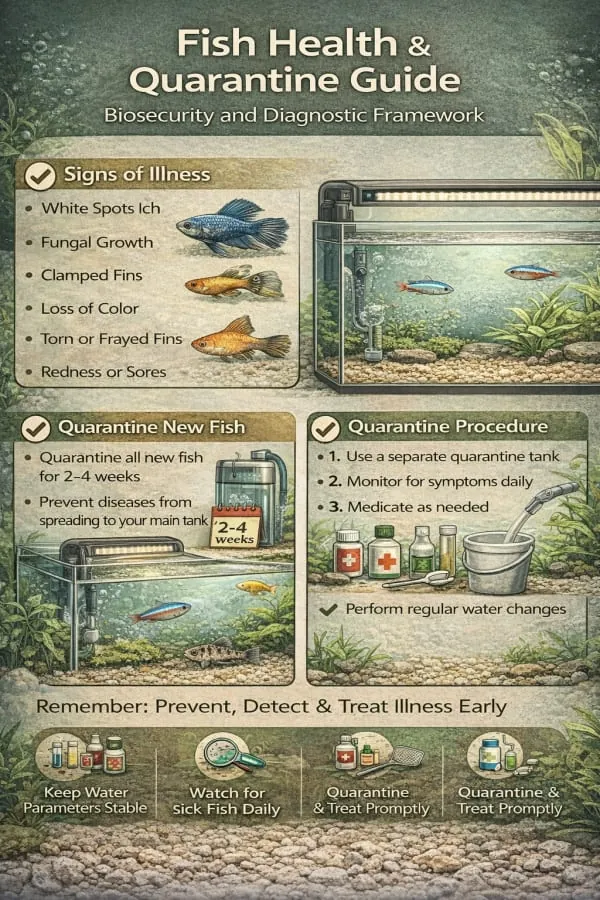
Quarantine new fish, spot the early warning signs, and treat disease without wrecking your tank. A practical freshwater fish health guide.

Acclimate new fish, shrimp, and coral safely: temperature floating, drip acclimation, plop-and-drop for shipped livestock, and the first 24 hours.
Keeping Vampire Crab?
AquaLens identifies your fish and plants from a photo, tracks water chemistry, and flags health issues early — free on iOS and Android.