Platy Care Guide
Xiphophorus maculatus · Freshwater Fish
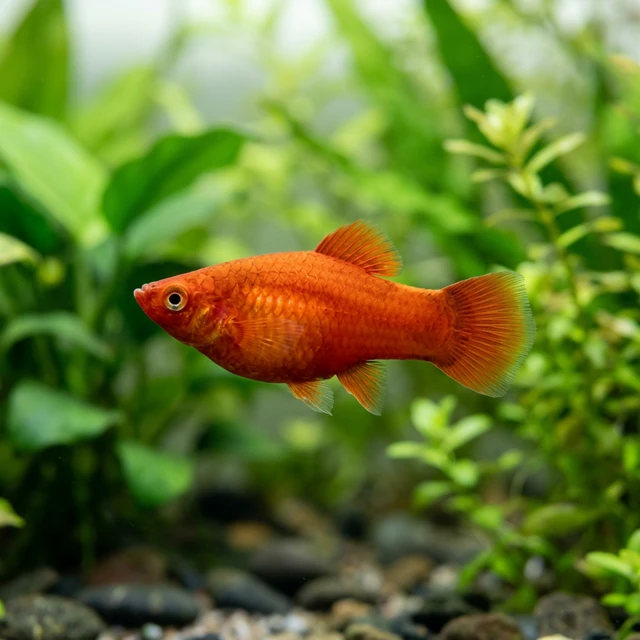
What Platy look like
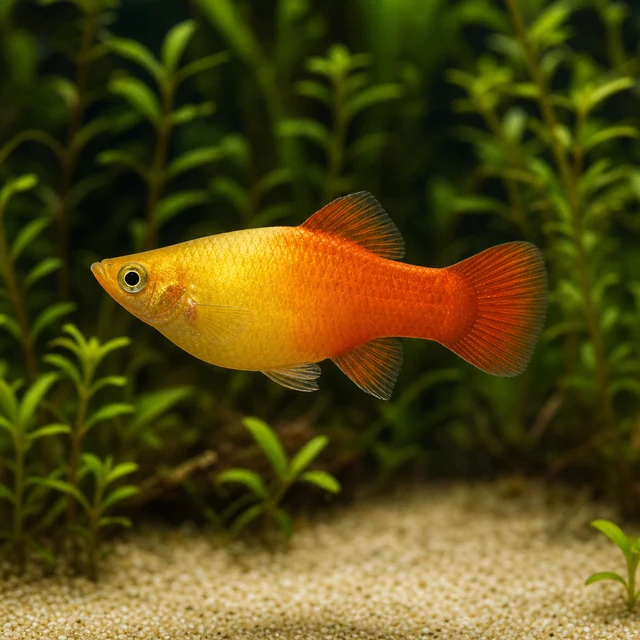
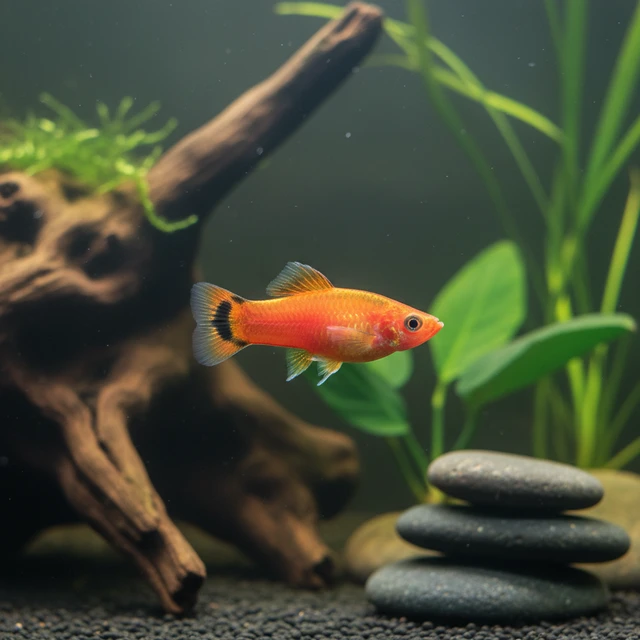
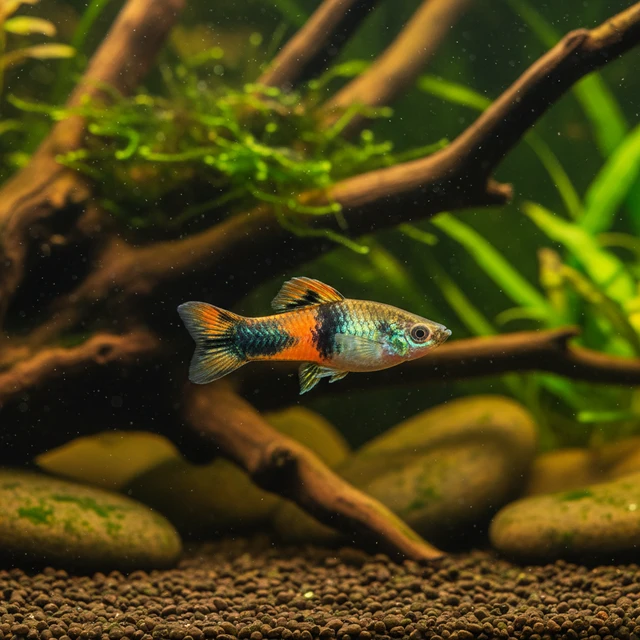
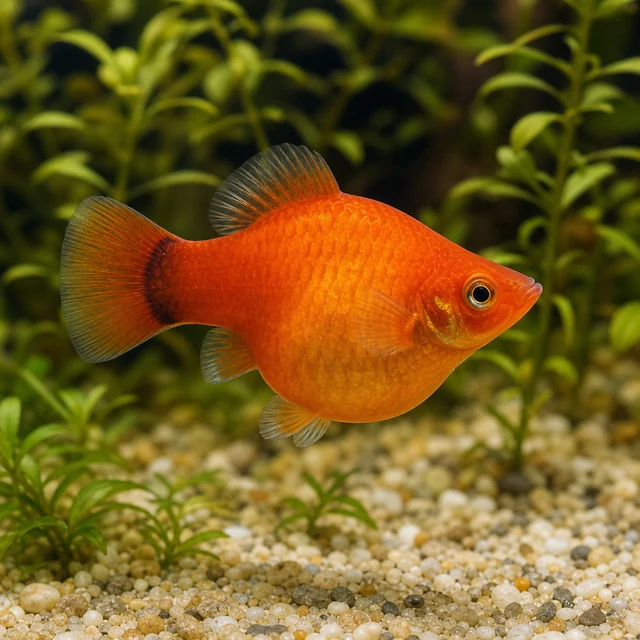
Xiphophorus maculatus, commonly known as the Platy, exhibits a laterally compressed, fusiform body shape that can reach a maximum adult size of approximately 5 inches (12.7 cm). This species displays sexual dimorphism, with males being smaller and more vibrantly colored than females, which tend to be larger and more robust. Males often possess elongated anal fins, forming a gonopodium used for reproduction, while females have a broader body to accommodate developing embryos. The Platy is equipped with a well-defined lateral line system, which aids in detecting water movement and vibrations. Its dentition is characterized by small, sharp teeth suitable for grazing on algae and plant matter, and it features a small adipose fin located between the dorsal and caudal fins. The coloration of the Platy can vary significantly, with wild types displaying a mix of greens and browns, while selectively bred variants exhibit a wide range of colors, including orange, red, and blue, often with distinctive spots or patterns.
Behavior & temperament
Platies are social fish that thrive in groups, often forming loose schools in their natural habitat, which is typically shallow, densely vegetated waters. They are primarily found in the mid to upper water column, exhibiting a peaceful temperament that makes them suitable for community tanks. Breeding behavior in Platies is viviparous, with females giving birth to live young rather than laying eggs. Males display courtship behaviors, including chasing and displaying their fins to attract females. Despite their generally docile nature, males can exhibit territorial aggression during breeding, particularly when competing for females. Platies are also known to be curious and interactive, often engaging with their environment and tank mates.
Diet & feeding
In the wild, Platies are omnivorous, feeding on a varied diet that includes algae, plant matter, and small invertebrates. In captivity, they require a balanced diet that includes high-quality flake food, frozen or live foods, and vegetable matter to ensure optimal health and coloration.
Behind the name
The genus name Xiphophorus is derived from the Greek words 'xiphos' (sword) and 'phoros' (bearing), referring to the sword-like shape of the male's anal fin. The species name 'maculatus' comes from the Latin word for 'spotted' or 'dotted', indicating the characteristic markings found on many individuals of this species.
Plan your tank
Check the numbers before you buy: tank volume, a stocking plan, cycle progress, water changes, and your ongoing care routine.
Keep reading

Choose compatible fish: school sizes, swimming zones, aggression, temperature and hardness matching, and honest bioload math for a peaceful community.
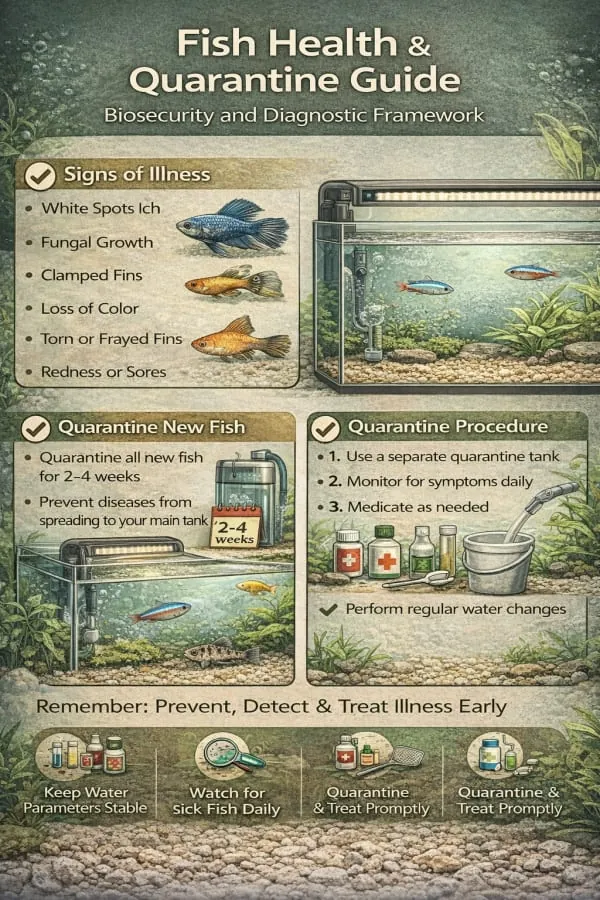
Quarantine new fish, spot the early warning signs, and treat disease without wrecking your tank. A practical freshwater fish health guide.
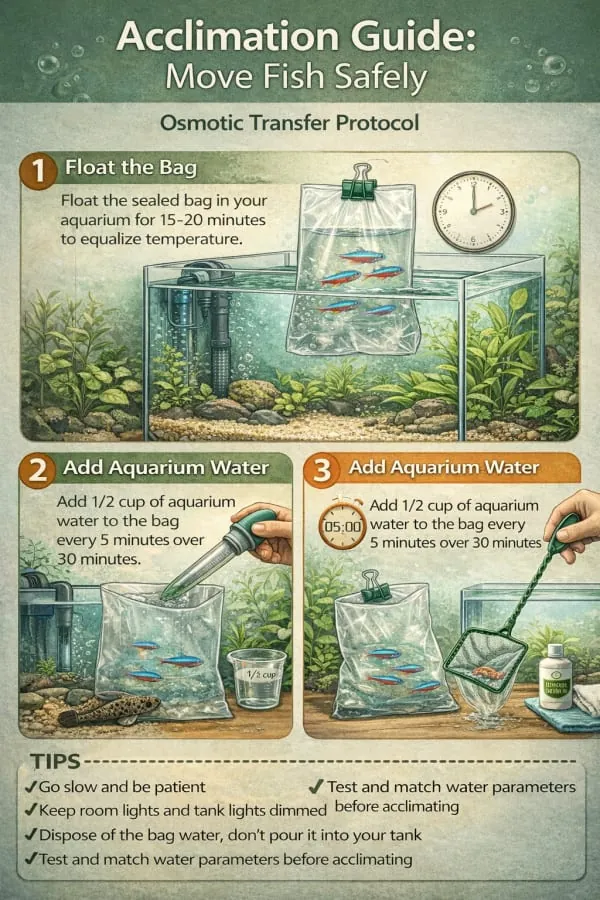
Acclimate new fish, shrimp, and coral safely: temperature floating, drip acclimation, plop-and-drop for shipped livestock, and the first 24 hours.
Keeping Platy?
AquaLens identifies your fish and plants from a photo, tracks water chemistry, and flags health issues early — free on iOS and Android.