Polka Dot Synodontis Care Guide
Synodontis angelicus · Freshwater Fish
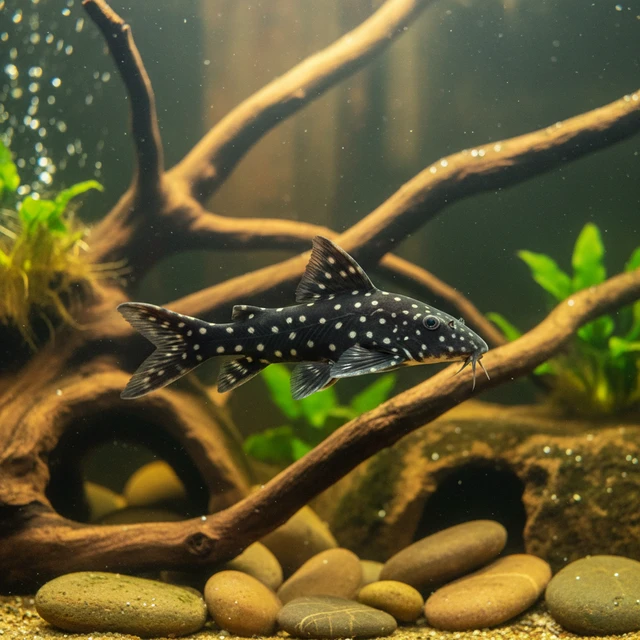
What Polka Dot Synodontis look like
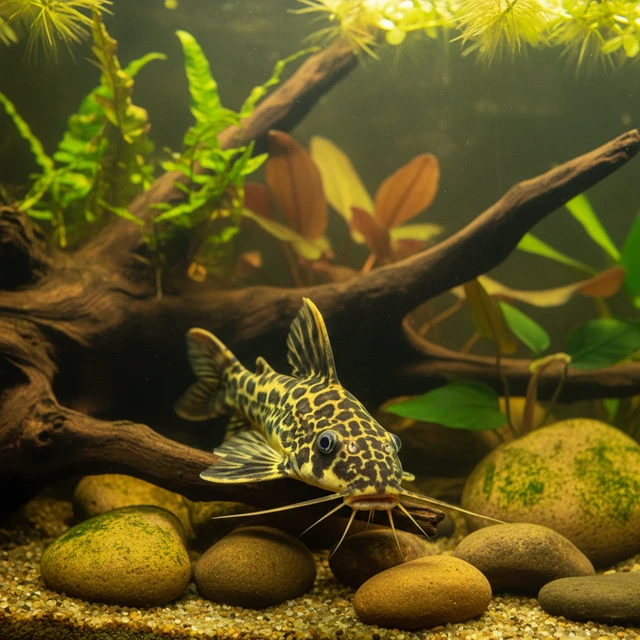
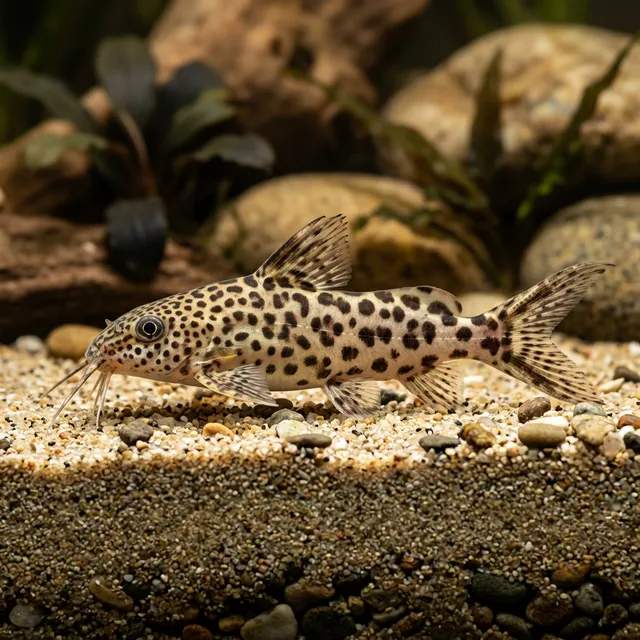
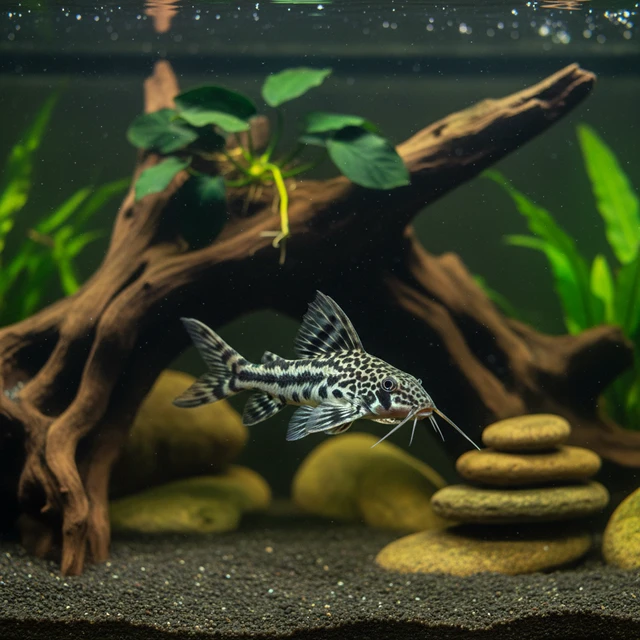
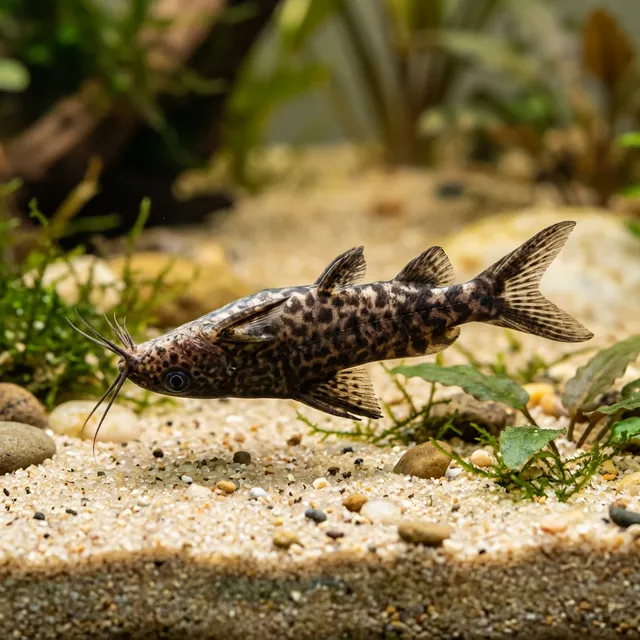
The Polka Dot Synodontis (Synodontis angelicus) exhibits a medium-sized, laterally compressed body that typically reaches a maximum adult size of 6-8 inches, with reports of individuals growing up to 15 inches under optimal conditions. Juvenile specimens are particularly striking, showcasing a vivid pattern of bright white polka dots against a jet-black or dark brown background, which may become more muted as they mature. This species possesses a prominent adipose fin and well-developed branched barbels, which aid in foraging. The polka dot pattern serves as a defensive adaptation, potentially confusing predators. Notably, the species lacks a sucker mouth, a characteristic that distinguishes it from other catfish, and instead features a more traditional mouth structure suited for its omnivorous diet.
Behavior & temperament
The Polka Dot Synodontis is primarily a benthic dweller, often found in the lower strata of its natural habitat in the Congo River basin. This species tends to be solitary or form loose aggregations rather than strict schools, displaying a non-hierarchical social structure. During breeding, they exhibit egg scattering behavior, releasing their eggs among vegetation or substrate. Their temperament is generally peaceful, although they can exhibit territoriality, particularly when establishing a breeding site or during feeding. They are known to be more active during twilight hours, showcasing a crepuscular activity pattern.
Diet & feeding
In the wild, the Polka Dot Synodontis is an omnivore, feeding on a varied diet that includes detritus, small invertebrates, and plant matter. In captivity, they require a balanced diet consisting of high-quality pellets, live or frozen foods such as bloodworms and brine shrimp, and occasional vegetable matter to ensure optimal health.
Behind the name
Synodontis (from Greek 'syn' meaning together and 'odous' meaning tooth); angelicus (Latin for angelic, possibly referring to its striking appearance).
Plan your tank
Check the numbers before you buy: tank volume, a stocking plan, cycle progress, water changes, and your ongoing care routine.
Keep reading

Choose compatible fish: school sizes, swimming zones, aggression, temperature and hardness matching, and honest bioload math for a peaceful community.
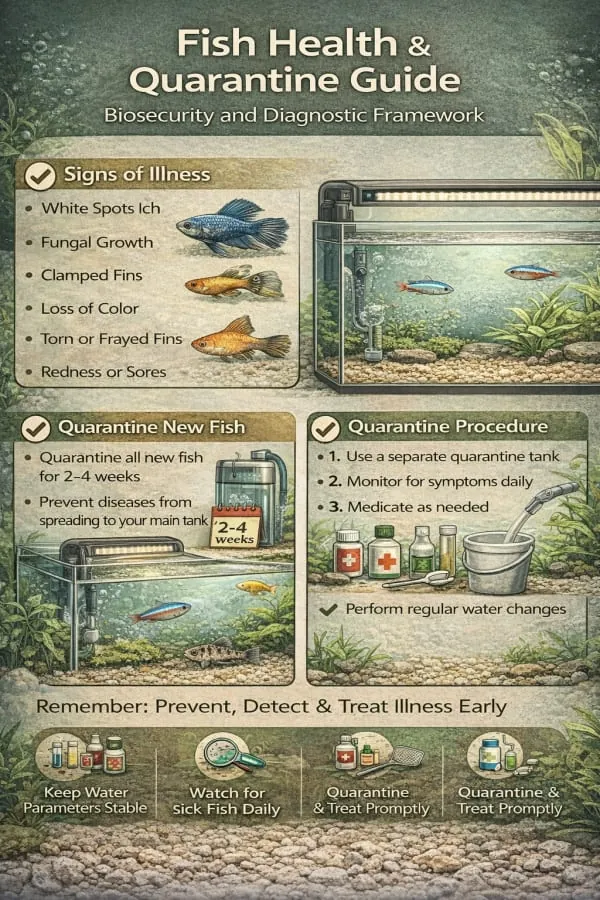
Quarantine new fish, spot the early warning signs, and treat disease without wrecking your tank. A practical freshwater fish health guide.
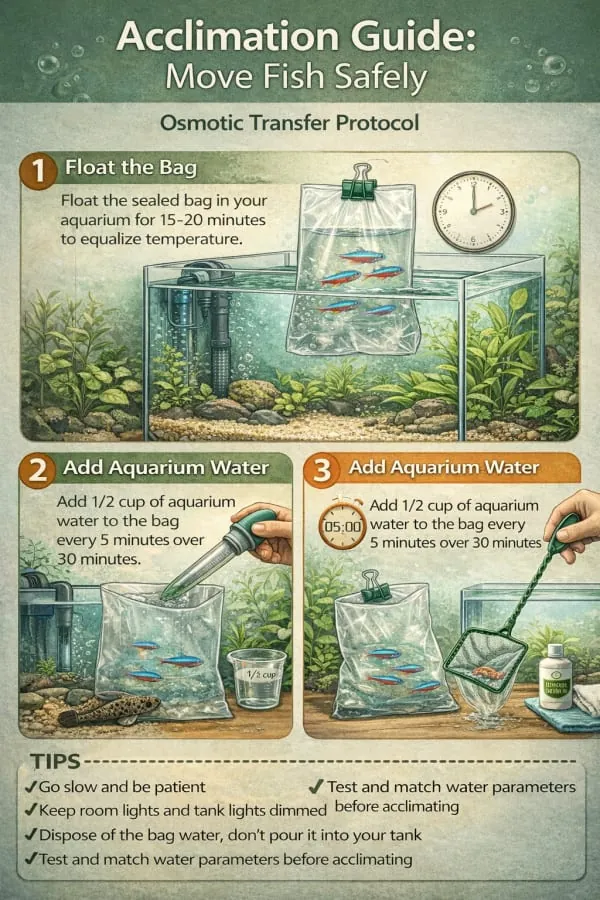
Acclimate new fish, shrimp, and coral safely: temperature floating, drip acclimation, plop-and-drop for shipped livestock, and the first 24 hours.
Keeping Polka Dot Synodontis?
AquaLens identifies your fish and plants from a photo, tracks water chemistry, and flags health issues early — free on iOS and Android.