Zebra Pleco (L046) Care Guide
Hypancistrus zebra · Freshwater Fish
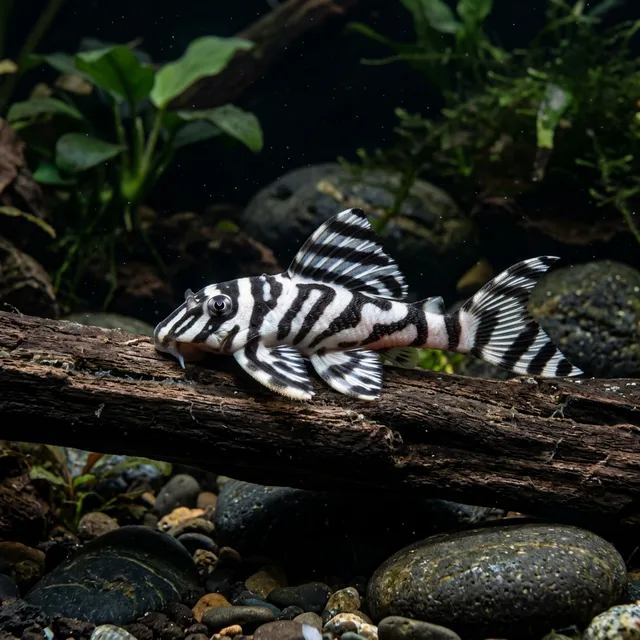
What Zebra Pleco (L046) look like
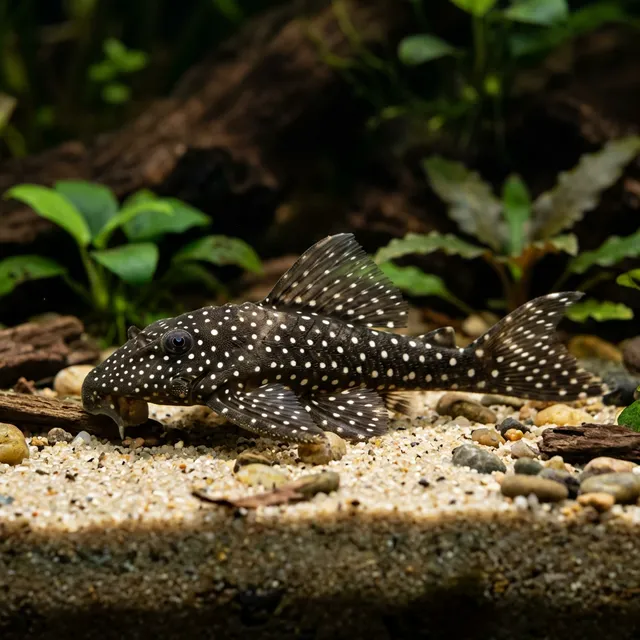
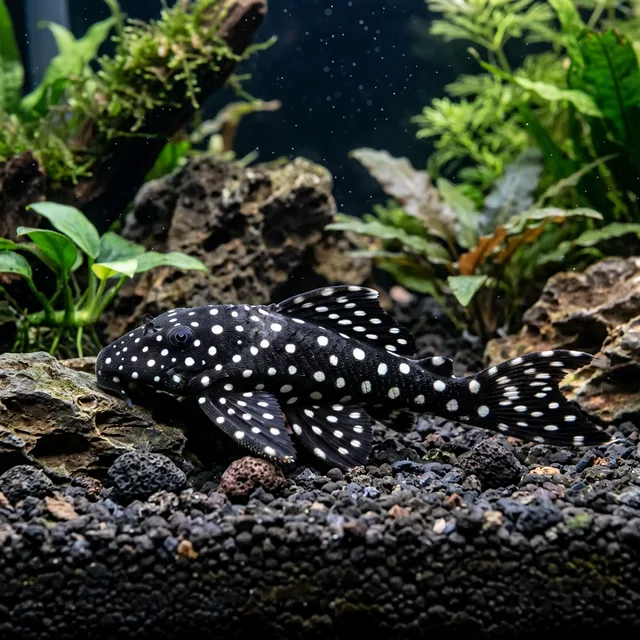
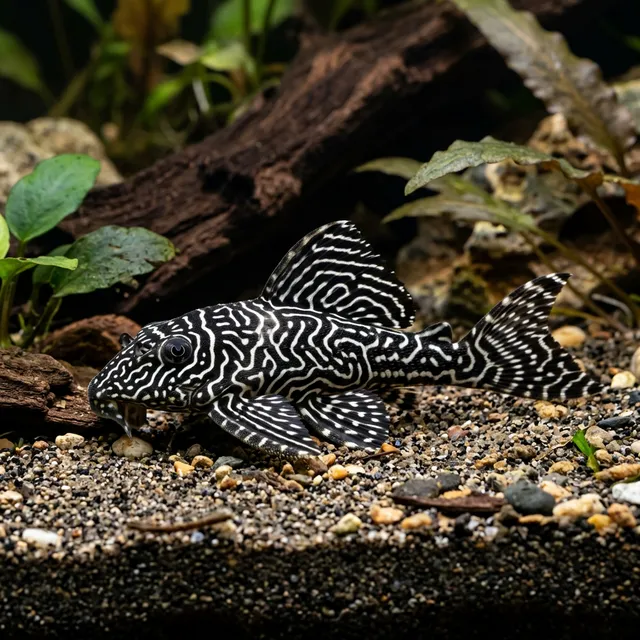
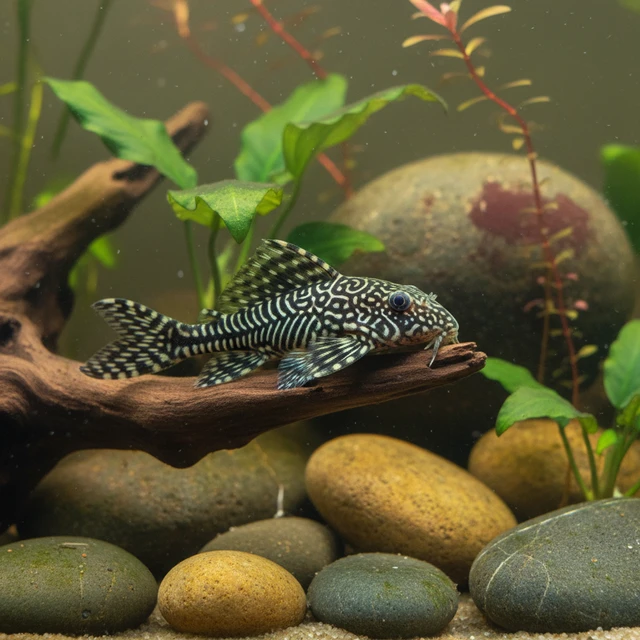
The Zebra Pleco (Hypancistrus zebra) is a strikingly patterned suckermouth catfish characterized by its laterally compressed body, which can reach a maximum adult size of approximately 4 inches (10 cm). This species exhibits sexual dimorphism, with males typically displaying more pronounced odontodes (small, tooth-like structures) on their pectoral fins and body, particularly during breeding seasons. The dorsal fin is elongated and pointed, contributing to its streamlined appearance, while the caudal fin is forked, aiding in agile swimming. Notable morphological features include a broad, flattened head with a wide mouth adapted for grazing on biofilm and detritus, and a series of small, sharp, black stripes against a pure white base that serve as a form of disruptive coloration, potentially aiding in camouflage against predators. The Zebra Pleco also possesses a well-defined lateral line system, which is critical for detecting vibrations in the water, enhancing its ability to navigate its environment.
Behavior & temperament
Hypancistrus zebra is primarily a nocturnal species, exhibiting a benthic lifestyle where it prefers to dwell on the substrate of fast-flowing rivers and streams in its native habitat of Brazil's Xingu River. This species is generally solitary or found in small groups, displaying a non-hierarchical social structure. During breeding, males will establish territories and engage in courtship displays, which may include fin flaring and body posturing to attract females. The breeding behavior involves the female laying eggs in crevices or caves, which the male subsequently guards. The temperament of the Zebra Pleco is relatively peaceful, although it can exhibit territorial aggression towards conspecifics, particularly males during the breeding season.
Diet & feeding
In the wild, the Zebra Pleco is a carnivorous species that primarily feeds on biofilm, detritus, and small invertebrates. In captivity, it requires a diet rich in protein, including high-quality sinking pellets, frozen or live foods such as bloodworms and brine shrimp, to ensure optimal health and coloration.
Behind the name
Hypancistrus (from Greek 'hypo' meaning 'under' and 'anistrus' meaning 'without spines'); zebra (referring to the species' distinctive black and white striping pattern).
Plan your tank
Check the numbers before you buy: tank volume, a stocking plan, cycle progress, water changes, and your ongoing care routine.
Keep reading

Choose compatible fish: school sizes, swimming zones, aggression, temperature and hardness matching, and honest bioload math for a peaceful community.

Quarantine new fish, spot the early warning signs, and treat disease without wrecking your tank. A practical freshwater fish health guide.

Acclimate new fish, shrimp, and coral safely: temperature floating, drip acclimation, plop-and-drop for shipped livestock, and the first 24 hours.
Keeping Zebra Pleco (L046)?
AquaLens identifies your fish and plants from a photo, tracks water chemistry, and flags health issues early — free on iOS and Android.