Blue Phantom Plecostomus Care Guide
Hemiancistrus sp "Blue Phantom" · Freshwater Fish
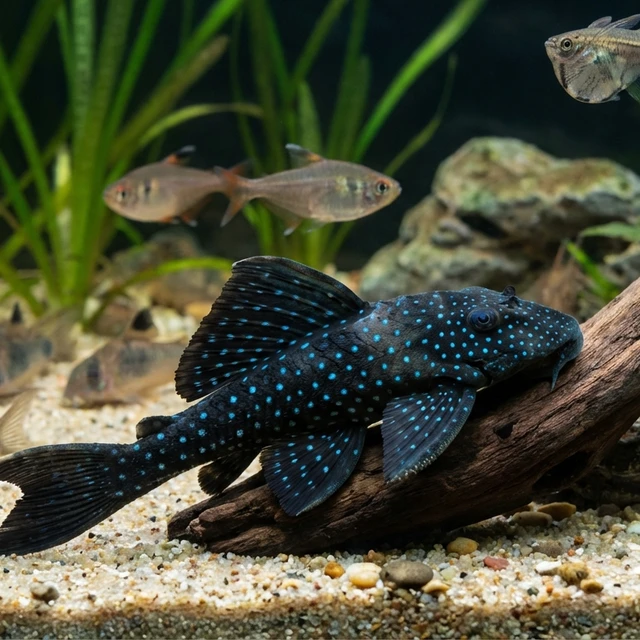
What Blue Phantom Plecostomus look like
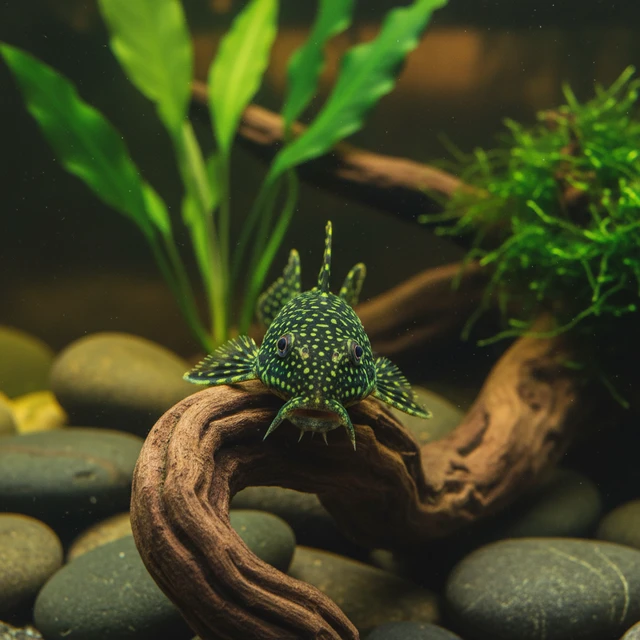
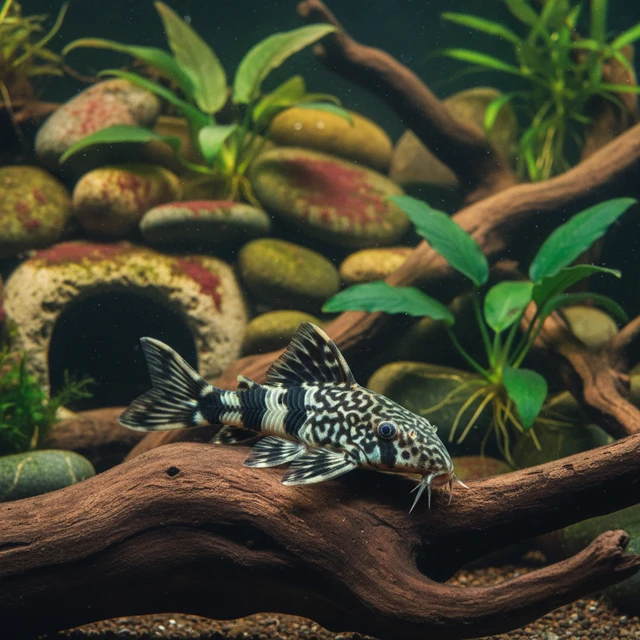
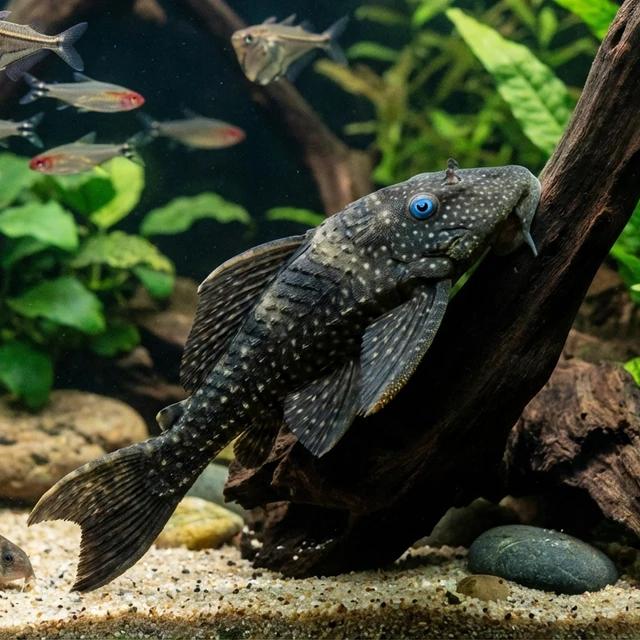
The Blue Phantom Plecostomus (Hemiancistrus sp 'Blue Phantom') exhibits a medium-sized, laterally compressed body that typically reaches a maximum adult size of 6 to 8 inches, with some individuals potentially growing up to 15 inches under optimal conditions. This species displays sexual dimorphism, with males generally being smaller and possessing more pronounced odontodes (bristle-like structures) on their snouts compared to the more robust females. The body is adorned with a striking ghostly blue-gray coloration, featuring a pattern of small, lighter blue-white spots that create an ethereal appearance, distinguishing it from the more common brown plecos. The species possesses a powerful sucker mouth, adapted for grazing on algae and detritus, and an armored body typical of the Loricariidae family, which provides protection against predation. Unique morphological features include a well-developed adipose fin and a prominent lateral line, which aids in sensory perception in its natural habitat.
Behavior & temperament
The Blue Phantom Plecostomus is primarily a nocturnal, benthic species that exhibits solitary behavior, although it may be found in loose aggregations in the wild. It prefers to dwell near the substrate in slow-moving waters, utilizing its sucker mouth to graze on algae and organic matter. Breeding behavior in this species is not well-documented, but it is believed to be an egg scatterer, with females laying eggs in hidden crevices or caves. The temperament of the Blue Phantom is generally peaceful; however, it may exhibit territorial aggression towards conspecifics, particularly during breeding periods or when space is limited.
Diet & feeding
In the wild, the Blue Phantom Plecostomus is an omnivore, primarily feeding on algae, detritus, and small invertebrates. In captivity, it requires a varied diet that includes high-quality sinking pellets, fresh vegetables, and occasional protein sources such as bloodworms or brine shrimp.
Behind the name
Hemiancistrus (half-ancistrus; referring to its resemblance to the genus Ancistrus) sp (species); 'Blue Phantom' denotes its ethereal blue-gray coloration.
Plan your tank
Check the numbers before you buy: tank volume, a stocking plan, cycle progress, water changes, and your ongoing care routine.
Keep reading

Choose compatible fish: school sizes, swimming zones, aggression, temperature and hardness matching, and honest bioload math for a peaceful community.
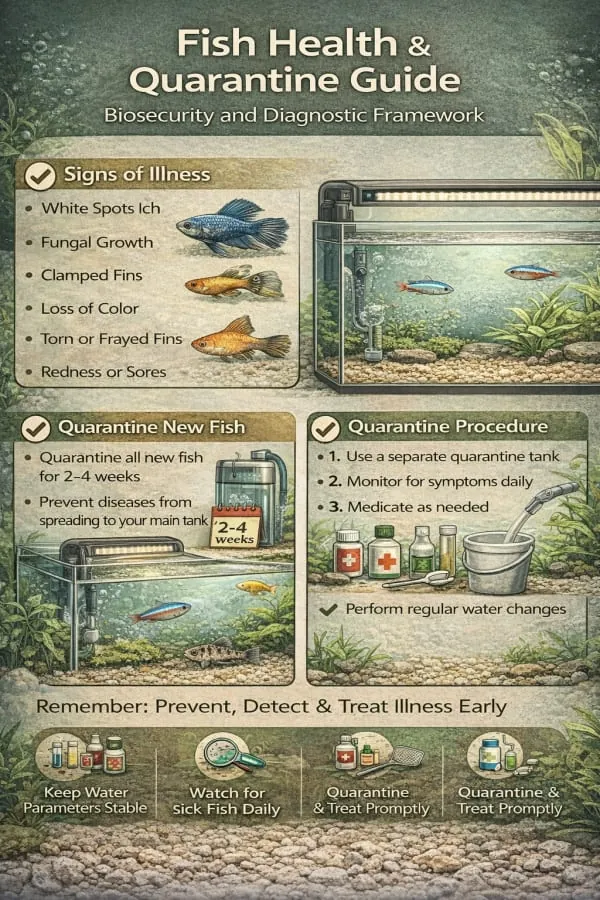
Quarantine new fish, spot the early warning signs, and treat disease without wrecking your tank. A practical freshwater fish health guide.
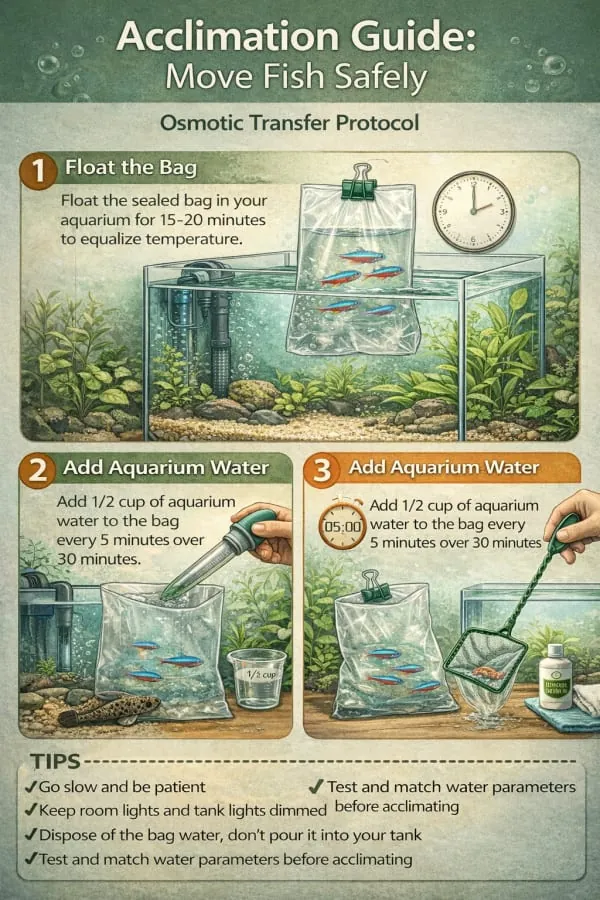
Acclimate new fish, shrimp, and coral safely: temperature floating, drip acclimation, plop-and-drop for shipped livestock, and the first 24 hours.
Keeping Blue Phantom Plecostomus?
AquaLens identifies your fish and plants from a photo, tracks water chemistry, and flags health issues early — free on iOS and Android.