Blue Striped Rivulus Killifish Care Guide
Rivulus xiphidius · Freshwater Fish
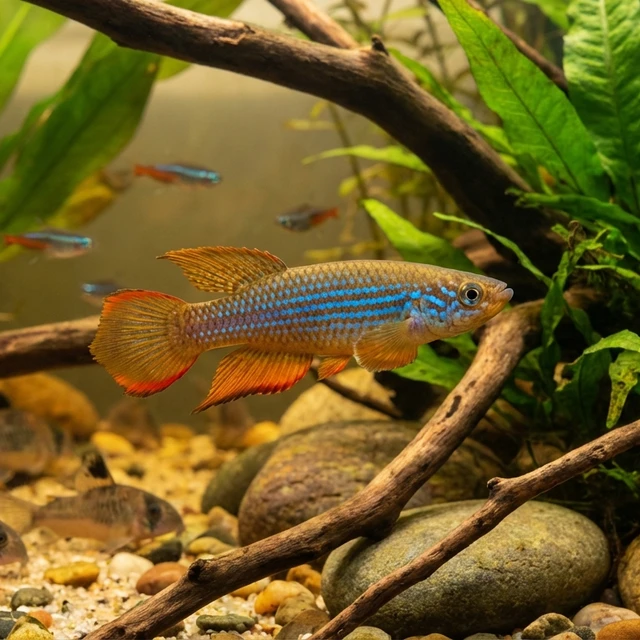
What Blue Striped Rivulus Killifish look like
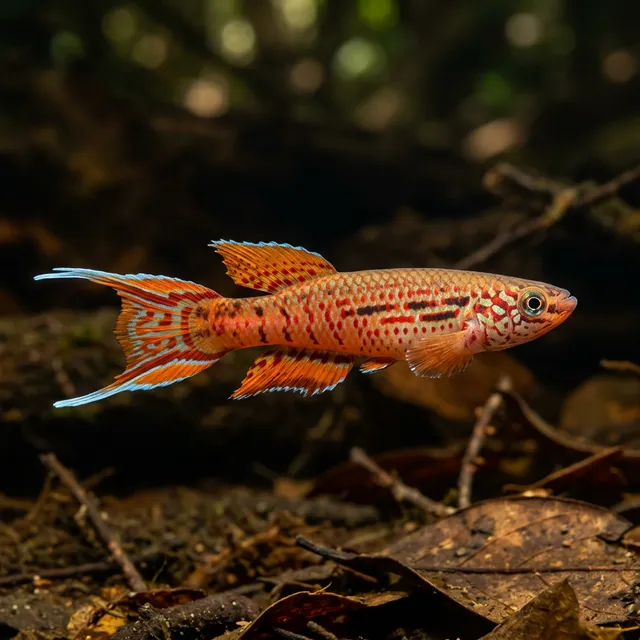
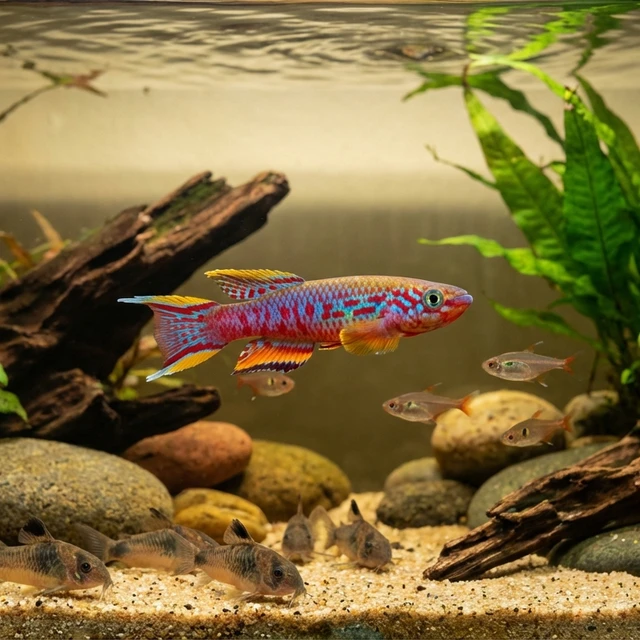
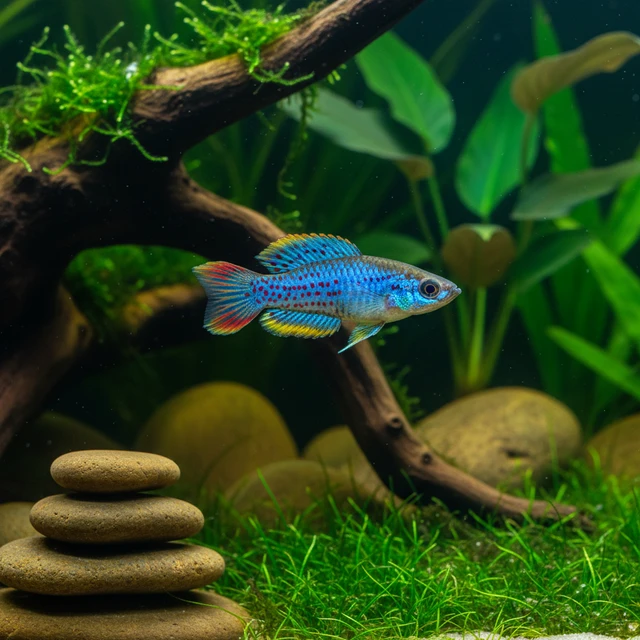
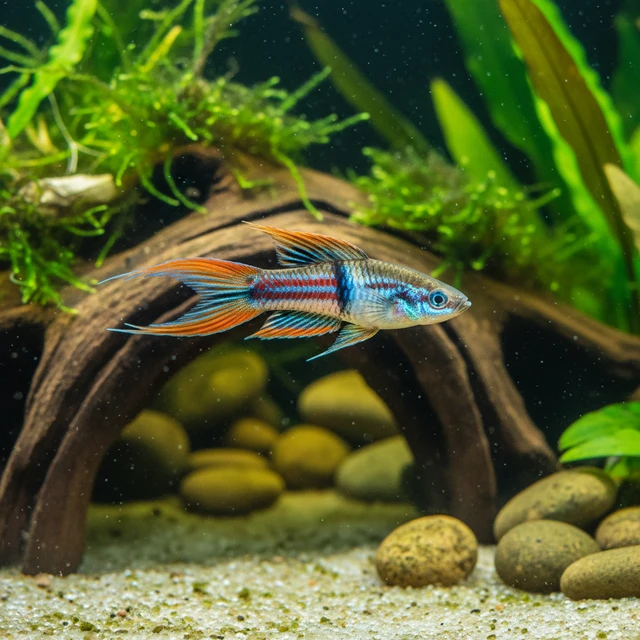
The Blue Striped Rivulus Killifish (Rivulus xiphidius) exhibits a slender, elongated, and laterally compressed body, reaching a maximum adult size of approximately 2.5 inches (6.4 cm). Males are particularly distinguished by their striking iridescent blue horizontal stripes that contrast with a brownish base coloration, while females are generally more subdued in color and lack the vibrant markings of their male counterparts, showcasing a degree of sexual dimorphism. The species possesses a fusiform body shape that is well-adapted for agile swimming in its natural habitat. Notable morphological features include a terminal mouth that is upturned, facilitating surface feeding, and a well-developed dorsal fin that extends along much of the back, aiding in stability during swimming. The presence of lateral lines enhances sensory perception, allowing the fish to detect vibrations and movements in the water, which is crucial for both foraging and predator evasion.
Behavior & temperament
Rivulus xiphidius is primarily a solitary species, though it may exhibit loose aggregations in favorable conditions. It typically inhabits the upper strata of the water column, demonstrating a preference for shallow, densely vegetated areas where it can find cover and forage. The breeding behavior of this species is characterized by egg scattering, with females laying adhesive eggs among aquatic vegetation, which provides protection for the developing embryos. The Blue Striped Rivulus Killifish is generally peaceful but can display territorial behavior, particularly during breeding periods, when males may engage in displays of dominance to attract females.
Diet & feeding
In the wild, the Blue Striped Rivulus Killifish is an omnivore, feeding on a varied diet that includes small invertebrates, zooplankton, and detritus. In captivity, it thrives on a balanced diet of high-quality flake food, supplemented with live or frozen foods such as brine shrimp and daphnia to meet its nutritional needs.
Behind the name
Rivulus (Latin for 'small stream'); xiphidius (from Greek 'xiphos', meaning sword, referring to the shape of the fish).
Plan your tank
Check the numbers before you buy: tank volume, a stocking plan, cycle progress, water changes, and your ongoing care routine.
Keep reading

Choose compatible fish: school sizes, swimming zones, aggression, temperature and hardness matching, and honest bioload math for a peaceful community.
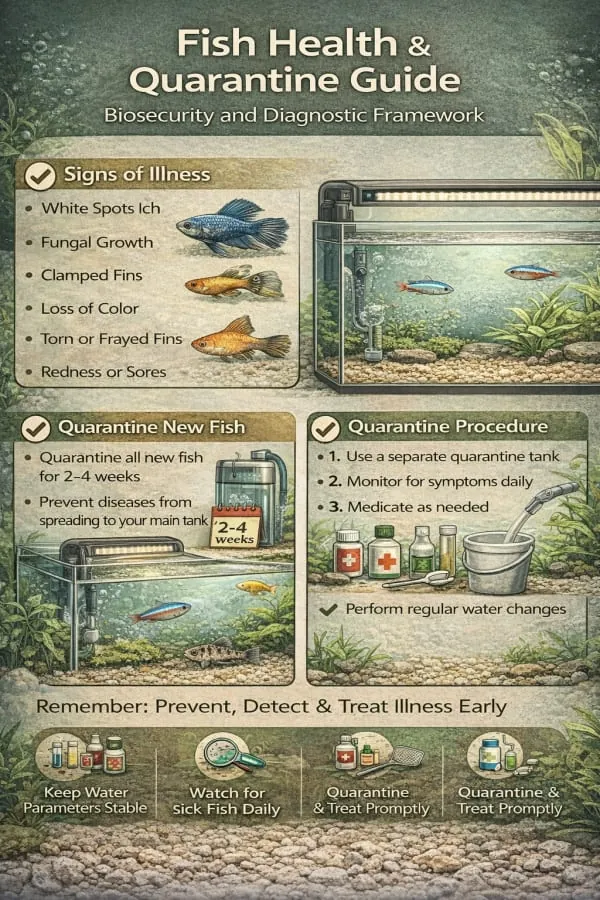
Quarantine new fish, spot the early warning signs, and treat disease without wrecking your tank. A practical freshwater fish health guide.

Acclimate new fish, shrimp, and coral safely: temperature floating, drip acclimation, plop-and-drop for shipped livestock, and the first 24 hours.
Keeping Blue Striped Rivulus Killifish?
AquaLens identifies your fish and plants from a photo, tracks water chemistry, and flags health issues early — free on iOS and Android.