Bumblebee Cichlid Care Guide
Pseudotropheus crabro · Freshwater Fish
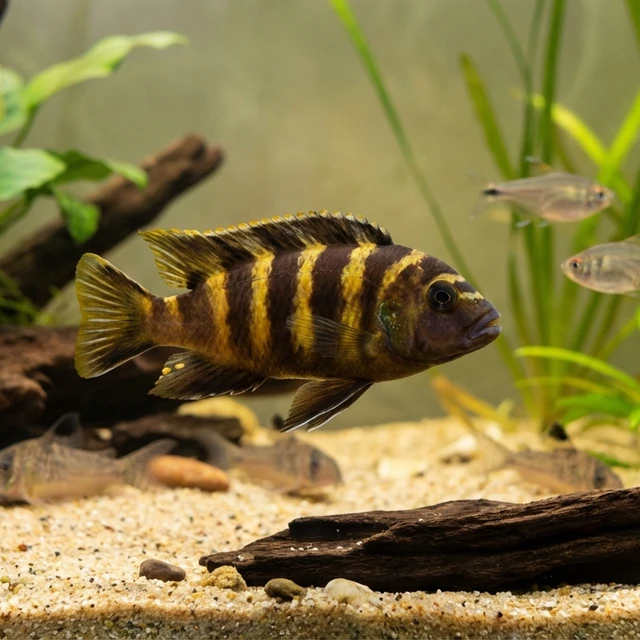
What Bumblebee Cichlid look like
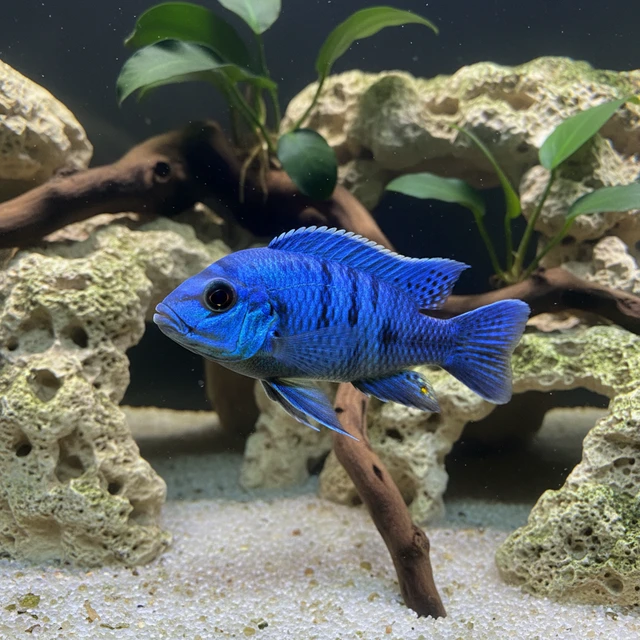
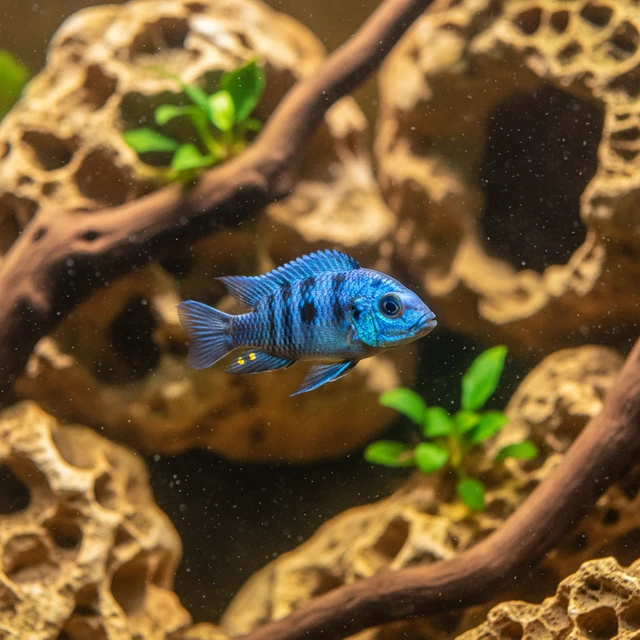
The Bumblebee Cichlid (Pseudotropheus crabro) is a medium-sized cichlid native to the rocky substrates of Lake Malawi, exhibiting a maximum adult size of approximately 10-20 cm. This species displays sexual dimorphism, with males generally being larger and more vibrantly colored than females. The body is laterally compressed and robust, adorned with bold alternating vertical bars of bright yellow and dark brown to black, which can shift in intensity based on environmental factors and mood. Notable morphological adaptations include a pronounced dorsal fin that extends along the back, an adipose fin, and a well-developed lateral line system that aids in navigation and predation. The dentition is characterized by strong, conical teeth, suitable for grazing on algae and detritus, while the overall fusiform shape enhances agility in rocky habitats.
Behavior & temperament
Bumblebee Cichlids are primarily territorial and exhibit a hierarchical social structure, often establishing dominance within their groups. They are typically found in the rocky areas of the lake, dwelling primarily in the mid to lower water column, where they can navigate through crevices and caves. These fish are known for their aggressive temperament, especially during breeding seasons, where males will display courtship behaviors and defend their territories vigorously. Breeding occurs through a mouthbrooding strategy, where females incubate fertilized eggs in their mouths until the fry are ready to swim independently, showcasing a strong parental investment.
Diet & feeding
In the wild, Bumblebee Cichlids are omnivorous, primarily feeding on algae, detritus, and small invertebrates. In captivity, they require a varied diet that includes high-quality pellets, spirulina flakes, and occasional protein sources such as brine shrimp or bloodworms to ensure optimal health and coloration.
Behind the name
Pseudotropheus (false turn; referring to the genus's resemblance to other cichlids) and crabro (wasp; alluding to the striking coloration reminiscent of a wasp).
Plan your tank
Check the numbers before you buy: tank volume, a stocking plan, cycle progress, water changes, and your ongoing care routine.
Keep reading

Choose compatible fish: school sizes, swimming zones, aggression, temperature and hardness matching, and honest bioload math for a peaceful community.

Quarantine new fish, spot the early warning signs, and treat disease without wrecking your tank. A practical freshwater fish health guide.

Acclimate new fish, shrimp, and coral safely: temperature floating, drip acclimation, plop-and-drop for shipped livestock, and the first 24 hours.
Keeping Bumblebee Cichlid?
AquaLens identifies your fish and plants from a photo, tracks water chemistry, and flags health issues early — free on iOS and Android.