Snow White Cichlid Care Guide
Pseudotropheus socolofi Var. Albino · Freshwater Fish
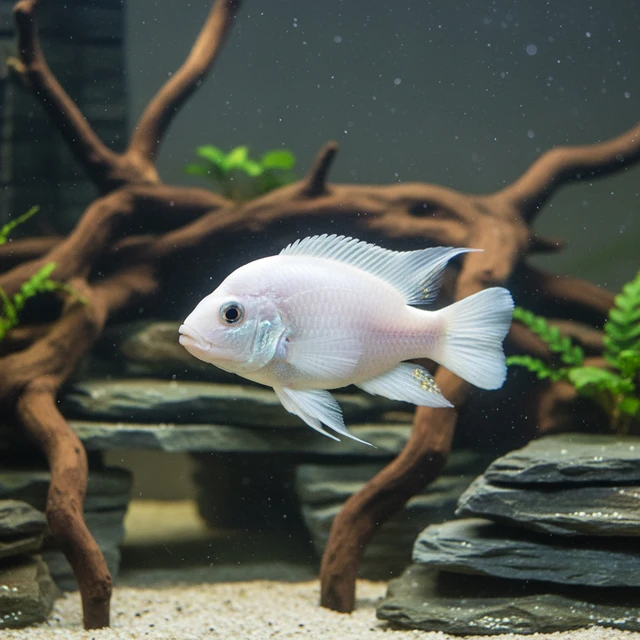
What Snow White Cichlid look like
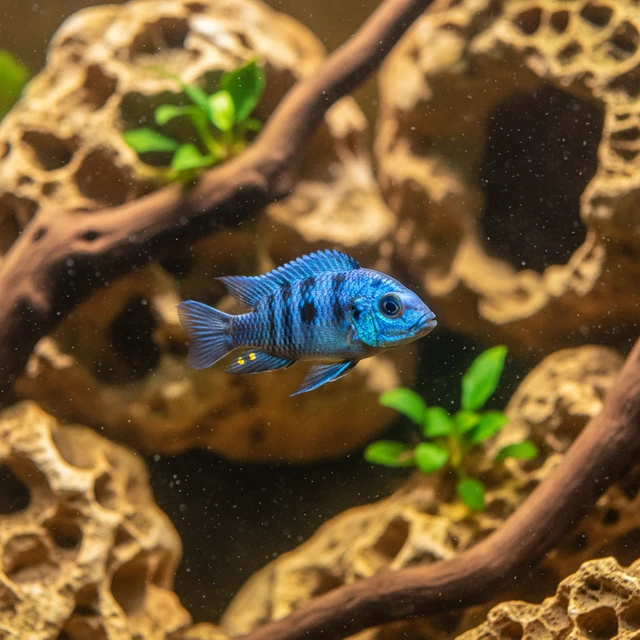
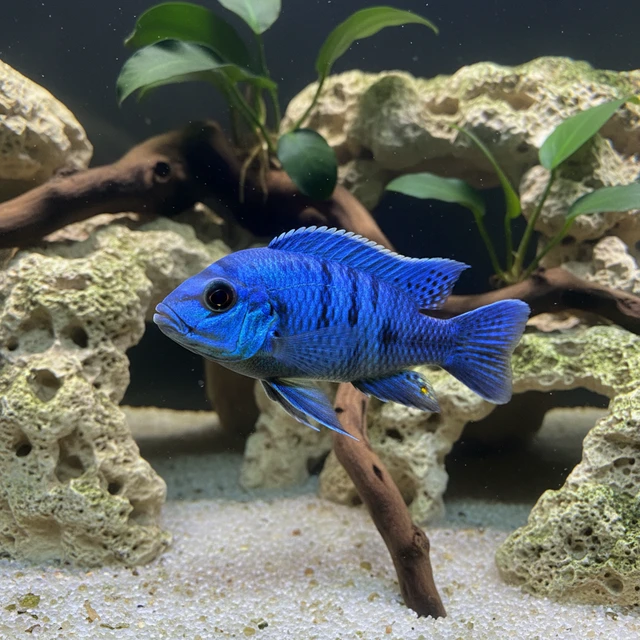
The Snow White Cichlid, scientifically classified as Pseudotropheus socolofi Var. Albino, exhibits a strikingly unique morphology characterized by its medium-sized, robust, and laterally compressed body, typically reaching a maximum adult size of 4-5 inches. This albino variant is devoid of the typical blue pigmentation found in its standard counterpart, presenting instead a pure white to pale pink body that contrasts sharply with its vibrant red eyes, a feature that enhances its visual appeal. Sexual dimorphism is subtle, with males generally exhibiting slightly larger dorsal fins and more pronounced coloration variations during breeding displays. Defensive adaptations include a strong, laterally compressed body that allows for agile maneuvering among rocky substrates, along with a set of sharp, conical teeth adapted for scraping algae off surfaces. The presence of a well-defined lateral line aids in detecting vibrations in the water, crucial for navigating its natural habitat in Malawi's rocky shores.
Behavior & temperament
In terms of ethology, the Snow White Cichlid is a social species that exhibits a predominantly territorial behavior, often establishing hierarchies within groups. It is classified as an obligate schooler, thriving in small to medium-sized groups that provide social structure and safety from predators. This species primarily occupies the rocky substrates of the lake, dwelling in the benthic zone while occasionally venturing into the mid-water column during feeding. Breeding behavior is characterized by mouthbrooding, where females carry and protect fertilized eggs in their mouths until they hatch, showcasing a high level of parental care. The temperament of the Snow White Cichlid can be described as moderately aggressive, particularly during breeding periods, necessitating ample space and hiding spots in a community tank to mitigate territorial disputes.
Diet & feeding
In the wild, the Snow White Cichlid primarily feeds on algae and small invertebrates, making it an omnivore with a preference for plant-based materials. In captivity, it requires a varied diet that includes high-quality spirulina flakes, pellets, and occasional protein sources such as brine shrimp or bloodworms to ensure optimal health and coloration.
Behind the name
The genus name 'Pseudotropheus' is derived from Greek, where 'pseudo' means 'false' and 'tropheus' means 'nourisher', indicating its resemblance to other cichlid genera. The species name 'socolofi' is derived from the local name for this fish in its native habitat, while 'Var. Albino' denotes the albinism trait, characterized by the absence of pigmentation.
Plan your tank
Check the numbers before you buy: tank volume, a stocking plan, cycle progress, water changes, and your ongoing care routine.
Keep reading

Choose compatible fish: school sizes, swimming zones, aggression, temperature and hardness matching, and honest bioload math for a peaceful community.

Quarantine new fish, spot the early warning signs, and treat disease without wrecking your tank. A practical freshwater fish health guide.

Acclimate new fish, shrimp, and coral safely: temperature floating, drip acclimation, plop-and-drop for shipped livestock, and the first 24 hours.
Keeping Snow White Cichlid?
AquaLens identifies your fish and plants from a photo, tracks water chemistry, and flags health issues early — free on iOS and Android.