Marble Angelfish Care Guide
Pterophyllum scalare var. Marble · Freshwater Fish
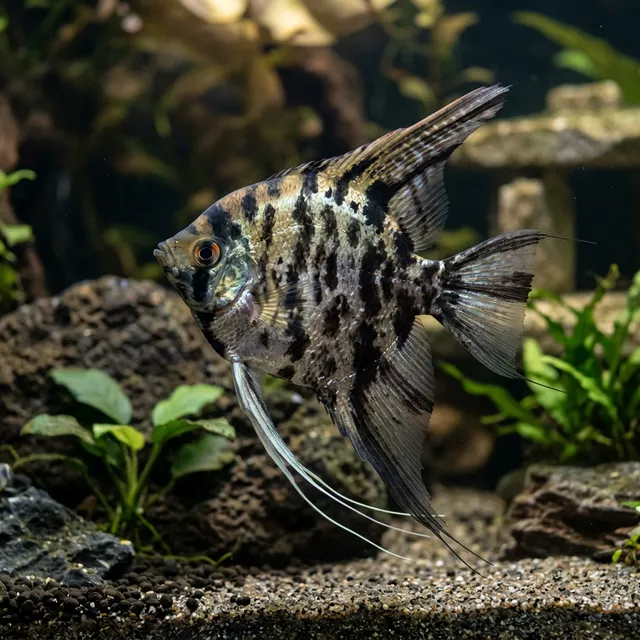
What Marble Angelfish look like
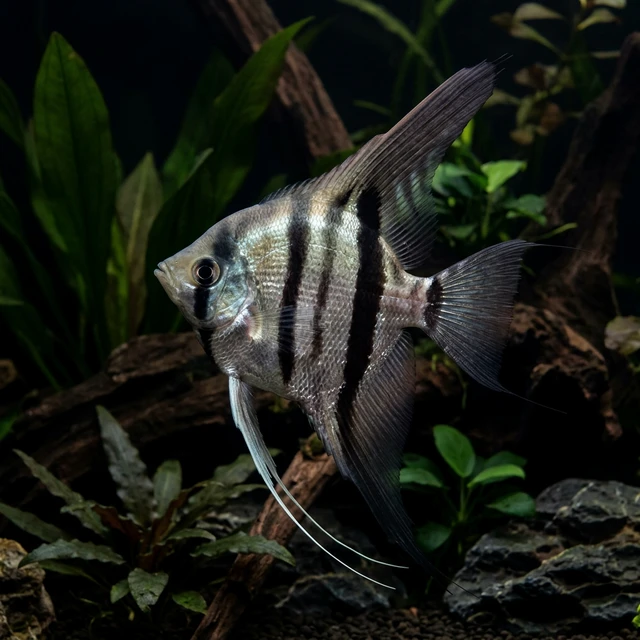
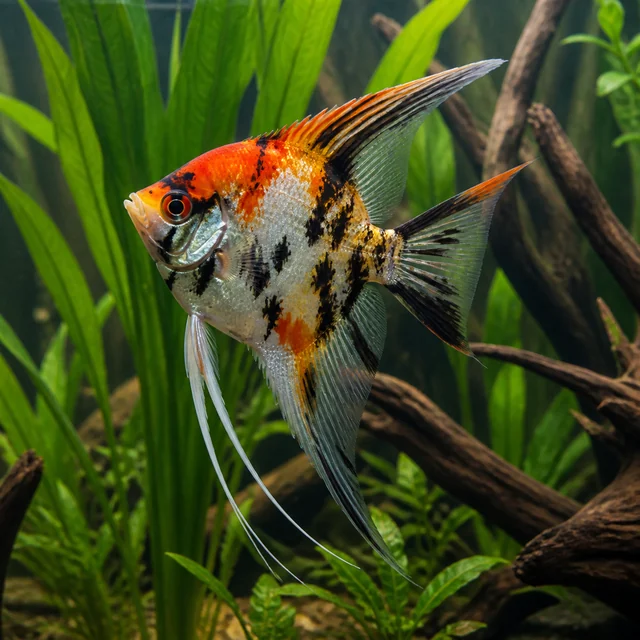
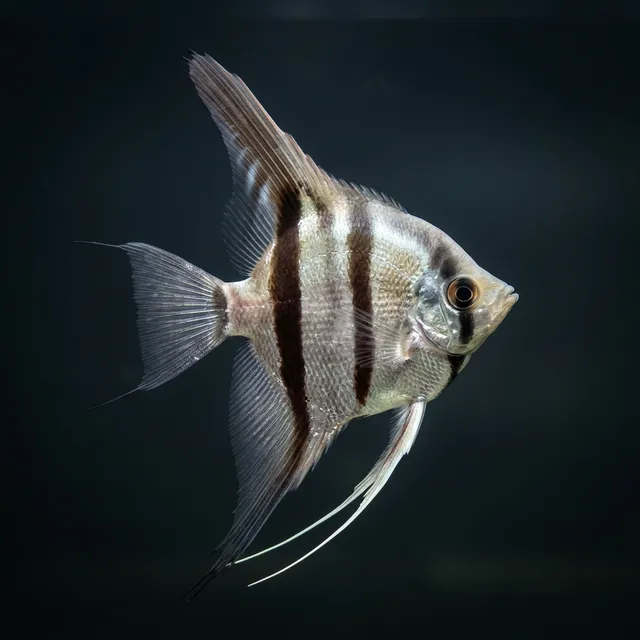
The Marble Angelfish (Pterophyllum scalare var. Marble) exhibits a strikingly tall, laterally compressed body, reaching a maximum adult size of approximately 6 inches in height, with an overall length of up to 12 inches. This variety is characterized by its dramatic marbled patterning, featuring irregularly scattered black and silver patches that vary significantly among individuals; some present a predominantly black appearance, while others are more silver with distinct black splashes. The fins are elongated and flowing, particularly the ventral filaments, which trail gracefully beneath the body. The dorsal fin is tall and triangular, complementing the fish's overall profile. Notable defensive adaptations include its ability to blend into complex aquatic environments due to its coloration and body shape, which can deter potential predators. Additionally, the presence of a lateral line system aids in detecting movement and vibrations in the water, enhancing its survival in the wild.
Behavior & temperament
The Marble Angelfish is typically a social species, often found in pairs or small groups, exhibiting a hierarchical structure within its social interactions. It tends to dwell in the mid to upper water column, where it can navigate through vegetation and structures. Breeding behavior is characterized by being an egg scatterer, where the female lays eggs on flat surfaces, and both parents participate in guarding the eggs and fry. In terms of temperament, Marble Angelfish are generally peaceful but can exhibit territorial aggression, particularly during breeding periods or when establishing dominance within a group.
Diet & feeding
In the wild, Marble Angelfish are omnivorous, feeding on a varied diet that includes small invertebrates, plant matter, and detritus. In captivity, they thrive on a balanced diet comprising high-quality flake food, pellets, and occasional live or frozen foods such as brine shrimp and bloodworms to ensure optimal health and coloration.
Behind the name
Pterophyllum (wing leaf); scalare (ladder-like).
Plan your tank
Check the numbers before you buy: tank volume, a stocking plan, cycle progress, water changes, and your ongoing care routine.
Keep reading

Choose compatible fish: school sizes, swimming zones, aggression, temperature and hardness matching, and honest bioload math for a peaceful community.
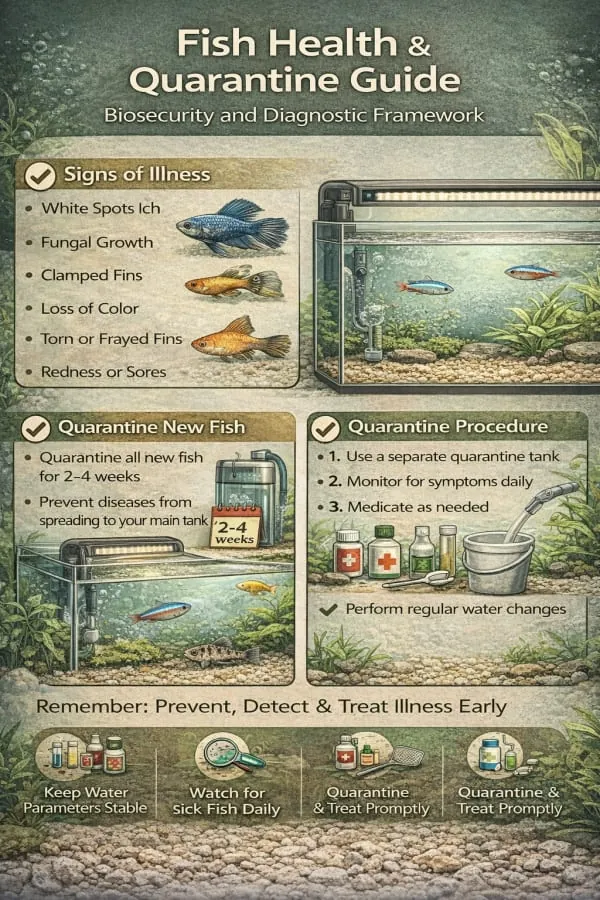
Quarantine new fish, spot the early warning signs, and treat disease without wrecking your tank. A practical freshwater fish health guide.

Acclimate new fish, shrimp, and coral safely: temperature floating, drip acclimation, plop-and-drop for shipped livestock, and the first 24 hours.
Keeping Marble Angelfish?
AquaLens identifies your fish and plants from a photo, tracks water chemistry, and flags health issues early — free on iOS and Android.